

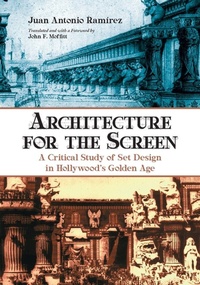
Architecture for the Screen
A Critical Study of Set Design in Hollywood's Golden Age
Published on 11. April 2012
Book
Paperback/Softback
255 pages
978-0-7864-6930-7 (ISBN)
Description
Most of us have never found ourselves trapped inside a burning skyscraper or entombed within an Egyptian pyramid--but we probably have some idea of what it would be like because of their portrayal on screen. The movies have overcome the constraints of time and place by bringing us images of diverse and otherwise unfamiliar settings.
This work covers the many applications of art and architecture appearing in the movies produced in Hollywood from the very beginning until the fifties. The first chapters deal with the process of design, construction, physical characteristics and immediate functions of a wide variety of architectural sets. The remaining chapters examine the great number of styles shown in those movies and take the reader up to the final triumph of modernist architecture in the aftermath of the Second World War.
This work covers the many applications of art and architecture appearing in the movies produced in Hollywood from the very beginning until the fifties. The first chapters deal with the process of design, construction, physical characteristics and immediate functions of a wide variety of architectural sets. The remaining chapters examine the great number of styles shown in those movies and take the reader up to the final triumph of modernist architecture in the aftermath of the Second World War.
Reviews / Votes
"fascinating...highly recommended"-Choice; "fascinating review of Hollywood set design"-C&RL News.More details
Language
English
Place of publication
Jefferson, NC
United States
Target group
Interest Age: From 18 years
Product notice
Paperback (trade)
Illustrations
108 photos, notes, bibliography, index
Dimensions
Height: 254 mm
Width: 178 mm
Thickness: 14 mm
Weight
489 gr
ISBN-13
978-0-7864-6930-7 (9780786469307)
Copyright in bibliographic data and cover images is held by Nielsen Book Services Limited or by the publishers or by their respective licensors: all rights reserved.
Schweitzer Classification
Person
Juan Antonio Ramirez, professor of art history at the Universidad Autonoma de Madrid in Spain, is the author of several books on architectural history, modern art, and visual culture. The late John F. Moffitt authored, edited or translated numerous books about art history. He was an art history professor at New Mexico State University.
Content
Table of Contents
Foreword: Architecture in the Movies and Elsewhere in History ( John F. Moffitt)
Preface to the English Edition: Ten Lessons About Architecture in the Movies
Preface to the First Edition (1986)
1. General Introduction
Film Architecture and the Crisis of Modernism
From Shooting on Location to Filming in the Studios
The Architecture of Movie Theaters and Architecture in the Movies
Film Architecture vs. Ordinary Architecture
2. Set Design
The First Advances in Art Direction
Architect vs. Director: Joseph Urban
The "Illustrators": Anton Grot and William Cameron Menzies
Stage Designers and Painters: Wilfred Buckland and Ben Carre
Supervising Architects: Hans Dreier, Van Nest Polglase, and Cedric Gibbons
Other Art Directors
The Design Process
Background Research
Additional Aspects of Design
The Imaginary Client and the Viewing Customer: Scale Models
Working Conditions and the Studio Styles
3. Set Construction
Techniques, Materials, and Architectural Machinery
Tricks of the Trade
The Impact of Sound
4. From Furniture to Artificial Landscapes
Set Dressing and the Accessories Departments
Wardrobes vs. Sets
The Construction of Landscapes
Artificial Oceans and Creative Ship-Building
Heavenly Effects
5. Architecture and Desire: The Character of Film Constructions
Six Distinctive Qualities
Color and Lighting
A Driving Functionalism
6. The Death and Resurrection of Sets
Methods of Destruction: Fire, Burial, Abandonment
The Ruins of Hollywood
Architectural Metempsychosis: The Permanent Sets
Some Statistics
7. Architectural Styles from Antiquity
Mesopotamia and Palestine
Egypt
Greco-Roman Architecture
8. From Medieval to Renaissance Architectural Styles
Castles and Palaces
The Gothic of Terror
Church, Cloister, Street...
Examples from the Renaissance
9. The Provinces of Exoticism
From Legendary Arabia to Contemporary Legend: Moorish Spain
An Archetypal Spain
India
Pan-Slavic Architecture and/or the Jungle
The Far East
Pre-Columbian America
10. From Colonial Baroque to Contemporary Eclecticism
The "Spanish Style" and the Bourgeois Baroque
Did a Cinematic Neo-Classicism Exist?
"American" Architecture, Frontier to Urban
Other (Old World) Countries
11. Modern Architecture Conquers Hollywood
The First Moderns: Urban, Rambova, et al.
Art Deco and Zigzag Geometrization
The Ocean Liner and "Streamline Moderne"
The International Style
Rationalist-Surrealist Architecture in Musicals
12. Epilogue
Some Omnipresent Elements: Staircases, Bathrooms, Bedrooms
Partial Conclusions
Notes
Bibliography
Index
Foreword: Architecture in the Movies and Elsewhere in History ( John F. Moffitt)
Preface to the English Edition: Ten Lessons About Architecture in the Movies
Preface to the First Edition (1986)
1. General Introduction
Film Architecture and the Crisis of Modernism
From Shooting on Location to Filming in the Studios
The Architecture of Movie Theaters and Architecture in the Movies
Film Architecture vs. Ordinary Architecture
2. Set Design
The First Advances in Art Direction
Architect vs. Director: Joseph Urban
The "Illustrators": Anton Grot and William Cameron Menzies
Stage Designers and Painters: Wilfred Buckland and Ben Carre
Supervising Architects: Hans Dreier, Van Nest Polglase, and Cedric Gibbons
Other Art Directors
The Design Process
Background Research
Additional Aspects of Design
The Imaginary Client and the Viewing Customer: Scale Models
Working Conditions and the Studio Styles
3. Set Construction
Techniques, Materials, and Architectural Machinery
Tricks of the Trade
The Impact of Sound
4. From Furniture to Artificial Landscapes
Set Dressing and the Accessories Departments
Wardrobes vs. Sets
The Construction of Landscapes
Artificial Oceans and Creative Ship-Building
Heavenly Effects
5. Architecture and Desire: The Character of Film Constructions
Six Distinctive Qualities
Color and Lighting
A Driving Functionalism
6. The Death and Resurrection of Sets
Methods of Destruction: Fire, Burial, Abandonment
The Ruins of Hollywood
Architectural Metempsychosis: The Permanent Sets
Some Statistics
7. Architectural Styles from Antiquity
Mesopotamia and Palestine
Egypt
Greco-Roman Architecture
8. From Medieval to Renaissance Architectural Styles
Castles and Palaces
The Gothic of Terror
Church, Cloister, Street...
Examples from the Renaissance
9. The Provinces of Exoticism
From Legendary Arabia to Contemporary Legend: Moorish Spain
An Archetypal Spain
India
Pan-Slavic Architecture and/or the Jungle
The Far East
Pre-Columbian America
10. From Colonial Baroque to Contemporary Eclecticism
The "Spanish Style" and the Bourgeois Baroque
Did a Cinematic Neo-Classicism Exist?
"American" Architecture, Frontier to Urban
Other (Old World) Countries
11. Modern Architecture Conquers Hollywood
The First Moderns: Urban, Rambova, et al.
Art Deco and Zigzag Geometrization
The Ocean Liner and "Streamline Moderne"
The International Style
Rationalist-Surrealist Architecture in Musicals
12. Epilogue
Some Omnipresent Elements: Staircases, Bathrooms, Bedrooms
Partial Conclusions
Notes
Bibliography
Index