

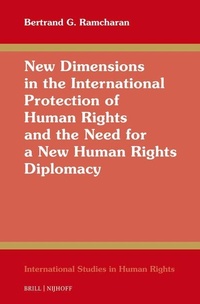
New Dimensions in the International Protection of Human Rights and the Need for a New Human Rights Diplomacy
Published on 9. May 2024
Book
Hardback
240 pages
978-90-04-69564-1 (ISBN)
Description
The twenty-first century is seeing a battle of ideas between different conceptions of governance: people-centred and party-centred. At the same time, scientific and technological developments are posing new challenges for human rights. This book identifies new dimensions in the international protection of human rights and makes the case for a new human rights diplomacy focusing on enlarging the area of common ground among governments and enhancing national human rights protection systems.
More details
Series
Language
English
Place of publication
Netherlands
Publishing group
Brill
Target group
Professional and scholarly
Product notice
sewn/stitched
Cloth over boards
Dimensions
Height: 239 mm
Width: 157 mm
Thickness: 20 mm
Weight
499 gr
ISBN-13
978-90-04-69564-1 (9789004695641)
Copyright in bibliographic data and cover images is held by Nielsen Book Services Limited or by the publishers or by their respective licensors: all rights reserved.
Schweitzer Classification
Person
Dr Bertrand G. Ramcharan has been Chancellor of the University of Guyana, Professor of International Law at the University of Ottawa, Professor of International Human Rights Law at the Geneva Graduate Institute of International and Development Studies, Fellow at Harvard University and Fellow at the LSE, Commissioner of the International Commission of Jurist, Member of the Permanent Court of Arbitration, Deputy and then UN High Commissioner for Human Rights ad interim.
He served as member of an Eminent Persons Panel of the UN Human Rights Council dealing with human rights in Darfur, and as Commissioner on an ILO Commission of Inquiry on the human rights situation in Zimbabwe. He is the author of several books, including Contemporary Human Rights Ideas and Preventive Diplomacy at the UN.
He served as member of an Eminent Persons Panel of the UN Human Rights Council dealing with human rights in Darfur, and as Commissioner on an ILO Commission of Inquiry on the human rights situation in Zimbabwe. He is the author of several books, including Contemporary Human Rights Ideas and Preventive Diplomacy at the UN.
Content
????Foreword??
Preface??
Contemporary Protection Challenges??
1???Introduction??
?i?The UN's Normative and Jurisprudential Architecture of Human Rights
?ii?Protection of the Right to Life
?iii?Promotion of Human Dignity and Equality
?iv?Promotion of a Social and International Order Conducive to Human Survival, Dignity and Rights
?v?Clarification of the Content of International Human Rights Law through the Human Rights Treaty Organs and the International Court of Justice
?vi?Struggling against Widespread Violations of Human Rights
?vii?The International Criminal Tribunals
?viii?Operating Imperfect Bodies: The Security Council, the General Assembly and the Human Rights Council
?ix?Struggling for a Wise Arrangement on the Role of Treaty Supervisory Organs
?x?Grudgingly Benefitting from the Contributions of ngo?s
??Conclusion
2???Historical and Phlosophical Perspectives??
??Introduction
?i?Historical Perspectives
?ii?Philosophical Perspectives
??Conclusion
3???Fundamental Premises: Universality, Dignity, Equality, Justice??
??Introduction
?i?Universality
?ii?Dignity
?iii?The Principle of Equality
?iv?Justice
??Conclusion
4???A New Human Rights Diplomacy in Support of National Human Rights Protection Systems??
??Introduction
?i?International Legal Requirements on the Need for Adequate and Effective National Human Rights Protection Systems
?ii?The Concept of a National Human Rights Protection System
?iii?Sustainable Development Goal 16
?iv?Towards a New Diplomacy in Support of the Enhancement of National Human Rights Protection Systems
??Conclusion
5???Promoting Equitable Life Chances through National Implementation of the Right to Development??
??Introduction
?i?The UN Millennium Development Goals and the Sustainable Development Goals
?ii?Perspectives on Implementation of the Right to Development
?iii?The Need for National Law and Policy
?iv?Equality
?v?The Duty to Ensure the Enjoyment of Basic Rights
?vi?The Need for Legal Innovations
?vii?The Right to Development as the Right to a Process of Development
?viii?Case Studies of India, Brazil and South Africa
?ix?Preventable Poverty
?x?Violations of Economic, Social and Cultural Rights
?xi?Public Interest Litigation
??Conclusion
6???Enhancing Racial Justice in the Face of Searing Traumas - Despite the Durban Declaration and Programme of Action??
??Introduction
?i?Intellectual History
?ii?Taking the Pulse of the Regions and of ngo?s in the Run-Up to the Durban Conference
?iii?Vision Statements by All Countries
?iv?Political Debates
?v?The Durban Declaration and Programme of Action
?vi?Innovations in the Durban Declaration and Programme of Action
?vii?Policy Issues
?viii?Political Issues
??Conclusion
7???Managing Epochal Changes and Protecting People at Risk??
??Introduction
?i?The Responsibility to Protect in an Age of Epochal Change
?ii?Divergences among the Great Powers
?iii?Chinese and Russian Perspectives on Human Rights
?iv?Climate Change: A Crime against Humanity for Deliberate, Reckless or Negligent Harming of the Global Climate?
?v?Artificial Intelligence: Should ai Firms Face Criminal Sanctions?
?vi?Robotic Weapons
?vii?Humans on Other Planets
?viii?Protection of People at Risk
?ix?International Law and Public Emergencies
??Conclusion
8???Conclusion??
Bibliography??
Index??
Preface??
Contemporary Protection Challenges??
1???Introduction??
?i?The UN's Normative and Jurisprudential Architecture of Human Rights
?ii?Protection of the Right to Life
?iii?Promotion of Human Dignity and Equality
?iv?Promotion of a Social and International Order Conducive to Human Survival, Dignity and Rights
?v?Clarification of the Content of International Human Rights Law through the Human Rights Treaty Organs and the International Court of Justice
?vi?Struggling against Widespread Violations of Human Rights
?vii?The International Criminal Tribunals
?viii?Operating Imperfect Bodies: The Security Council, the General Assembly and the Human Rights Council
?ix?Struggling for a Wise Arrangement on the Role of Treaty Supervisory Organs
?x?Grudgingly Benefitting from the Contributions of ngo?s
??Conclusion
2???Historical and Phlosophical Perspectives??
??Introduction
?i?Historical Perspectives
?ii?Philosophical Perspectives
??Conclusion
3???Fundamental Premises: Universality, Dignity, Equality, Justice??
??Introduction
?i?Universality
?ii?Dignity
?iii?The Principle of Equality
?iv?Justice
??Conclusion
4???A New Human Rights Diplomacy in Support of National Human Rights Protection Systems??
??Introduction
?i?International Legal Requirements on the Need for Adequate and Effective National Human Rights Protection Systems
?ii?The Concept of a National Human Rights Protection System
?iii?Sustainable Development Goal 16
?iv?Towards a New Diplomacy in Support of the Enhancement of National Human Rights Protection Systems
??Conclusion
5???Promoting Equitable Life Chances through National Implementation of the Right to Development??
??Introduction
?i?The UN Millennium Development Goals and the Sustainable Development Goals
?ii?Perspectives on Implementation of the Right to Development
?iii?The Need for National Law and Policy
?iv?Equality
?v?The Duty to Ensure the Enjoyment of Basic Rights
?vi?The Need for Legal Innovations
?vii?The Right to Development as the Right to a Process of Development
?viii?Case Studies of India, Brazil and South Africa
?ix?Preventable Poverty
?x?Violations of Economic, Social and Cultural Rights
?xi?Public Interest Litigation
??Conclusion
6???Enhancing Racial Justice in the Face of Searing Traumas - Despite the Durban Declaration and Programme of Action??
??Introduction
?i?Intellectual History
?ii?Taking the Pulse of the Regions and of ngo?s in the Run-Up to the Durban Conference
?iii?Vision Statements by All Countries
?iv?Political Debates
?v?The Durban Declaration and Programme of Action
?vi?Innovations in the Durban Declaration and Programme of Action
?vii?Policy Issues
?viii?Political Issues
??Conclusion
7???Managing Epochal Changes and Protecting People at Risk??
??Introduction
?i?The Responsibility to Protect in an Age of Epochal Change
?ii?Divergences among the Great Powers
?iii?Chinese and Russian Perspectives on Human Rights
?iv?Climate Change: A Crime against Humanity for Deliberate, Reckless or Negligent Harming of the Global Climate?
?v?Artificial Intelligence: Should ai Firms Face Criminal Sanctions?
?vi?Robotic Weapons
?vii?Humans on Other Planets
?viii?Protection of People at Risk
?ix?International Law and Public Emergencies
??Conclusion
8???Conclusion??
Bibliography??
Index??