

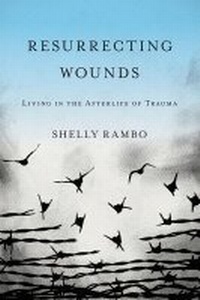
Resurrecting Wounds
Living in the Afterlife of Trauma
Published on 1. October 2017
Book
Hardback
196 pages
978-1-4813-0678-2 (ISBN)
Description
The Gospel of John's account of doubting Thomas is often told as a lesson about the veracity and triumph of Christian faith. And yet it is a story about wounds. Interpretations of this Gospel narrative, by focusing on Christ's victory in the resurrection, reflect Christianity's unease with the wounds that remain on the body of the risen Jesus. By returning readers to this familiar passage, Resurrecting Wounds expands the scope of the Upper Room to the present world where wounds mark all of humanity. Shelly Rambo rereads the Thomas story and the history of its interpretation through the lens of trauma studies to reflect on the ways that the wounds of race, gender, and war persist. Wounds do not simply go away, even though a close reading of John Calvin reveals his theological investments in removing wounds. This erasure reflects a dominant mode of Christian thinking, but it is not the only Christian reading. By contrast, Macrina's scar, in Gregory of Nyssa's account of her life and death, displays how resurrection can be inscribed in wounds, particularly in the illumination of her body after her death. The scar, produced in and through a mother's touch, recalls a healing, linking resurrection to the work of tending wounds. Much like Christ's wounds and Macrina's scar, racial wounds can be found on the skin of America's collective life. The wounds of racial histories, unhealed, resurface again and again. The wounds of war persist as well, despite a cultural calculus that links the suffering of a soldier with that of Christ. Again, the visceral display of Jesus' wounds, when placed at the center of Thomas' encounter in the Upper Room, enacts a vision of resurrecting that addresses the real harm of the real wounds of war. The powerful Upper Room images of resurrectionaencounters with wounds, the invitation to touch, and the formation of a communityapresent visions of truth-telling and of healing that grapple with the pressing questions of wounds surfacing in the midst of human encounters with violence, suffering, and trauma. While traditional accounts of resurrection in Christian theology have focused on the afterlife, this book forges a theology of resurrection wounds in the afterliving. By returning again and again to Christ's woundedness, we discover ways to live with our own.
Reviews / Votes
An important and beautifully written contribution to current theological discourse on trauma. -- Hannah Jones -- Reading Religion ...Rambo exceeds expectations with a masterful and surprisingly daring venture to reconsider theologies of resurrection in the 'afterlife' or 'ongoingness' of trauma. -- Amy McLaughlin-Sheasby -- Homiletic The breadth and creativity of Ramboas intertextual analysis is exciting, and her multivalent reading of John 20 will undoubtedly spur reflection on suffering, resurrection, and salvation. -- Jessica Coblentz -- HorizonsMore details
Language
English
Place of publication
Waco
United States
Target group
Professional and scholarly
Illustrations
1
Dimensions
Height: 228 mm
Width: 152 mm
Weight
448 gr
ISBN-13
978-1-4813-0678-2 (9781481306782)
Copyright in bibliographic data and cover images is held by Nielsen Book Services Limited or by the publishers or by their respective licensors: all rights reserved.
Schweitzer Classification
Other editions
Additional editions
E-Book
10/2017
Baylor University Press
€29.49
Available for download
Content
Introduction: Reenvisioning Resurrection 1. Erasing Wounds: John Calvin and the Problem of the Resurrected Body 2. Touching Wounds: Macrinaas Scar and the Balm of Resurrection Flesh 3. Surfacing Wounds: Christian Theology and Resurrecting Histories in the Age of Ferguson 4. Discovering Wounds: Veteran Healing and Resurrection in the Upper Room Conclusion: Communal After-Living