

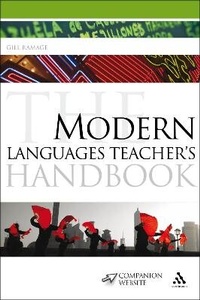
The Modern Languages Teacher's Handbook
Published on 30. August 2012
Book
Paperback/Softback
176 pages
978-1-4411-5860-4 (ISBN)
Description
This is a practical handbook for aspiring and practising teachers of modern languages with students aged 11+. This user-friendly handbook for busy teachers contains up-to-date advice on a range of topics including: planning outstanding lesson; teaching the four key language skills; stretching able and talented and multilingual students; including and engaging students with weaker skills; using ICT to advance language skills and build international links; and, teaching MFL at post 16. There is also a companion website containing links to useful resources, videos and websites. This book is invaluable for trainees, newly qualified teachers and more experienced practitioners looking for practical ideas and strategies to motivate and engage learners in modern languages. Each title in the "Handbooks" series is a comprehensive guide to preparing to teach, teaching with confidence and making the most of assessment in secondary schools. Each handbook contains practical advice for teachers, from working with Teaching Assistants to guidance on continued professional development, as well as plenty of strategies for making lessons stimulating, cross-curricular and fun.
Reviews / Votes
'This is an excellent handbook for modern languages staff at all stages of their careers. It provides lots of practical advice and is written by a teacher who is still working in the classroom. There are good tips for young teachers and aspiring Heads of Departments, and the more experienced teacher can just 'dip in' to a section for inspiration.' Yvonne Gorrod, Advanced Skills Teacher, Notre Dame High School, Norwich, UK 'An absolute must for today's busy ML teacher - thorough, practical advice with a wealth of great ideas!' Jackie Rayment, County Adviser for Modern Languages, Hertfordshire, UK 'At last, a pragmatic but innovative handbook about aspects of Modern Languages teaching methodology and wider departmental issues. Gill takes a pragmatic, thoughtful approach to dealing with those more hotly disputed areas of Modern Languages practice, such as the use of target language and the teaching of grammar. This work would be useful to languages practitioner at any stage of their career, and especially as a starting point for those wishing to research further into recent learning theory and policy in Modern Languages.' Adam Cooke, MFL Adviser, Norfolk Local Authority, UK 'Full of sensible and practical ideas for teaching foreign languages, this handbook will support teachers in the development of their work in the classroom. It draws on personal experience, is very accessible, offers a good deal of helpful advice, and is realistic about the demands of teaching and where energies need to be focused. It should prove to be a valuable resource for all languages teachers.' Linda Fisher, Lecturer in Education, University of Cambridge, UKMore details
Series
Language
English
Place of publication
New York
United States
Target group
Professional and scholarly
Dimensions
Height: 234 mm
Width: 156 mm
Weight
274 gr
ISBN-13
978-1-4411-5860-4 (9781441158604)
Copyright in bibliographic data and cover images is held by Nielsen Book Services Limited or by the publishers or by their respective licensors: all rights reserved.
Schweitzer Classification
Other editions
Additional editions
Gill Ramage
The Modern Languages Teacher's Handbook
E-Book
06/2012
1st Edition
Continuum Publishing Corporation
€24.49
Available for download
Gill Ramage
The Modern Languages Teacher's Handbook
E-Book
06/2012
1st Edition
Bloomsbury Continuum
€24.49
Available for download
Person
Formerly the Secondary Modern Languages Adviser for Suffolk, Gill Ramage is an independent modern languages adviser, author and trainer. She also teaches modern languages at a secondary school in Suffolk.
Content
1. What's the point of learning a language?; 2. Planning outstanding lessons; 3. Teaching learners how to listen; 4. Getting students talking; 5. Reading: the Cinderella skill; 6. Teaching students to write; 7. Using the target language (TL); 8. Grammar, thinking and creativity; 9. Assessment and progression; 10. Making MFL learning real; Useful information and websites; Index.