

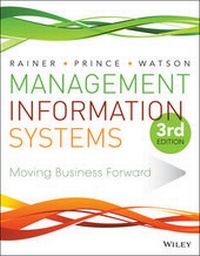
Management Information Systems
3rd Edition
Published on 2. January 2015
Book
Paperback/Softback
576 pages
978-1-118-89538-2 (ISBN)
Description
The 3rd Edition of Management Information Systems promotes active learning like no other text in the market. Each chapter is comprised of tightly coupled concepts and section-level student activities that transport your students from passively learning about IS to doing IS in a realistic context.
The integration of Microsoft Excel and Access exercises at the end of every chapter enables students to practice their Microsoft application skills in the context of the chapter material.
The integration of Microsoft Excel and Access exercises at the end of every chapter enables students to practice their Microsoft application skills in the context of the chapter material.
More details
Edition
3rd edition
Language
English
Place of publication
New York
United States
Target group
College/higher education
Dimensions
Height: 278 mm
Width: 216 mm
Thickness: 20 mm
Weight
1043 gr
ISBN-13
978-1-118-89538-2 (9781118895382)
Copyright in bibliographic data and cover images is held by Nielsen Book Services Limited or by the publishers or by their respective licensors: all rights reserved.
Schweitzer Classification
Other editions
Previous edition
R. Kelly Rainer | Hugh J. Watson | Brad Prince
Management Information Systems
Book
08/2013
2nd Edition
Wiley
€94.00
Article exhausted; check for reprint
Persons
Content
Chapter 1 Introduction to Information Systems 2
1.1 Why Should I Study Information Systems? 4
1.2 Overview of Computer-Based Information Systems 10
1.3 How Does IT Impact Organizations? 18
1.4 Importance of Information Systems to Society 21
Chapter 2 Organizational Strategy, Competitive Advantage, and Information Systems 36
2.1 Business Pressures, Organizational Responses, and Information Technology Support 38
2.2 Competitive Advantage and Strategic Information Systems 48
Chapter 3 Data and Knowledge Management 66
3.1 Managing Data 68
3.2 The Database Approach 72
3.3 Big Data 77
3.4 Data Warehouses and Data Marts 83
3.5 Knowledge Management 90
Chapter 4 Telecommunications and Networking 102
4.1 What Is a Computer Network? 104
4.2 Network Fundamentals 106
4.3 The Internet and the World Wide Web 112
4.4 Network Applications 117
Chapter 5 Business Intelligence 140
5.1 Managers and Decision Making 142
5.2 What Is Business Intelligence? 146
5.3 Business Intelligence Applications for Data Analysis 150
5.4 Business Intelligence Applications for Presenting Results 154
Chapter 6 Ethics and Privacy 168
6.1 Ethical Issues 169
6.2 Privacy 174
Chapter 7 Information Security 190
7.1 Introduction to Information Security 192
7.2 Unintentional Threats to Information Systems 194
7.3 Deliberate Threats to Information Systems 197
7.4 What Organizations Are Doing to Protect Information Resources 204
7.5 Information Security Controls 205
Chapter 8 Social Computing 226
8.1 Web 2.0 229
8.2 Fundamentals of Social Computing in Business 238
8.3 Social Computing in Business: Shopping 240
8.4 Social Computing in Business: Marketing 245
8.5 Social Computing in Business: Customer Relationship Management 250
8.6 Social Computing in Business: Human Resource Management 251
Chapter 9 E-Business and E-Commerce 262
9.1 Overview of E-Business and E-Commerce 265
9.2 Business-to-Consumer (B2C) Electronic Commerce 272
9.3 Business-to-Business (B2B) Electronic Commerce 279
9.4 Ethical and Legal Issues in E-Business 281
Chapter 10 Wireless, Mobile Computing, and Mobile Commerce 296
10.1 Wireless Technologies 298
10.2 Wireless Computer Networks and Internet Access 305
10.3 Mobile Computing and Mobile Commerce 313
10.4 Pervasive Computing 318
10.5 Wireless Security 322
Chapter 11 Information Systems within the Organization 332
11.1 Transaction Processing Systems 334
11.2 Functional Area Information Systems 335
11.3 Enterprise Resource Planning Systems 342
11.4 ERP Support for Business Processes 349
Chapter 12 Customer Relationship Management 362
12.1 Defining Customer Relationship Management 364
12.2 Operational Customer Relationship Management Systems 368
12.3 Analytical Customer Relationship Management Systems 372
12.4 Other Types of Customer Relationship Management Systems 373
Chapter 13 Supply Chain Management 384
13.1 Supply Chains 385
13.2 Supply Chain Management 387
13.3 Information Technology Support for Supply Chain Management 392
Chapter 14 Acquiring Information Systems and Applications 404
14.1 Planning for and Justifying IT Applications 405
14.2 Strategies for Acquiring IT Applications 409
14.3 The Traditional Systems Development Life Cycle 416
14.4 Alternative Methods and Tools for Systems Development 423
14.5 Vendor and Software Selection 426
Plug IT In 1 Business Processes and Business Process Management 438
PI1.1 Business Processes 438
PI1.2 Business Process Improvement, Business Process Reengineering, and Business Process Management 442
Plug IT In 2 Hardware and Software 450
PI2.1 Introduction to Hardware 450
PI2.2 Introduction to Software 460
Plug IT In 3 Fundamentals of Relational Database Operations 470
PI3.1 Query Languages 470
PI3.2 Entity-Relationship Modeling 471
PI3.3 Normalization and Joins 474
Plug IT In 4 Cloud Computing 481
PI4.1 Introduction 481
PI4.2 What Is Cloud Computing? 483
PI4.3 Different Types of Clouds 487
PI4.4 Cloud Computing Services 489
PI4.5 The Benefi ts of Cloud Computing 492
PI4.6 Concerns and Risks with Cloud Computing 493
PI4.7 Web Services and Service-Oriented Architecture 497
Plug IT In 5 Intelligent Systems 503
PI5.1 Introduction to Intelligent Systems 503
PI5.2 Expert Systems 506
PI5.3 Neural Networks 509
PI5.4 Fuzzy Logic 510
PI5.5 Genetic Algorithms 511
PI5.6 Intelligent Agents 512
Plug IT In 6 Project Management 517
PI6.1 Project Management for Information Systems Projects 517
PI6.2 The Project Management Process 519
PI6.3 The Project Management Body of Knowledge 521
Plug IT In 7 Protecting Your Information Assets 528
PI7.1 How to Protect Your Assets: The Basics 528
PI7.2 Behavioral Actions to Protect Your Information Assets 529
PI7.3 Computer-Based Actions to Protect Your Information Assets 531
Index 543
1.1 Why Should I Study Information Systems? 4
1.2 Overview of Computer-Based Information Systems 10
1.3 How Does IT Impact Organizations? 18
1.4 Importance of Information Systems to Society 21
Chapter 2 Organizational Strategy, Competitive Advantage, and Information Systems 36
2.1 Business Pressures, Organizational Responses, and Information Technology Support 38
2.2 Competitive Advantage and Strategic Information Systems 48
Chapter 3 Data and Knowledge Management 66
3.1 Managing Data 68
3.2 The Database Approach 72
3.3 Big Data 77
3.4 Data Warehouses and Data Marts 83
3.5 Knowledge Management 90
Chapter 4 Telecommunications and Networking 102
4.1 What Is a Computer Network? 104
4.2 Network Fundamentals 106
4.3 The Internet and the World Wide Web 112
4.4 Network Applications 117
Chapter 5 Business Intelligence 140
5.1 Managers and Decision Making 142
5.2 What Is Business Intelligence? 146
5.3 Business Intelligence Applications for Data Analysis 150
5.4 Business Intelligence Applications for Presenting Results 154
Chapter 6 Ethics and Privacy 168
6.1 Ethical Issues 169
6.2 Privacy 174
Chapter 7 Information Security 190
7.1 Introduction to Information Security 192
7.2 Unintentional Threats to Information Systems 194
7.3 Deliberate Threats to Information Systems 197
7.4 What Organizations Are Doing to Protect Information Resources 204
7.5 Information Security Controls 205
Chapter 8 Social Computing 226
8.1 Web 2.0 229
8.2 Fundamentals of Social Computing in Business 238
8.3 Social Computing in Business: Shopping 240
8.4 Social Computing in Business: Marketing 245
8.5 Social Computing in Business: Customer Relationship Management 250
8.6 Social Computing in Business: Human Resource Management 251
Chapter 9 E-Business and E-Commerce 262
9.1 Overview of E-Business and E-Commerce 265
9.2 Business-to-Consumer (B2C) Electronic Commerce 272
9.3 Business-to-Business (B2B) Electronic Commerce 279
9.4 Ethical and Legal Issues in E-Business 281
Chapter 10 Wireless, Mobile Computing, and Mobile Commerce 296
10.1 Wireless Technologies 298
10.2 Wireless Computer Networks and Internet Access 305
10.3 Mobile Computing and Mobile Commerce 313
10.4 Pervasive Computing 318
10.5 Wireless Security 322
Chapter 11 Information Systems within the Organization 332
11.1 Transaction Processing Systems 334
11.2 Functional Area Information Systems 335
11.3 Enterprise Resource Planning Systems 342
11.4 ERP Support for Business Processes 349
Chapter 12 Customer Relationship Management 362
12.1 Defining Customer Relationship Management 364
12.2 Operational Customer Relationship Management Systems 368
12.3 Analytical Customer Relationship Management Systems 372
12.4 Other Types of Customer Relationship Management Systems 373
Chapter 13 Supply Chain Management 384
13.1 Supply Chains 385
13.2 Supply Chain Management 387
13.3 Information Technology Support for Supply Chain Management 392
Chapter 14 Acquiring Information Systems and Applications 404
14.1 Planning for and Justifying IT Applications 405
14.2 Strategies for Acquiring IT Applications 409
14.3 The Traditional Systems Development Life Cycle 416
14.4 Alternative Methods and Tools for Systems Development 423
14.5 Vendor and Software Selection 426
Plug IT In 1 Business Processes and Business Process Management 438
PI1.1 Business Processes 438
PI1.2 Business Process Improvement, Business Process Reengineering, and Business Process Management 442
Plug IT In 2 Hardware and Software 450
PI2.1 Introduction to Hardware 450
PI2.2 Introduction to Software 460
Plug IT In 3 Fundamentals of Relational Database Operations 470
PI3.1 Query Languages 470
PI3.2 Entity-Relationship Modeling 471
PI3.3 Normalization and Joins 474
Plug IT In 4 Cloud Computing 481
PI4.1 Introduction 481
PI4.2 What Is Cloud Computing? 483
PI4.3 Different Types of Clouds 487
PI4.4 Cloud Computing Services 489
PI4.5 The Benefi ts of Cloud Computing 492
PI4.6 Concerns and Risks with Cloud Computing 493
PI4.7 Web Services and Service-Oriented Architecture 497
Plug IT In 5 Intelligent Systems 503
PI5.1 Introduction to Intelligent Systems 503
PI5.2 Expert Systems 506
PI5.3 Neural Networks 509
PI5.4 Fuzzy Logic 510
PI5.5 Genetic Algorithms 511
PI5.6 Intelligent Agents 512
Plug IT In 6 Project Management 517
PI6.1 Project Management for Information Systems Projects 517
PI6.2 The Project Management Process 519
PI6.3 The Project Management Body of Knowledge 521
Plug IT In 7 Protecting Your Information Assets 528
PI7.1 How to Protect Your Assets: The Basics 528
PI7.2 Behavioral Actions to Protect Your Information Assets 529
PI7.3 Computer-Based Actions to Protect Your Information Assets 531
Index 543