


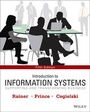
Introduction to Information Systems
Enabling and Transforming Business
4th Edition
Published on 11. January 2012
Book
Paperback/Softback
480 pages
978-1-118-06334-7 (ISBN)
Description
Rainer & Cegielski's new edition of Introduction to Information Systems: Enabling and Transforming Business, 4th Edition includes updated coverage, refined cases, more illustrations, and a new "Weekly Updates" resource. Its concise chapters, many cases and examples, and online quizzing provide smooth and straightforward information and provide many hands-on activities. In general, the text is more engaging, compelling and relevant with a broader table of contents, pedagogically innovative structure, integrated activities, Excel and Access projects.
More details
Edition
4th edition
Language
English
Place of publication
New York
United States
Target group
College/higher education
Dimensions
Height: 254 mm
Width: 216 mm
Thickness: 15 mm
Weight
794 gr
ISBN-13
978-1-118-06334-7 (9781118063347)
Copyright in bibliographic data is held by Nielsen Book Services Limited or its licensors: all rights reserved.
Schweitzer Classification
Other editions
New editions
Book
11/2013
Wiley
€188.72
Article is exhausted, reprint undefined
Previous edition
R. Kelly Rainer | Casey G. Cegielski
Introduction to Information Systems
Enabling and Transforming Business
Book
12/2009
3rd Edition
Wiley
€109.00
Shipment within 10-20 days
Persons
Content
[Chapter 1] Introduction to Information Systems 2 1.1: Why Should I Study Information Systems? 6
1.2: Overview of Computer-Based Information Systems 12
1.3: How Does IT Impact Organizations? 20
1.4: Importance of Information Systems to Society 22
[Chapter 2] Organizational Strategy, Competitive Advantage, and Information Systems 30
2.1: Business Processes 35
2.2: Business Process Reengineering and Business Process Management 38
2.3: Business Pressures, Organizational Responses, and Information Technology Support 39
2.4: Competitive Strategy and Strategic Information Systems 47
2.5: Business-Information Technology Alignment 53
[Chapter 3] Ethics and Privacy 60
3.1: Ethical Issues 65
3.2: Privacy 69
[Chapter 4] Information Security 78
4.1: Introduction to Information Security 83
4.2: Unintentional Threats to Information Systems 84
4.3: Deliberate Threats to Information Systems 87
4.4: What Organizations Are Doing to Protect Information Resources 93
4.5: Information Security Controls 94
[Chapter 5] Data and Knowledge Management 110
5.1: Managing Data 115
5.2: The Database Approach 117
5.3: Database Management Systems 122
5.4: Data Warehouses and Data Marts 127
5.5: Knowledge Management 135
[Chapter 6] Networks 144
6.1: What Is a Computer Network? 149
6.2: Network Fundamentals 151
6.3: The Internet and the World Wide Web 157
6.4: Network Applications 161
[Chapter 7] E-Business and E-Commerce 180
7.1: Overview of E-Business and E-Commerce 185
7.2: Business-to-Consumer (B2C) Electronic Commerce 189
7.3: Business-to-Business (B2B) Electronic Commerce 197
7.4: Electronic Payments 199
7.5: Ethical and Legal Issues in E-Business 202
[Chapter 8] Wireless, Mobile Computing, and Mobile Commerce 212
8.1: Wireless Technologies 217
8.2: Wireless Computer Networks and Internet Access 222
8.3: Mobile Computing and Mobile Commerce 228
8.4: Pervasive Computing 233
8.5: Wireless Security 235
[Chapter 9] Web 2.0 and Social Networks 242
9.1: Web 2.0 Underlying Technologies 246
9.2: Web 2.0 Applications 248
9.3: Categories of Web 2.0 Sites 253
[Chapter 10] Information Systems within the Organization 262
10.1: Transaction Processing Systems 266
10.2: Functional Area Information Systems 267
10.3: Enterprise Resource Planning Systems 273
10.4: Reports 278
[Chapter 11] Customer Relationship Management and Supply
Chain Management 284
11.1: Defining Customer Relationship Management 288
11.2: Operational Customer Relationship Management Systems 292
11.3: Analytical Customer Relationship Management Systems 296
11.4: Other Types of Customer Relationship Management Systems 297
11.5: Supply Chains 299
11.6: Supply Chain Management 301
11.7: Information Technology Support for Supply Chain Management 305
[Chapter 12] Business Intelligence 316
12.1: Managers and Decision Making 320
12.2: What Is Business Intelligence? 324
12.3: Business Intelligence Applications for Data Analysis 328
12.4: Business Intelligence Applications for Presenting Results 330
12.5: Business Intelligence in Action: Corporate Performance Management 335
[Chapter 13] Acquiring Information Systems and Applications 342
13.1: Planning for and Justifying IT Applications 346
13.2: Strategies for Acquiring IT Applications 350
13.3: The Traditional Systems Development Life Cycle 356
13.4: Alternative Methods and Tools for Systems Development 361
13.5: Vendor and Software Selection 364
[Technology Guide 1] Hardware 372
TG 1.1: Introduction 374
TG 1.2: Strategic Hardware Issues 374
TG 1.3: Computer Hierarchy 375
TG 1.4: Input and Output Technologies 377
TG 1.5: The Central Processing Unit 380
[Technology Guide 2] Software 390
TG 2.1: Introduction to Software 392
TG 2.2: Software Issues 393
TG 2.3: Systems Software 394
TG 2.4: Application Software 395
[Technology Guide 3] Emerging Types of Enterprise Computing 400
TG 3.1: Introduction 402
TG 3.2: Server Farms 403
TG 3.3: Virtualization 403
TG 3.4: Grid Computing 405
TG 3.5: Utility Computing 406
TG 3.6: Cloud Computing 406
TG 3.7: Emerging Software Trends 409
[Technology Guide 4] Intelligent Systems 414
TG 4.1: Introduction to Intelligent Systems 416
TG 4.2: Expert Systems 418
TG 4.3: Neural Networks 422
TG 4.4: Fuzzy Logic 423
TG 4.5: Genetic Algorithms 424
TG 4.6: Intelligent Agents 425
[Technology Guide 5] Protecting Your Information Assets 430
TG 5.1: Introduction 432
TG 5.2: Behavioral Actions to Protect Your Information Assets 432
TG 5.3: Computer-Based Actions to Protect Your Information Assets 435
[Index] 454
1.2: Overview of Computer-Based Information Systems 12
1.3: How Does IT Impact Organizations? 20
1.4: Importance of Information Systems to Society 22
[Chapter 2] Organizational Strategy, Competitive Advantage, and Information Systems 30
2.1: Business Processes 35
2.2: Business Process Reengineering and Business Process Management 38
2.3: Business Pressures, Organizational Responses, and Information Technology Support 39
2.4: Competitive Strategy and Strategic Information Systems 47
2.5: Business-Information Technology Alignment 53
[Chapter 3] Ethics and Privacy 60
3.1: Ethical Issues 65
3.2: Privacy 69
[Chapter 4] Information Security 78
4.1: Introduction to Information Security 83
4.2: Unintentional Threats to Information Systems 84
4.3: Deliberate Threats to Information Systems 87
4.4: What Organizations Are Doing to Protect Information Resources 93
4.5: Information Security Controls 94
[Chapter 5] Data and Knowledge Management 110
5.1: Managing Data 115
5.2: The Database Approach 117
5.3: Database Management Systems 122
5.4: Data Warehouses and Data Marts 127
5.5: Knowledge Management 135
[Chapter 6] Networks 144
6.1: What Is a Computer Network? 149
6.2: Network Fundamentals 151
6.3: The Internet and the World Wide Web 157
6.4: Network Applications 161
[Chapter 7] E-Business and E-Commerce 180
7.1: Overview of E-Business and E-Commerce 185
7.2: Business-to-Consumer (B2C) Electronic Commerce 189
7.3: Business-to-Business (B2B) Electronic Commerce 197
7.4: Electronic Payments 199
7.5: Ethical and Legal Issues in E-Business 202
[Chapter 8] Wireless, Mobile Computing, and Mobile Commerce 212
8.1: Wireless Technologies 217
8.2: Wireless Computer Networks and Internet Access 222
8.3: Mobile Computing and Mobile Commerce 228
8.4: Pervasive Computing 233
8.5: Wireless Security 235
[Chapter 9] Web 2.0 and Social Networks 242
9.1: Web 2.0 Underlying Technologies 246
9.2: Web 2.0 Applications 248
9.3: Categories of Web 2.0 Sites 253
[Chapter 10] Information Systems within the Organization 262
10.1: Transaction Processing Systems 266
10.2: Functional Area Information Systems 267
10.3: Enterprise Resource Planning Systems 273
10.4: Reports 278
[Chapter 11] Customer Relationship Management and Supply
Chain Management 284
11.1: Defining Customer Relationship Management 288
11.2: Operational Customer Relationship Management Systems 292
11.3: Analytical Customer Relationship Management Systems 296
11.4: Other Types of Customer Relationship Management Systems 297
11.5: Supply Chains 299
11.6: Supply Chain Management 301
11.7: Information Technology Support for Supply Chain Management 305
[Chapter 12] Business Intelligence 316
12.1: Managers and Decision Making 320
12.2: What Is Business Intelligence? 324
12.3: Business Intelligence Applications for Data Analysis 328
12.4: Business Intelligence Applications for Presenting Results 330
12.5: Business Intelligence in Action: Corporate Performance Management 335
[Chapter 13] Acquiring Information Systems and Applications 342
13.1: Planning for and Justifying IT Applications 346
13.2: Strategies for Acquiring IT Applications 350
13.3: The Traditional Systems Development Life Cycle 356
13.4: Alternative Methods and Tools for Systems Development 361
13.5: Vendor and Software Selection 364
[Technology Guide 1] Hardware 372
TG 1.1: Introduction 374
TG 1.2: Strategic Hardware Issues 374
TG 1.3: Computer Hierarchy 375
TG 1.4: Input and Output Technologies 377
TG 1.5: The Central Processing Unit 380
[Technology Guide 2] Software 390
TG 2.1: Introduction to Software 392
TG 2.2: Software Issues 393
TG 2.3: Systems Software 394
TG 2.4: Application Software 395
[Technology Guide 3] Emerging Types of Enterprise Computing 400
TG 3.1: Introduction 402
TG 3.2: Server Farms 403
TG 3.3: Virtualization 403
TG 3.4: Grid Computing 405
TG 3.5: Utility Computing 406
TG 3.6: Cloud Computing 406
TG 3.7: Emerging Software Trends 409
[Technology Guide 4] Intelligent Systems 414
TG 4.1: Introduction to Intelligent Systems 416
TG 4.2: Expert Systems 418
TG 4.3: Neural Networks 422
TG 4.4: Fuzzy Logic 423
TG 4.5: Genetic Algorithms 424
TG 4.6: Intelligent Agents 425
[Technology Guide 5] Protecting Your Information Assets 430
TG 5.1: Introduction 432
TG 5.2: Behavioral Actions to Protect Your Information Assets 432
TG 5.3: Computer-Based Actions to Protect Your Information Assets 435
[Index] 454