


The Lionfish Effect
Reflections on Human-Lionfish Relations in The Bahamas
1st Edition
Published on 20. March 2026
Book
Paperback/Softback
225 pages
978-1-0364-7082-1 (ISBN)
Description
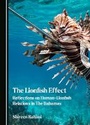
The Indo-Pacific lionfish is the highest-profile marine invasive species in the world. In The Bahamas, lionfish have developed particularly high population densities and are thought to pose a significant threat to the nation's marine biodiversity and native fisheries given their insatiable appetite for other fish. Differing dominant narratives surrounding the lionfish issue in The Bahamas show that this invasive fish is not only an environmental issue, but also an undoubtedly political one. In this book, author Shireen Rahimi explores the dominant discourses surrounding lionfish and efforts to promote their killing and consumption in The Bahamas, as well as how different groups there (including foreign tourists, Bahamian nationals, and Haitian immigrants) encounter and relate to these invasive animals. The issue of lionfish reveals how societies are adapting to novel ecosystems given new understandings of the human role in driving large-scale planetary change, and how these adaptations are mediated by class, race, and the flow of power.
More details
Other editions
Additional editions
Book
06/2025
Cambridge Scholars Publishing
€104.17
Shipment within 15-20 days
Person
Author
Dr Shireen Rahimi is a visual storyteller and environmental anthropologist whose work focuses on the stories of people who engage with our rapidly changing planet. She received her PhD from the University of Miami Abess Center for Ecosystem Science and Policy, USA, and her Bachelor of Science in Environmental Biology from Columbia University, USA. Rahimi uses ethnography, photography, and film to study sites where marine nature and culture intersect. She has published visual and journalistic work in the Miami Herald, National Geographic, Sierra Magazine, and Nature Conservancy Magazine, and her academic work in Marine Policy. Rahimi tells stories about human adaptations to environmental change-stories that are relatable, emotional, visceral, and character-focused-to help us reimagine our collective relationship with the natural world.