

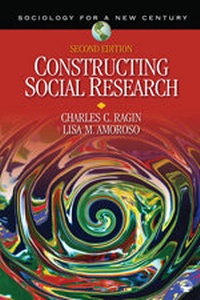
Constructing Social Research
The Unity and Diversity of Method
2nd Edition
Published on 14. September 2010
Book
Paperback/Softback
248 pages
978-1-4129-6018-2 (ISBN)
Description
Constructing Social Research, Second Edition is a concise, innovative text designed for undergraduate Research Methods courses in the Social Sciences. This Sociology for a New Century Series text effectively highlights the unity and diversity of methods across disciplines and cultures using comparative and historical examples. Ragin and Amoroso clearly demonstrate the similarities among three major traditions: qualitative research on commonalities, comparative research on diversity, and quantitative research on relationships among variables. Together, these three compelling research strategies provide a solid foundation for studying all social phenomena, from examining the complexities of everyday life to investigating the power of transnational processes.
New to This Edition
- This edition includes a new Chapter 4 "The Ethics of Social Research" to provide more in-depth information on this vital topic
- Ragin and Amoroso offer a new succinct overview of the scientific method, illuminating the contrast between this method and the alternative presented in the text
- To illustrate the various types of data collection associated with qualitative, comparative, and quantitative research, each chapter within the "Strategies of Social Research" section includes new, detailed examples.
New to This Edition
- This edition includes a new Chapter 4 "The Ethics of Social Research" to provide more in-depth information on this vital topic
- Ragin and Amoroso offer a new succinct overview of the scientific method, illuminating the contrast between this method and the alternative presented in the text
- To illustrate the various types of data collection associated with qualitative, comparative, and quantitative research, each chapter within the "Strategies of Social Research" section includes new, detailed examples.
More details
Series
Edition
2nd Revised edition
Language
English
Place of publication
Thousand Oaks
United States
Target group
College/higher education
Edition type
Revised edition
Dimensions
Height: 229 mm
Width: 152 mm
Weight
340 gr
ISBN-13
978-1-4129-6018-2 (9781412960182)
Copyright in bibliographic data and cover images is held by Nielsen Book Services Limited or by the publishers or by their respective licensors: all rights reserved.
Schweitzer Classification
Other editions
New editions
Book
06/2018
3rd Edition
SAGE Publications Inc
€84.70
Shipment within 10-20 days
Persons
Charles C. Ragin spent most of his youth in Texas and the southeastern United States. He attended the University of Texas at Austin as an undergraduate and received his BA degree in 1972 at the age of 19. That same year he began graduate work in sociology at the University of North Carolina at Chapel Hill and received his PhD in 1975. From 1975 until 2001, he lived in the Midwest, teaching first at Indiana University and then at Northwestern University. He headed west in 2001, where he spent just over a decade at University of Arizona-Tucson. In 2012, he joined the faculty at the University of California-Irvine, where he is currently the Chancellor's Professor of Sociology. He is best known for developing a methodological alternative to conventional research methods, using formal set-theoretic techniques for comparative research. His many publications address broad issues in politics and society, with topics ranging from the causes of ethnic political mobilization to the shaping of the welfare state in advanced capitalist countries. He has written several books including Intersectional Inequality: Race, Class, Test Scores and Poverty (with Peer Fiss, 2017). Redesigning Social Inquiry: Fuzzy Sets and Beyond (2008) Fuzzy-Set Social Science (2000). His book The Comparative Method: Moving Beyond Qualitative and Quantitative Strategies (1987) won the 1989 Stein Rokkan Prize of the International Social Science Council of UNESCO. In 2014 he received the Paul F. Lazarsfeld Award of the American Sociological Association. He is married to Mary Driscoll, and they have two sons, Andrew and Daniel.
Lisa M. Amoroso spent her childhood in Pittsburgh and the suburbs of Chicago. She attended Northwestern University for her BA in economics and mathematical methods in the social sciences. After working in software development and management systems, she returned to Northwestern and the Kellogg School of Management, where she completed her PhD in a joint program in sociology and organization behavior in 2003. Since leading her first seminar at Northwestern in 1997, she has been teaching in the Midwest-at Northwestern, Beloit College, Roosevelt University, and currently Dominican University in River Forest, Illinois. Research methods and quantitative analysis are among her favorite courses to teach. In 2010, she joined Dominican's Brennan School of Business where she is a Professor of Management. She received Excellence in Teaching awards at Roosevelt in 2007 and at the Brennan School of Business in 2016. Although her primary focus is teaching, she publishes research on diversity education, social identity, status hierarchies, and student learning. She has published in variety of journals including Psychological Inquiry and Journal of Management Education. She is married to Phil Tracy, and they have two children, Nate and Carmen.
Lisa M. Amoroso spent her childhood in Pittsburgh and the suburbs of Chicago. She attended Northwestern University for her BA in economics and mathematical methods in the social sciences. After working in software development and management systems, she returned to Northwestern and the Kellogg School of Management, where she completed her PhD in a joint program in sociology and organization behavior in 2003. Since leading her first seminar at Northwestern in 1997, she has been teaching in the Midwest-at Northwestern, Beloit College, Roosevelt University, and currently Dominican University in River Forest, Illinois. Research methods and quantitative analysis are among her favorite courses to teach. In 2010, she joined Dominican's Brennan School of Business where she is a Professor of Management. She received Excellence in Teaching awards at Roosevelt in 2007 and at the Brennan School of Business in 2016. Although her primary focus is teaching, she publishes research on diversity education, social identity, status hierarchies, and student learning. She has published in variety of journals including Psychological Inquiry and Journal of Management Education. She is married to Phil Tracy, and they have two children, Nate and Carmen.
Content
Foreword
Preface
PART I Elements of Social Research
1 What is Social Research?
Introduction
Some Conventional Views of Social Research
Social Research and Other Ways of Representing Social Life
Social Research Defined
Journalism and Social Research: The Similarities
How Social Research Differs
2 The Goals of Social Research
Introduction
The Seven Main Goals
The Link between Goals and Strategies
The Social Nature of Social Research
3 The Process of Social Research: Ideas and Evidence
Introduction
The Interpretive Model of Social Research
Processes and Strategies of Social Research
The Challenge of Social Research
4 The Ethics of Social Research
Introduction
Ethical Dilemmas and Failures
The Troublesome History of Ethical Research
The Current Ethical Standards and Institutional Oversight
Ethical and Professional Dilemmas Facing Social Researchers
PART II Strategies of Social Research
5 Using Qualitative Methods to Study Commonalities
Introduction
The Goals of Qualitative Research
The Process of Qualitative Research
Using Qualitative Methods
The Study of a Single Case
6 Using Comparative Methods to Study Diversity
Introduction
Contrasts with Other Research Strategies
The Goals of Comparative Research
The Process of Comparative Research
Using Comparative Methods
7 Using Quantitative Methods to Study Covariation
Introduction
Contrasts with Other Research Strategies
The Goals of Quantitative Research
The Process of Quantitative Research
Using Quantitative Methods
AFTERWORD: The Promise of Social Research with Mary Driscoll
APPENDIX: Computing Correlation Coefficients
References
Glossary/Index
Preface
PART I Elements of Social Research
1 What is Social Research?
Introduction
Some Conventional Views of Social Research
Social Research and Other Ways of Representing Social Life
Social Research Defined
Journalism and Social Research: The Similarities
How Social Research Differs
2 The Goals of Social Research
Introduction
The Seven Main Goals
The Link between Goals and Strategies
The Social Nature of Social Research
3 The Process of Social Research: Ideas and Evidence
Introduction
The Interpretive Model of Social Research
Processes and Strategies of Social Research
The Challenge of Social Research
4 The Ethics of Social Research
Introduction
Ethical Dilemmas and Failures
The Troublesome History of Ethical Research
The Current Ethical Standards and Institutional Oversight
Ethical and Professional Dilemmas Facing Social Researchers
PART II Strategies of Social Research
5 Using Qualitative Methods to Study Commonalities
Introduction
The Goals of Qualitative Research
The Process of Qualitative Research
Using Qualitative Methods
The Study of a Single Case
6 Using Comparative Methods to Study Diversity
Introduction
Contrasts with Other Research Strategies
The Goals of Comparative Research
The Process of Comparative Research
Using Comparative Methods
7 Using Quantitative Methods to Study Covariation
Introduction
Contrasts with Other Research Strategies
The Goals of Quantitative Research
The Process of Quantitative Research
Using Quantitative Methods
AFTERWORD: The Promise of Social Research with Mary Driscoll
APPENDIX: Computing Correlation Coefficients
References
Glossary/Index