

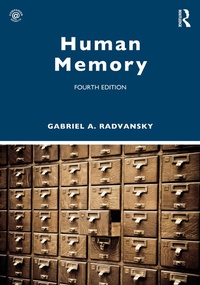
Human Memory
4th Edition
Published on 31. March 2021
Book
Paperback/Softback
656 pages
978-0-367-25292-2 (ISBN)
Description
Human Memory, 4th edition, provides a comprehensive overview of research and theory on human memory. Written in an engaging style, the book is divided into three sections, providing an accessible introduction to the application and assessment of memory theory. Beginning with the history of memory, the first section explores basic methodology and neuroscience. The second section examines the key topics of memory such as the sensory registers, mechanisms of forgetting and short-term, nondeclarative, episodic, and semantic memory. The third section focuses on specialist topics such as amnesia, memory for space and time, autobiographical memory, memory and reality, memory and the law, metamemory and formal models of memory. Instructors could pick and chose which of these chapters best fit the goals of their course.
New to this edition:
More prominent discussion of neuroscience findings.
Coverage of a wider range of neuroscientific techniques.
Greater emphasis on memory changes over time.
New explanation of how to calculate a wider range of signal detection measures.
Additional content on a wide range of topics including the mirror effect, sleep-related memory processes, vicarious autobiographical memories, inter-generational memory transmission, the impact of lying on memory, eyewitness collaboration, and aging and spatial memory.
Expanded coverage of areas including theories of hypermnesia, chunking, serial order memory, prospective memory, threshold models, and eyewitness line-up identification.
Updated companion resources, including PowerPoint slides and exam questions.
The book highlights the application of memory theory and findings to everyday experience, presents in-depth explorations of studies, and provides opportunities for students to explore the assessment of memory in more laboratory-based settings. Packed full of student-friendly pedagogy including study questions, Stop and Review and Try it Out sections, Study in Depth text boxes, and more, Human Memory, 4th edition is an essential companion for all students of human memory.
New to this edition:
More prominent discussion of neuroscience findings.
Coverage of a wider range of neuroscientific techniques.
Greater emphasis on memory changes over time.
New explanation of how to calculate a wider range of signal detection measures.
Additional content on a wide range of topics including the mirror effect, sleep-related memory processes, vicarious autobiographical memories, inter-generational memory transmission, the impact of lying on memory, eyewitness collaboration, and aging and spatial memory.
Expanded coverage of areas including theories of hypermnesia, chunking, serial order memory, prospective memory, threshold models, and eyewitness line-up identification.
Updated companion resources, including PowerPoint slides and exam questions.
The book highlights the application of memory theory and findings to everyday experience, presents in-depth explorations of studies, and provides opportunities for students to explore the assessment of memory in more laboratory-based settings. Packed full of student-friendly pedagogy including study questions, Stop and Review and Try it Out sections, Study in Depth text boxes, and more, Human Memory, 4th edition is an essential companion for all students of human memory.
Reviews / Votes
"Human Memory has an unconventional and appealing organization. It covers critical topics that are omitted from most textbooks and weaves historical and modern research together into a format that will serve well for both beginning and advanced study of the topic. Most importantly, it covers both the theoretical and the applied side of human memory research, making it a valuable resource for understanding how and where the formal study of human memory fits into the social sciences more broadly." - Aaron S. Benjamin, University of Illinois at Urbana-Champaign, U.S.A."This is an impressive text: Comprehensive, well-written and sure to be a winner. Radvansky provides a great blend of classic and contemporary research and the pedagogical features built into the book will be helpful for students." - Henry L. Roediger III, Washington University in St. Louis, U.S.A. "Human Memory has an unconventional and appealing organization. It covers critical topics that are omitted from most textbooks and weaves historical and modern research together into a format that will serve well for both beginning and advanced study of the topic. Most importantly, it covers both the theoretical and the applied side of human memory research, making it a valuable resource for understanding how and where the formal study of human memory fits into the social sciences more broadly." - Aaron S. Benjamin, University of Illinois at Urbana-Champaign, U.S.A.
"This is an impressive text: Comprehensive, well-written and sure to be a winner. Radvansky provides a great blend of classic and contemporary research and the pedagogical features built into the book will be helpful for students." - Henry L. Roediger III, Washington University in St. Louis, U.S.A.
More details
Edition
4th edition
Language
English
Place of publication
London
United Kingdom
Publishing group
Taylor & Francis Ltd
Target group
College/higher education
Illustrations
217 farbige Abbildungen, 37 Farbfotos bzw. farbige Rasterbilder, 165 farbige Zeichnungen, 15 farbige Tabellen
15 Tables, color; 165 Line drawings, color; 37 Halftones, color; 217 Illustrations, color
Dimensions
Height: 252 mm
Width: 176 mm
Thickness: 35 mm
Weight
1550 gr
ISBN-13
978-0-367-25292-2 (9780367252922)
Copyright in bibliographic data and cover images is held by Nielsen Book Services Limited or by the publishers or by their respective licensors: all rights reserved.
Schweitzer Classification
Other editions
New editions
Additional editions
Gabriel A. Radvansky
Human Memory
Book
03/2021
4th Edition
Routledge
€216.65
Article exhausted; check for reprint
Previous edition
Book
01/2016
3rd Edition
Routledge
€148.55
Article exhausted; check for reprint
Person
Gabriel A. Radvansky received his BA from Cleveland State University under the supervision of Mark Ashcraft and Ben Wallace, and his MA and PhD from Michigan State University in 1992 under the supervision of Rose T. Zacks. He has been a faculty member in the Department of Psychology at the University of Notre Dame since 1993. He is an expert in human memory with over 100 publications. He has served as associated editor for the journals Memory & Cognition, the Quarterly Journal of Experimental Psychology, and Collabra.
Content
Background
Chapter 1 Overview and History of Memory Research
Chapter 2 Neuroscience of Memory
Chapter 3 Methods and Principles
Core Memory Topics
Chapter 4 Sensory and Short-Term Memory
Chapter 5 Working Memory
Chapter 6 Nondeclarative Memory
Chapter 7 Episodic Memory: Past and Future
Chapter 8 Forgetting
Chapter 9 Semantic Memory
Special Topics in Memory
Chapter 10 Forms of Amnesia
Chapter 11 Memory for Space and Time
Chapter 12 Autobiographical Memory
Chapter 13 Memory and Reality
Chapter 14 Memory and the Law
Chapter 15 Metamemory
Chapter 16 Memory in Infancy and Childhood
Chapter 17 Memory and Aging
Chapter 18 Formal Models of Memory
Chapter 1 Overview and History of Memory Research
Chapter 2 Neuroscience of Memory
Chapter 3 Methods and Principles
Core Memory Topics
Chapter 4 Sensory and Short-Term Memory
Chapter 5 Working Memory
Chapter 6 Nondeclarative Memory
Chapter 7 Episodic Memory: Past and Future
Chapter 8 Forgetting
Chapter 9 Semantic Memory
Special Topics in Memory
Chapter 10 Forms of Amnesia
Chapter 11 Memory for Space and Time
Chapter 12 Autobiographical Memory
Chapter 13 Memory and Reality
Chapter 14 Memory and the Law
Chapter 15 Metamemory
Chapter 16 Memory in Infancy and Childhood
Chapter 17 Memory and Aging
Chapter 18 Formal Models of Memory