

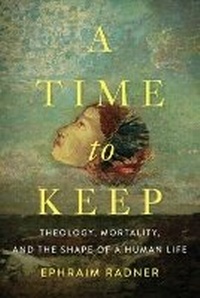
A Time to Keep
Theology, Mortality, and the Shape of a Human Life
Published on 1. July 2016
Book
Hardback
304 pages
978-1-4813-0506-8 (ISBN)
Description
The miracle of birth and the mystery of death markhuman life. Mortality, like a dark specter, looms over all that lies in between. Human character, behavior, aims, and community are all inescapably shaped by this certainty of human ends. Mortality, like an unwanted guest, intrudes, becoming a burden and a constant struggle. Mortality, like a thief who steals, even threatens the ability to live life rightly. Life is short. Death is certain. Mortality, at all costs, should be resisted or transcended. In A Time to Keep Ephraim Radner revalues mortality, reclaiming it as God's own. Mortality should notbe resisted butreceived. Radner reveals mortality's true nature as a gift, God's gift, and thus reveals that the many limitations that mortality imposes should be celebrated. Radner demonstrates how faithfulnessaand not resignation, escape, denial, redefinition, or excessais the proper response to the gift of humanity's temporal limitation. To live rightly is to recognize and then willingly accept life's limitations. In chapters on sex and sexuality, singleness and family, education and vocation, andapanoply of end of life issues, A Time to Keep plumbs the depths of the secularimagination, uncovering the constantstrugglewith human finitudein its myriadforms. Radner shows thatby wrongly positioningcreaturely mortality, these parts of human experience havereceivedan inadequate reckoning. A Time to Keep retrieves the most basic confession of the Christian faith, that life is God's, which Radner offers as grace, asthe basis for a Christian understanding of human existence bound by its origin and telos. Thepossibilityand purposeof what comes between birth and deathisorderedby the pattern of Scripture,but isperformed faithfully onlyin obedience to thelimits that bind it.
Reviews / Votes
For pointing to the fundamental nature of finitude and creatureliness and for writing in a manner manifesting that very mode of being, we are in Radner's debt. The book is commended, though the reader must be warned that, as in life, time will be taken to assimilate it. -- Michael Allen -- Reading Religion Radner's prose is thoughtful, and he clearly names the complexities of contemporary life and presents a rich vision of the ways in which Christian wisdom calls humans to lives of meaning and purpose amid finitude. -- Choice Anything written by Ephraim Radner can be guaranteed to be serious, constructively difficult, spiritually challenging and original, and this book is no exception...This establishes Radner as not only an unusually profound analyst of ecclesial and ecclesiological issues (his previous books have shown that in abundance), not only a theological essayist of near-genius, but a truly systematic theologian in the best sense, someone who can connect the great themes of dogmatic orthodoxy and scriptural figure to the challenges of our culture, which seems increasingly adrift from any idea of what common humanity--let alone common created identity--might amount to. -- Rowan Williams -- The Living Church A formidable book repaid by a second reading -- Jeremy James -- Expository Times Wide and expansive, sure to command the attention of scholars for years, even decades, to come. -- J. Todd Billings -- First ThingsMore details
Language
English
Place of publication
Waco
United States
Target group
Professional and scholarly
Dimensions
Height: 228 mm
Width: 152 mm
Weight
614 gr
ISBN-13
978-1-4813-0506-8 (9781481305068)
Copyright in bibliographic data and cover images is held by Nielsen Book Services Limited or by the publishers or by their respective licensors: all rights reserved.
Schweitzer Classification
Other editions
Additional editions
E-Book
07/2016
Baylor University Press
€38.99
Available for download
Person
Ephraim Radner is Professor of Historical Theology at Wycliffe College at the University of Toronto. He is the author or editor of seven books, including The Fate of Communion: The Agony of Anglicanism and the Future of a Global Church and Hope Among the Fragments: The Broken Church and Its Engagement of Scripture. He lives in Toronto, Ontario.
Content
Preface: Recovering the Context of Life 1. Clocks, Skins, and Mortality 2. How Life Is Measured 3. Death and Filiation 4. The Arc of Life 5. The Vocation of Singleness 6. Working and Eating Conclusion: The Churchas Vocation to Number Our Days Notes Scripture Index General Index