


Panic Disorder
Published on 5. September 1996
Book
Paperback/Softback
108 pages
978-0-19-262738-4 (ISBN)
Description
This text deals with a relatively common psychological problem - panic disorder. A panic disorder is a sudden episode of intense fear, often bordering on terror. Repeated attacks of panic are termed "panic disorder". Roughly 15 people per 1000 develop a panic disorder at some time in their life. It is a distressing condition, and if it persists, has an adverse effect on most aspects of the person's life. In this book, the authors give a lucid and detailed account of the disorder. This book is mainly intended for the sufferes of panic disorder, and their families and friends. It will also be of interest to the general reader, and to health care workers who have to deal with this problem. Up-to-date information on the nature, symptoms, causes, theories and treatment of panic disorder is provided, all in non-technical language. The chapters on treatment give an account of psychological therapy, and also discuss drug treatment. There is also a chapter giving practical self-help advice. A final chapter answers some commonly asked questions. Personal accounts are given throughout the book, highlighting various aspects of panic disorder and its treatment.
More details
Series
Language
English
Place of publication
Oxford
United Kingdom
Publishing group
Oxford University Press
Product notice
Paperback (UK-B)
Illustrations
line figures, tables, bibliography
Dimensions
Height: 196 mm
Width: 129 mm
Weight
124 gr
ISBN-13
978-0-19-262738-4 (9780192627384)
Copyright in bibliographic data is held by Nielsen Book Services Limited or its licensors: all rights reserved.
Schweitzer Classification
Other editions
New editions
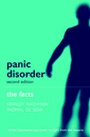
Book
01/2004
2nd Edition
Oxford University Press
€14.84
Article exhausted; check for reprint
Content
1. Panic and panic disorder; 2. The experience of panic; 3. Facts about panic; 4. The consequences of panic; 5. Theories of panic disorder; 6. Treatment; 7. Assessment; 8. Evaluation; 9. Obstacles and complications; 10. Practical advice; 11. Common questions answered