

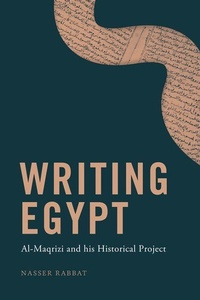
Writing Egypt
Al-Maqrizi and his Historical Project
Published on 12. January 2023
Book
Hardback
332 pages
978-1-3995-0281-8 (ISBN)
Description
Although al-Maqrizi is recognised as the most influential historian of pre-modern Egypt, he has never received the probing historical treatment warranted by his standing and scholarly output. This book fills that gap. Arranged in three sections, it tells al-Maqrizi's life story in the first, weaves it with historiographical, textual and methodological analysis of his oeuvre in the second, and reconstructs the afterlife of the author and his work down to the present in the third part.
al-Maqrizi is presented both as a man of his age who forged a distinct and unique scholarly persona and a historian with a structured and principled project aiming to reconstruct the history of Islamic Egypt in all its facets. His, however, was a critical stance with moral overtones, conceived from within the epistemological framework of a medieval Muslim thinker, which ensured not only his reputation in his own historiographical tradition, but also his reclamation in the modern Egyptian consciousness as one of the most original voices of Egypt.
al-Maqrizi is presented both as a man of his age who forged a distinct and unique scholarly persona and a historian with a structured and principled project aiming to reconstruct the history of Islamic Egypt in all its facets. His, however, was a critical stance with moral overtones, conceived from within the epistemological framework of a medieval Muslim thinker, which ensured not only his reputation in his own historiographical tradition, but also his reclamation in the modern Egyptian consciousness as one of the most original voices of Egypt.
Reviews / Votes
This will be Rabbat's magnum opus. The culmination of the author's career-long devotion to al-Maqrizi's work, Writing Egypt is a very human assessment of the life and scholarship of one of the most influential historians of the medieval Islamic world. This beautiful work, which has one foot in Mamluk Studies and the other in historical biography, carefully examines historical craft, vividly portrays daily life in medieval Cairo, and raises important questions about identity-making in modern Egypt. -- Bethany J. Walker, University of Bonn In writing al-Maqrizi and his Egypt, Nasser Rabbat deploys the full extent of his sympathy, expertise, skills, and cultural and academic knowledge to weave a remarkably detailed tapestry that goes beyond the traditional biography of "the great man and his work." -- Dana Sajdi, Boston College In this exhaustive portrait, al-Maqrizi, the person, the moralist, and the historian, comes to life. It also serves as a fundamental bibliographical guide to Egyptian urban history. For anyone interested in writing about place and yearning in general, the carefully charted trajectory of al-Maqrizi's monumental project and its impact on Ottoman historiography, Orientalism, and modern Egyptian historical writing is informative and inspirational. -- Li Guo, University of Notre Dame This intellectual biography of al-Maqrizi is a masterpiece. One of the best assessments of an Arab intellectual to appear this decade. The work of Professor Rabbat will set the standard for biographical scholarly work on Mamluk scholars. The arch of the work is unique in modern scholarship. It excavates the author from his massive works and situates him in his environment. But more importantly, Rabbat follows the impact of the works of this scholar up to the present. This is a magisterial work. A must read for anyone interested in the intellectual history of Islam. -- Walid Saleh, University of Toronto Well-organized and written in simple and clear language, Nasser Rabbat's book is an excellent synthesis of our knowledge of al-Maqrizi. -- Pascal Buresi * Arabica * Writing Egypt is a study of a sophisticated medieval Arab intellectual, a lifetime's work that at times makes for challenging reading. Though a Mamlukist myself, I found much of the content new and difficult, yet still most welcome. -- Robert Irwin * Times Literary Supplement *More details
Language
English
Place of publication
Edinburgh
United Kingdom
Target group
Professional and scholarly
Product notice
sewn/stitched
Cloth over boards
Dimensions
Height: 237 mm
Width: 162 mm
Thickness: 26 mm
Weight
666 gr
ISBN-13
978-1-3995-0281-8 (9781399502818)
Copyright in bibliographic data and cover images is held by Nielsen Book Services Limited or by the publishers or by their respective licensors: all rights reserved.
Schweitzer Classification
Other editions
Additional editions
E-Book
11/2022
1st Edition
Edinburgh University Press
€32.99
Available for download
E-Book
11/2022
1st Edition
Edinburgh University Press
€32.99
Available for download
Person
Nasser Rabbat is Aga Khan Professor and Director of the Aga Khan Program for Islamic Architecture at MIT.
Content
Foreword
Introduction
Part 1: The Life of al-Maqrizi
Chapter 1: The Formative Years
The Sources on al-Maqrizi's Life
A Family of Scholars
The Loving Presence of Women in al-Maqrizi's Life
A Solid Scholarly Formation
Ibn Khaldun: Teacher and Interlocutor
A Glorious Lineage?
Al-Maqrizi's Representation of the Fatimids
Chapter 2: Career, Moral Crisis, and Withdrawal
A Question of Madhhab?
Building a Career
Quest for Patrons
The Hisba Saga
Rivalry with Badr al-Din al-'Ayni
The Damascus Interlude
The Beginning of Estrangement
Last Attempts at Finding Patronage?
Withdrawal
Death
Part 2: The Writing of al-Maqrizi
Chapter 3: Harvest of a Lifetime
A Tentative Inventory of al-Maqrizi's Works
Notebooks and Abridgments: A Window into al-Maqrizi's Sourcing Method
The Beginnings: From Abridger to Author
The Concept of Kharab: Looking Back as Method
The History of Egypt: An Integrated Project
Chapter 4: The Khitat: History and Belonging
The Khitat: A Cumulative Book?
Al-Mawa'iz wa-l-I'tibar: What's in a Title
Al-Maqrizi's Notion of History
Khitat and Athar: The Totality of the Urban Space
The Patriotic Impulse
Structuring the Khitat on the Tempo of Ruination
Al-Maqrizi and the Khaldunian Cyclical History
Part 3: The Afterlife of al-Maqrizi's Writing
Chapter 5: Al-Maqrizi and the Orientalists
The Khitat as Urban History
Al-Maqrizi and the Ottomans
Al-Maqrizi, Napoleon, and the Early Orientalists
Arabic Editions of al-Maqrizi's Khitat
Translating al-Maqrizi's Khitat
Re-Editing al-Maqrizi
Chapter 6: Reading al-Maqrizi in Modern Egypt
Al-Maqrizi's Readers on the Eve of the Nahda: al-Jabarti and Hasan al-'Attar
Publishing al-Maqrizi's Khitat
Reviving the Khitat Genre: 'Ali Mubarak and Muhammad Kurd'ali
Architectural History Comes to Egypt: From Coste to Creswell
Nationalist Egyptian Architectural History: 'Abdel-Wahab, Fikri, and Shafe'i
Al-Maqrizi in the Modern Narratives of Cairo: Mahfouz and al-Ghitani
Al-Maqrizi in the Egyptian Consciousness: Shalabi and Surur
In the Guise of a Conclusion
Bibliography
?
Introduction
Part 1: The Life of al-Maqrizi
Chapter 1: The Formative Years
The Sources on al-Maqrizi's Life
A Family of Scholars
The Loving Presence of Women in al-Maqrizi's Life
A Solid Scholarly Formation
Ibn Khaldun: Teacher and Interlocutor
A Glorious Lineage?
Al-Maqrizi's Representation of the Fatimids
Chapter 2: Career, Moral Crisis, and Withdrawal
A Question of Madhhab?
Building a Career
Quest for Patrons
The Hisba Saga
Rivalry with Badr al-Din al-'Ayni
The Damascus Interlude
The Beginning of Estrangement
Last Attempts at Finding Patronage?
Withdrawal
Death
Part 2: The Writing of al-Maqrizi
Chapter 3: Harvest of a Lifetime
A Tentative Inventory of al-Maqrizi's Works
Notebooks and Abridgments: A Window into al-Maqrizi's Sourcing Method
The Beginnings: From Abridger to Author
The Concept of Kharab: Looking Back as Method
The History of Egypt: An Integrated Project
Chapter 4: The Khitat: History and Belonging
The Khitat: A Cumulative Book?
Al-Mawa'iz wa-l-I'tibar: What's in a Title
Al-Maqrizi's Notion of History
Khitat and Athar: The Totality of the Urban Space
The Patriotic Impulse
Structuring the Khitat on the Tempo of Ruination
Al-Maqrizi and the Khaldunian Cyclical History
Part 3: The Afterlife of al-Maqrizi's Writing
Chapter 5: Al-Maqrizi and the Orientalists
The Khitat as Urban History
Al-Maqrizi and the Ottomans
Al-Maqrizi, Napoleon, and the Early Orientalists
Arabic Editions of al-Maqrizi's Khitat
Translating al-Maqrizi's Khitat
Re-Editing al-Maqrizi
Chapter 6: Reading al-Maqrizi in Modern Egypt
Al-Maqrizi's Readers on the Eve of the Nahda: al-Jabarti and Hasan al-'Attar
Publishing al-Maqrizi's Khitat
Reviving the Khitat Genre: 'Ali Mubarak and Muhammad Kurd'ali
Architectural History Comes to Egypt: From Coste to Creswell
Nationalist Egyptian Architectural History: 'Abdel-Wahab, Fikri, and Shafe'i
Al-Maqrizi in the Modern Narratives of Cairo: Mahfouz and al-Ghitani
Al-Maqrizi in the Egyptian Consciousness: Shalabi and Surur
In the Guise of a Conclusion
Bibliography
?