

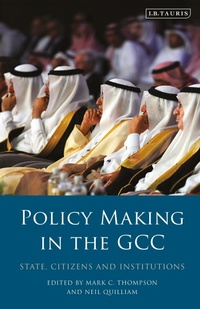
Policy-Making in the GCC
State, Citizens and Institutions
Published on 31. October 2019
Book
Paperback/Softback
368 pages
978-1-83860-702-9 (ISBN)
Description
The GCC is a major player in the post-2011 reordering of the Middle East. Despite the rise in prominence of individual Gulf states - especially Kuwait, Qatar, Saudi Arabia and the United Arab Emirates - and the growth of the GCC as a collective entity, surprisingly little attention has been paid to the actual mechanics of policy-making in the region. This book analyses the vital role that institutions are coming to play in shaping policy in the Gulf Arab states. The research coincides with two key developments that have given institutions new importance in the policy process: the emergence of a new generation of leaders in the Gulf, and the era of low oil prices. Both developments, along with dramatic demographic change, have compelled state and citizens to re-evaluate the nature of the social contract that binds them together. Contributors assess the changing relationship between state and citizen and evaluate the role that formal and informal institutions play in mediating such change and informing policy.The book shows how academic, social and economic institutions are responding to the increasingly complex process of decision-making, where citizens demand better services and further empowerment, and states are obliged to seek wider counsel, although wanting to retain ultimate authority.
With contributions from both academics and practitioners, this book will be highly relevant for researchers and policymakers alike.
With contributions from both academics and practitioners, this book will be highly relevant for researchers and policymakers alike.
More details
Language
English
Place of publication
United Kingdom
Publishing group
Bloomsbury Publishing PLC
Target group
College/higher education
Dimensions
Height: 138 mm
Width: 217 mm
Thickness: 21 mm
Weight
482 gr
ISBN-13
978-1-83860-702-9 (9781838607029)
Copyright in bibliographic data and cover images is held by Nielsen Book Services Limited or by the publishers or by their respective licensors: all rights reserved.
Schweitzer Classification
Other editions
Additional editions
E-Book
09/2017
1st Edition
I.B. Tauris
€38.49
Available for download
Persons
Mark C. Thompson is Assistant Professor of Middle East Studies at King Fahd University of Petroleum and Minerals in Dhahran, Saudi Arabia. He is also Senior Associate Fellow at the King Faisal Center for Research and Islamic Studies in Riyadh. His publications include Saudi Arabia and the Path to Political Change: National Dialogue and Civil Society (2014) and articles in the Journal of Arabian Studies; Asian Affairs; Middle Eastern Studies; and Diplomacy and Statecraft.
Neil Quilliam is Senior Research Fellow in the Middle East and North Africa Programme at Chatham House, The Royal Institute of International Affairs, London. He also serves as Director for Strategic Advisory Services at Rapidan Group, an energy consultancy. Quilliam is an expert in international relations of the Middle East and focuses on the Gulf Arab states, Syria and Lebanon. Recent publications include a contribution to the book Saudi Arabian Foreign Policy: Conflict and Cooperation (2016) and an article in the journal East Asia (2015). He advises European governments on foreign policy issues and energy companies with operations in the region.
Neil Quilliam is Senior Research Fellow in the Middle East and North Africa Programme at Chatham House, The Royal Institute of International Affairs, London. He also serves as Director for Strategic Advisory Services at Rapidan Group, an energy consultancy. Quilliam is an expert in international relations of the Middle East and focuses on the Gulf Arab states, Syria and Lebanon. Recent publications include a contribution to the book Saudi Arabian Foreign Policy: Conflict and Cooperation (2016) and an article in the journal East Asia (2015). He advises European governments on foreign policy issues and energy companies with operations in the region.
Content
Introduction and Overview
Mark C. Thompson and Neil Quilliam
PART 1: THE STATE AND E-GOVERNMENT
1 Identity and State in the Gulf: The Case of Kuwait
Shafeeq Ghabra
2 Saudi Arabia's Support for International Development
Mehtab Currey, Abdullah Al Shoaibi and Nassir Al Kasabi
3 GCC Governments Responding to Public Needs through E-government: Progress and Limitations of Public Administration Reform
Sherif Fawzi Abdel Gawad and Maggie Kamel
4 Governance, Participation and ICT: Assessing the Role of E-Government in the State of Qatar
Rhea Abraham
PART 2: CITIZENS: ECONOMY AND LABOUR ISSUES
5 Economic Diversification and the Emergence of Inclusive Economic Institutions in the Gulf Cooperation Council States
I-Tsung Tsai and Abdullah Kaya
6 Youth Employability and its Cultural and Institutional Context: Do Current Institutions and Policies Promote or Prevent Greater Productivity and Positivity within Local Labour Markets Towards the Knowledge-Based Economies of the Future?
David Jones, Radhika Punshi and Gauri Gupta
7 A Review and Critique of the Saudisation Metanarrative: Bringing 'the Citizen' into Focus
Faisal Kattan
PART 3: INSTITUTIONAL PROCESSES
8 Institutional Processes and Gender Issues: The Women's Cultural and Social Society as an Agent of Change in Kuwaiti Politics
Alanoud Alsharekh
9 The Rise and Role of State Philanthropy in the United Arab Emirates
Natasha Ridge and Susan Kippels
10 The Role of Private, Non-Government Organisations and New State Institutions in the Gulf in the Development of Civil Society: The Example of Saudi Arabia
Adam Kulach
Bibliography
Contributors
Index
Mark C. Thompson and Neil Quilliam
PART 1: THE STATE AND E-GOVERNMENT
1 Identity and State in the Gulf: The Case of Kuwait
Shafeeq Ghabra
2 Saudi Arabia's Support for International Development
Mehtab Currey, Abdullah Al Shoaibi and Nassir Al Kasabi
3 GCC Governments Responding to Public Needs through E-government: Progress and Limitations of Public Administration Reform
Sherif Fawzi Abdel Gawad and Maggie Kamel
4 Governance, Participation and ICT: Assessing the Role of E-Government in the State of Qatar
Rhea Abraham
PART 2: CITIZENS: ECONOMY AND LABOUR ISSUES
5 Economic Diversification and the Emergence of Inclusive Economic Institutions in the Gulf Cooperation Council States
I-Tsung Tsai and Abdullah Kaya
6 Youth Employability and its Cultural and Institutional Context: Do Current Institutions and Policies Promote or Prevent Greater Productivity and Positivity within Local Labour Markets Towards the Knowledge-Based Economies of the Future?
David Jones, Radhika Punshi and Gauri Gupta
7 A Review and Critique of the Saudisation Metanarrative: Bringing 'the Citizen' into Focus
Faisal Kattan
PART 3: INSTITUTIONAL PROCESSES
8 Institutional Processes and Gender Issues: The Women's Cultural and Social Society as an Agent of Change in Kuwaiti Politics
Alanoud Alsharekh
9 The Rise and Role of State Philanthropy in the United Arab Emirates
Natasha Ridge and Susan Kippels
10 The Role of Private, Non-Government Organisations and New State Institutions in the Gulf in the Development of Civil Society: The Example of Saudi Arabia
Adam Kulach
Bibliography
Contributors
Index