

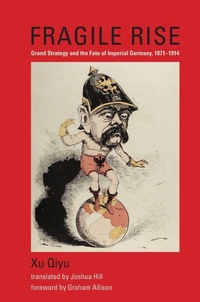
Fragile Rise
Grand Strategy and the Fate of Imperial Germany, 1871-1914
Published on 31. October 2023
Book
Paperback/Softback
368 pages
978-0-262-54973-8 (ISBN)
Description
Germany's rise to power before World War I from a Chinese persective, and the geopolitical lessons for today.
A series of solemn anniversary events have marked the centenary of World War I. Could history repeat itself in today's geopolitics? Now, as then, a land power with a growing economy and a maritime power with global commitments are the two leading states in the international system. Most ominously, the outbreak of war in 1914 is a stark reminder that nations cannot rely on economic interdependence and ongoing diplomacy to keep the peace.
In Fragile Rise, Xu Qiyu offers a Chinese perspective on the course of German grand strategy in the decades before World War I. Xu shows how Germany's diplomatic blunders turned its growing power into a liability instead of an asset. Bismarck's successors provoked tension and conflict with the other European great powers. Germany's attempts to build a powerful navy alienated Britain. Fearing an assertive Germany, France and Russia formed an alliance, leaving the declining Austro-Hungarian Empire as Germany's only major ally.
Xu's account demonstrates that better strategy and statesmanship could have made a difference—for Germany and Europe. His analysis offers important lessons for the leaders of China and other countries. Fragile Rise reminds us that the emergence of a new great power creates risks that can be managed only by adroit diplomats, including the leaders of the emerging power. In the twenty-first century, another great war may not be inevitable. Heeding the lessons of Fragile Rise could make it even less likely.
A series of solemn anniversary events have marked the centenary of World War I. Could history repeat itself in today's geopolitics? Now, as then, a land power with a growing economy and a maritime power with global commitments are the two leading states in the international system. Most ominously, the outbreak of war in 1914 is a stark reminder that nations cannot rely on economic interdependence and ongoing diplomacy to keep the peace.
In Fragile Rise, Xu Qiyu offers a Chinese perspective on the course of German grand strategy in the decades before World War I. Xu shows how Germany's diplomatic blunders turned its growing power into a liability instead of an asset. Bismarck's successors provoked tension and conflict with the other European great powers. Germany's attempts to build a powerful navy alienated Britain. Fearing an assertive Germany, France and Russia formed an alliance, leaving the declining Austro-Hungarian Empire as Germany's only major ally.
Xu's account demonstrates that better strategy and statesmanship could have made a difference—for Germany and Europe. His analysis offers important lessons for the leaders of China and other countries. Fragile Rise reminds us that the emergence of a new great power creates risks that can be managed only by adroit diplomats, including the leaders of the emerging power. In the twenty-first century, another great war may not be inevitable. Heeding the lessons of Fragile Rise could make it even less likely.
More details
Series
Language
English
Place of publication
Cambridge (Massachusetts)
United States
Publishing group
MIT Press Ltd
Target group
Professional and scholarly
Interest Age: From 18 years
Product notice
Paperback (trade)
Dimensions
Height: 235 mm
Width: 156 mm
Thickness: 22 mm
Weight
632 gr
ISBN-13
978-0-262-54973-8 (9780262549738)
Copyright in bibliographic data and cover images is held by Nielsen Book Services Limited or by the publishers or by their respective licensors: all rights reserved.
Schweitzer Classification
Persons
Content
Foreword . . . . . . . . . . . . . . . . . . . . . . . . . . . . . . . . . . . vii
Graham Allison
Translator’s Note . . . . . . . . . . . . . . . . . . . . . . . . . . . . . . . xi
Joshua Hill
Preface. . . . . . . . . . . . . . . . . . . . . . . . . . . . . . . . . . . . .xvii
Xu Qiyu
1. A Low-Posture Rise. . . . . . . . . . . . . . . . . . . . . . . . . . . . 1
2. “Active Shaping” and the Foundation of a Grand Staretegy. . . . . .33
3. Working to Maintain the Grand Strategy. . . . . . . . . . . . . . . .67
4. Entering the Post-Bismarckian Era . . . . . . . . . . . . . . . . . . 95
5. Institutions, Society, Popular Opinion, and Grand Strategy. . . . .127
6. From Weltpolitik to Encirclement . . . . . . . . . . . . . . . . . . 155
7. An Obsession with Command of the Seas . . . . . . . . . . . . . 191
8. The Schlieffen Plan and the Retreat of Grand Strategy. . . . . . . .227
9. Crisis Management on the Path to World War, 1908–1914. . . . . . . 259
Notes. . . . . . . . . . . . . . . . . . . . . . . . . . . . . . . . . . . . . . .293
About the Author. . . . . . . . . . . . . . . . . . . . . . . . . . . . . . . .329
Contributors. . . . . . . . . . . . . . . . . . . . . . . . . . . . . . . . . . .331
Index. . . . . . . . . . . . . . . . . . . . . . . . . . . . . . . . . . . . . . .333
Belfer Center Studies in International Security . . . . . . . . . . . . . . 343
About the Belfer Center for Science and International Affairs. . . . . . .346
Graham Allison
Translator’s Note . . . . . . . . . . . . . . . . . . . . . . . . . . . . . . . xi
Joshua Hill
Preface. . . . . . . . . . . . . . . . . . . . . . . . . . . . . . . . . . . . .xvii
Xu Qiyu
1. A Low-Posture Rise. . . . . . . . . . . . . . . . . . . . . . . . . . . . 1
2. “Active Shaping” and the Foundation of a Grand Staretegy. . . . . .33
3. Working to Maintain the Grand Strategy. . . . . . . . . . . . . . . .67
4. Entering the Post-Bismarckian Era . . . . . . . . . . . . . . . . . . 95
5. Institutions, Society, Popular Opinion, and Grand Strategy. . . . .127
6. From Weltpolitik to Encirclement . . . . . . . . . . . . . . . . . . 155
7. An Obsession with Command of the Seas . . . . . . . . . . . . . 191
8. The Schlieffen Plan and the Retreat of Grand Strategy. . . . . . . .227
9. Crisis Management on the Path to World War, 1908–1914. . . . . . . 259
Notes. . . . . . . . . . . . . . . . . . . . . . . . . . . . . . . . . . . . . . .293
About the Author. . . . . . . . . . . . . . . . . . . . . . . . . . . . . . . .329
Contributors. . . . . . . . . . . . . . . . . . . . . . . . . . . . . . . . . . .331
Index. . . . . . . . . . . . . . . . . . . . . . . . . . . . . . . . . . . . . . .333
Belfer Center Studies in International Security . . . . . . . . . . . . . . 343
About the Belfer Center for Science and International Affairs. . . . . . .346