

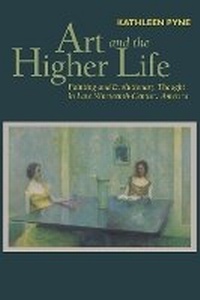
Art and the Higher Life
Painting and Evolutionary Thought in Late Nineteenth-Century America
Published on 1. July 1996
Book
Paperback/Softback
440 pages
978-0-292-76920-5 (ISBN)
Description
Late in the nineteenth century, many Americans were troubled by the theories of Charles Darwin, which contradicted both traditional Christian teachings and the idea of human supremacy over nature, and by an influx of foreign immigrants, who challenged the supremacy of the old Anglo-Saxon elite. In response, many people drew comfort from the theories of philosopher Herbert Spencer, who held that human society inevitably develops towards higher and more spiritual forms. In this illuminating study, Kathleen Pyne explores how Spencer's theories influenced a generation of American artists. She shows how the painters of the 1880s and 1890s, particularly John La Farge, James McNeill Whistler, Thomas Dewing and the Boston school, and the impressionist painters of the Ten, developed an art dedicated to social refinement and spiritual ideals and to defending the Anglo-Saxon elite of which they were members. This linking of visual culture to the problematic conditions of American life radically reinterprets the most important trends in late nineteenth-century American painting.
Reviews / Votes
"[Pyne's] book deserves considerable notice not only from historians of American art but from a wide array of literary and cultural historians." The New England QuarterlyMore details
Language
English
Place of publication
Austin, TX
United States
Target group
Professional and scholarly
Dimensions
Height: 229 mm
Width: 152 mm
ISBN-13
978-0-292-76920-5 (9780292769205)
Copyright in bibliographic data and cover images is held by Nielsen Book Services Limited or by the publishers or by their respective licensors: all rights reserved.
Schweitzer Classification
Person
Kathleen Pyne is Professor of Art at the University of Notre Dame.
Content
AcknowledgmentsIntroductionOne. The American Response to DarwinismTwo. John La Farge and the Sensuous EnvironmentThree. James McNeill Whistler and the Religion of ArtFour. Aesthetic Strategies in the "Age of Pain": Thomas Dewing and the Art of LifeFive. The Ideologies of American ImpressionismConclusionNotesSelect BibliographyIndex