

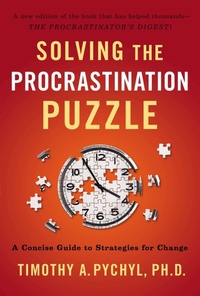
Solving the Procrastination Puzzle
A Concise Guide to Strategies for Change
Published on 26. December 2013
Book
Paperback/Softback
128 pages
978-0-399-16812-3 (ISBN)
Description
The revised edition of the self-published hit, offering powerful strategies to end procrastination.
Why do we sabotage our own best intentions? How can we eliminate procrastination from our lives for good? Based on current psychological research and supplemented with clear strategies for change, this concise guide will help readers finally break free from self-destructive ideas and habits, and move into freedom and accomplishment. With numerous practical tips for change, Solving the Procrastination Puzzle brings clarity and scientific studies-and a touch of humor!-to the quest for successfully achieving goals. This accessible guide is perfect for entrepreneurs, parents, students, and anyone who wants to get unstuck, stop delaying, and start living their most inspired life.
Why do we sabotage our own best intentions? How can we eliminate procrastination from our lives for good? Based on current psychological research and supplemented with clear strategies for change, this concise guide will help readers finally break free from self-destructive ideas and habits, and move into freedom and accomplishment. With numerous practical tips for change, Solving the Procrastination Puzzle brings clarity and scientific studies-and a touch of humor!-to the quest for successfully achieving goals. This accessible guide is perfect for entrepreneurs, parents, students, and anyone who wants to get unstuck, stop delaying, and start living their most inspired life.
More details
Language
English
Place of publication
New York
United States
Dimensions
Height: 208 mm
Width: 138 mm
Thickness: 12 mm
Weight
139 gr
ISBN-13
978-0-399-16812-3 (9780399168123)
Copyright in bibliographic data and cover images is held by Nielsen Book Services Limited or by the publishers or by their respective licensors: all rights reserved.
Schweitzer Classification
Other editions
Additional editions
E-Book
10/2013
TarcherPerigee
€8.99
Available for download
Person
Content
Acknowledgments ………………………………………………………………………………….. v
Introduction …………………………………………………………………………………………….
Chapter 1 - What is procrastination? Why does it matter? ……………………..
Chapter 2 – Is procrastination really a problem? What are the costs of
procrastinating? ………………………………………………………………..
Chapter 3 – What’s the most important thing we need to know
about procrastination? ………………………………………………………
Chapter 4 – Why we won’t feel like it tomorrow ………………………………………..
Chapter 5 – Excuses & Self-deception: How our thinking contributes to
our procrastination ……………………………………………………………
Chapter 6 – The power of getting started ……………………………………………………
Chapter 7 – Why getting started isn’t the whole solution ……………………………..
Chapter 8 – Willpower, willpower, if we only had the willpower …………………….
Chapter 9 – What’s bred in the bone: Personality and procrastination …………
Chapter 10 – Cyberslacking on the procrastination superhighway ……………….
Concluding Thoughts — On the road of self-change ………………………………………
Introduction …………………………………………………………………………………………….
Chapter 1 - What is procrastination? Why does it matter? ……………………..
Chapter 2 – Is procrastination really a problem? What are the costs of
procrastinating? ………………………………………………………………..
Chapter 3 – What’s the most important thing we need to know
about procrastination? ………………………………………………………
Chapter 4 – Why we won’t feel like it tomorrow ………………………………………..
Chapter 5 – Excuses & Self-deception: How our thinking contributes to
our procrastination ……………………………………………………………
Chapter 6 – The power of getting started ……………………………………………………
Chapter 7 – Why getting started isn’t the whole solution ……………………………..
Chapter 8 – Willpower, willpower, if we only had the willpower …………………….
Chapter 9 – What’s bred in the bone: Personality and procrastination …………
Chapter 10 – Cyberslacking on the procrastination superhighway ……………….
Concluding Thoughts — On the road of self-change ………………………………………