

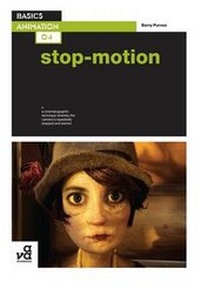
Basics Animation 04: Stop-motion
Published on 5. April 2010
Book
Paperback/Softback
200 pages
978-2-940373-73-4 (ISBN)
Description
"Basics Animation: Stop-motion" explores how all the elements of film-making camera work, design, colour, lighting, editing, music and storytelling come together in this unique art form. Students will learn to use and exploit the particular types of movement, characters and stories that characterise stop-motion. The book is packed with tips and suggestions to help you get the most out of your own stopmotion films, accompanied by full-colour illustrations and case studies demonstrating how film-making masters through the years have used it in feature films, short films and TV series. "Basics Animation: Stop-motion" also examines the evolution of stopmotion, from its almost accidental beginnings to a much-loved form of storytelling in its own right one that continues to push boundaries after 110 years.
Reviews / Votes
"To say this book is a perfect companion for anyone interested in stop-motion at any level is a tremendous understatement...the wide range of photographic examples alone make this book a must have...I am very excited to find a book that would make for a perfect textbook should I ever teach again." - Mark Osborne, co-director of DreamWorks Animation's Oscar-nominated Kung Fu Panda. "If you are interested in stop motion character animation - past, present or future - then Barry Purves' Basics Animation: Stop-motion is for you. Who better to guide us through the history of the medium, the techniques and process of filmmaking than master animator Purves (Screen Play) himself." - Jerry Beck, Cartoon Brew. 'Barry has managed to condense three decades of his creative passion and knowledge into 200 pages. He constantly references other films and auteurs worth researching and gives a clear glossary of terms useful throughout the creative industries. 5 stars from me!' Garance Rawinski, Leeds Metropolitan University, UK. 'This new book is filled with everything that all other stop motion books are missing ... this is the must-have book for the stop motion animator ... It's with high marks that we recommend this book to anyone with the love and passion for such a truly beautiful art form.' Pike Baker, Stop Motion Magazine, April 2010. 'The inclusion of the ethics pages at the back is brilliant.' Daniel Groscha, Nicolet College, USA.More details
Series
Language
English
Place of publication
Lausanne
Switzerland
Publishing group
Bloomsbury Publishing PLC
Target group
College/higher education
Product notice
With flaps
Illustrations
200 colour illustrations
Dimensions
Height: 230 mm
Width: 160 mm
Weight
580 gr
ISBN-13
978-2-940373-73-4 (9782940373734)
Copyright in bibliographic data and cover images is held by Nielsen Book Services Limited or by the publishers or by their respective licensors: all rights reserved.
Schweitzer Classification
Other editions
New editions
Book
03/2019
Bloomsbury Academic USA
€35.00
Available immediately
Book
08/2014
2nd Edition
Fairchild Books
€49.70
Article exhausted; check for reprint
Person
Barry Purves is a stop-motion animator and director with more than thirty years' experience. His films have won more than 60 major international awards, including Grand Prix's, Best Director, Best Film, and Oscar and BAFTA nominations. He has been involved with such diverse works as The Wind in the Willows, The Pied Piper of Hamelin, Chorlton and the Wheelies, Rupert Bear, Mars Attacks!, King Kong and Hamilton Mattress. Barry has held master classes in most of the major animation studios and colleges around the world and is the author of Stop Motion: Passion, Process and Performance.
Content
Introduction. How to get the most out of this book. What is stop-motion?: The beginnings; The illusion of movement; Physicality; A continuous performance; Special effects; Wholly animated films. Focusing the idea: Stories and themes; Approaching the story; A change of perspective; Out of the mouths of...talking umbrellas?; Atmosphere and substance; Economics. The puppets: Telling the story with puppets; The physical puppet; Telling characteristics; Stylised movement; Replacements; Eyes; Hands; Puppet size; Clay; Other techniques. Preparations: Working with others; Sets; Costume; Colour. Tools and techniques: Practicalities; The camera; Lighting; Sound; Dialogue; Special effects; Editing. Movement and performance: Animating on the set; Lively movement; Helping the movement; Performance. Conclusion. A brief history of stop-motion; Picture credits. Acknowledgements. Working with ethics.