

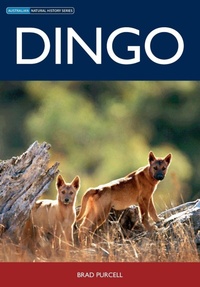
Dingo
Published on 1. October 2010
Book
Paperback/Softback
176 pages
978-0-643-09693-6 (ISBN)
Description
Many present-day Australians see the dingo as a threat and a pest to human production systems. An alternative viewpoint, which is more in tune with Indigenous culture, allows others to see the dingo as a means to improve human civilisation. The dingo has thus become trapped between the status of pest animal and totemic creature. This book helps readers to recognise this dichotomy, as a deeper understanding of dingo behaviour is now possible through new technologies which have made it easier to monitor their daily lives.
Recent research on genetic structure has indicated that dingo 'purity' may be a human construct and the genetic relatedness of wild dingo packs has been analysed for the first time. GPS telemetry and passive camera traps are new technologies that provide unique ways to monitor movements of dingoes, and analyses of their diet indicate that dietary shifts occur during the different biological seasons of dingoes, showing that they have a functional role in Australian landscapes.
Dingo brings together more than 50 years of observations to provide a comprehensive portrayal of the life of a dingo. Throughout this book dingoes are compared with other hypercarnivores, such as wolves and African wild dogs, highlighting the similarities between dingoes and other large canid species around the world.
More details
Series
Language
English
Place of publication
Melbourne
Australia
Target group
College/higher education
Illustrations
photos
Dimensions
Height: 244 mm
Width: 170 mm
Thickness: 12 mm
Weight
467 gr
ISBN-13
978-0-643-09693-6 (9780643096936)
Copyright in bibliographic data and cover images is held by Nielsen Book Services Limited or by the publishers or by their respective licensors: all rights reserved.
Schweitzer Classification
Other editions
Person
Brad Purcell completed his PhD at the University of Western Sydney on a study of dingoes in the Greater Blue Mountains World Heritage Area. He has also studied the ecology of small native mammals, feral pigs and feral deer. Brad is a scientific advisor on the National Dingo Recovery and Preservation Program.