

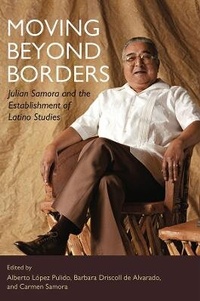
Moving Beyond Borders
Julian Samora and the Establishment of Latino Studies
Published on 1. October 2009
Book
Hardback
304 pages
978-0-252-03463-3 (ISBN)
Description
Moving Beyond Borders examines the life and accomplishments of Julian Samora, the first Mexican American sociologist in the United States and the founding father of the discipline of Latino studies. Detailing his distinguished career at the University of Notre Dame from 1959 to 1984, the book documents the history of the Mexican American Graduate Studies program that Samora established at Notre Dame and traces his influence on the evolution of border studies, Chicano studies, and Mexican American studies.
Samora's groundbreaking ideas opened the way for Latinos to understand and study themselves intellectually and politically, to analyze the complex relationships between Mexicans and Mexican Americans, to study Mexican immigration, and to ready the United States for the reality of Latinos as the fastest growing minority in the nation. In addition to his scholarly and pedagogical impact, his leadership in the struggle for civil rights was a testament to the power of community action and perseverance. Focusing on Samora's teaching, mentoring, research, and institution-building strategies, Moving Beyond Borders explores the legacies, challenges, and future of ethnic studies in United States higher education.
Contributors are Teresita E. Aguilar, Jorge A. Bustamante, Gilberto Cardenas, Miguel A. Carranza, Frank M. Castillo, Anthony J. Cortese, Lydia Espinosa Crafton, Barbara Driscoll de Alvarado, Herman Gallegos, Phillip Gallegos, Jose R. Hinojosa, Delfina Landeros, Paul Lopez, Sergio X. Madrigal, Ken Martinez, Vilma Martinez, Alberto Mata, Amelia M. Munoz, Richard A. Navarro, Jesus "Chuy" Negrete, Alberto Lopez Pulido, Julie Leininger Pycior, Olga Villa Parra, Ricardo Parra, Victor Rios, Marcos Ronquillo, Rene Rosenbaum, Carmen Samora, Rudy Sandoval, Alfredo Rodriguez Santos, and Ciro Sepulveda.
Samora's groundbreaking ideas opened the way for Latinos to understand and study themselves intellectually and politically, to analyze the complex relationships between Mexicans and Mexican Americans, to study Mexican immigration, and to ready the United States for the reality of Latinos as the fastest growing minority in the nation. In addition to his scholarly and pedagogical impact, his leadership in the struggle for civil rights was a testament to the power of community action and perseverance. Focusing on Samora's teaching, mentoring, research, and institution-building strategies, Moving Beyond Borders explores the legacies, challenges, and future of ethnic studies in United States higher education.
Contributors are Teresita E. Aguilar, Jorge A. Bustamante, Gilberto Cardenas, Miguel A. Carranza, Frank M. Castillo, Anthony J. Cortese, Lydia Espinosa Crafton, Barbara Driscoll de Alvarado, Herman Gallegos, Phillip Gallegos, Jose R. Hinojosa, Delfina Landeros, Paul Lopez, Sergio X. Madrigal, Ken Martinez, Vilma Martinez, Alberto Mata, Amelia M. Munoz, Richard A. Navarro, Jesus "Chuy" Negrete, Alberto Lopez Pulido, Julie Leininger Pycior, Olga Villa Parra, Ricardo Parra, Victor Rios, Marcos Ronquillo, Rene Rosenbaum, Carmen Samora, Rudy Sandoval, Alfredo Rodriguez Santos, and Ciro Sepulveda.
Reviews / Votes
"Succeeds mightily in giving Julian Samora his well-deserved recognition as a major figure in the building and sustenance of an important dimension of inclusion in higher education."--Journal of American Ethnic History "Julian Samora gave his life and work to a better and more complete understanding of the Chicano/Latino experience. This text is a wonderful and valuable introduction to the man and scholar."--Mario Garcia, author of Memories of Chicano History: The Life and Narrative of Bert Corona "This outstanding book provides marvelous insight not only into the life of a remarkable man but into the era that he helped to shape. I literally could not put the book down."--David T. Abalos, author of Latinos in the United States: The Sacred and the PoliticalMore details
Series
Language
English
Place of publication
Baltimore
United States
Target group
Professional and scholarly
Dimensions
Height: 229 mm
Width: 152 mm
ISBN-13
978-0-252-03463-3 (9780252034633)
Copyright in bibliographic data and cover images is held by Nielsen Book Services Limited or by the publishers or by their respective licensors: all rights reserved.
Schweitzer Classification
Persons
Alberto Lopez Pulido is director and professor of ethnic studies at the University of San Diego and the author of Sacred World of the Penitentes. Barbara Driscoll de Alvarado teaches humanities at Anna Maria College and is the author of The Tracks North: The Railroad Bracero Program of World War II. Carmen Samora teaches American and Chicana/o studies at the University of New Mexico and directs the Julian Samora Legacy Project.
Content
Corrido, Jesus "Chuy Negrete; Samorista Creed, Marcos Ronquillo Foreword, Herman Gallegos; Preface, Vilma Martinez; Acknowledgements Part One: The Legacy of Julian Samora; Introduction: Moving Beyond Borders, Alberto Lopez Pulido, Barbara Driscollo de Alvarado and Carmen Samora; Chapter One: Grace and Redemption: Julian Samora 1920-1996, Carmen Samora; Chapter Two: A Scholar and Visionary in Mexican American and Latino Studies, Barbara Driscoll de Alvarado; Chapter Three: Philanthropy, the Creation of a National Minority and the Mexican American Graduate Studies Program at Notre Dame, Alberto Lopez Pulido; Part Two: Samoristas @ 57; Introduction: Creating an Intellectual Community, Alberto Lopez Pulido, Barbara Driscoll de Alvarado and Carmen Samora Political Activism; Chapter Four: Constructive Marginality En El Otro Lado, Richard A Navarro; Chapter Five: Serving our Communities "1970-1980", Ricardo Parra and Olga Villa; Chapter Six: From Uvalde, Texas to South Bend, Indiana: El Chicano goes to Notre Dame, Alfredo Rodriguez Santos, c/s; Chapter Seven: Don Julian Samora, un hombre de Ubuntu, Lydia Espinosa Crafton; Chapter Eight: Julian Samora: uno de los primero sabios, Alberto Mata, Jr.; Chapter Nine: Fair Taxes and the Social Contract: the Samora Influence on a Chicano Economist, Sergio X. Madrigal; Chapter Ten: Circles of Commitment, Marcos Ronquillo; Chapter Eleven: Common Geography, Ken Martinez 281; B. The Pedagogy of Julian Samora; Chapter Twelve: Reflections on Education: Post-Samora,; Teresita E. Aguilar; Chapter Thirteen: Julian Samora's Pedagogy of Empowerment, Victor Rios; Chapter Fourteen: Personal Reflections on Education, Jose R. Hinojosa; Chapter Fifteen: Crossing Disciplines and Boundaries: From South Bend to Mexico City, Barbara Driscoll de Alvarado; Chapter Sixteen: In the Autumn of His Life, Rudy Sandoval 343;; Chapter Seventeen: Early Mentor, Phillip Gallegos; Chapter Eighteen: Vessel of the Samora Legacy: Mentoring the Third Generation, Anthony J. Cortese; C. Research and the Integrative Process of Julian Samora; Chapter Nineteen: Translating the Whole Person: Julian Samora as Research Mentor, Alberto Lopez Pulido; Chapter Twenty: Julian Samora: Mentor, Jorge A. Bustamante; Chapter Twenty One: Making History, Julie Leininger Pycior; Chapter Twenty Two: Reflections on Research Perspectives and Strategy, Paul Lopez; Chapter Twenty Three: On Respect and Teaching, Ciro Sepulveda; Chapter Twenty Four: Becoming a Scholar: In Tribute to Julian and Betty Samora, Gilbert Cardenas; Personal Reflections: Voices and Sentiments from Samoristas; Chapter Twenty Five: Personal Visions: 'Coming of Age with Samora': Miguel A. Carranza; Chapter Twenty Six: Reflections on the Impact of Dr. Julian Samora, Delfina Landeros; Chapter Twenty Seven: The Seeds We Plant, Frank M. Castillo; Chapter Twenty Eight: The Legacy of Latino Consciousness, Rene Rosenbaum; Chapter Twenty Nine: Julian Samora and His Lesson of Revelation, Alberto Lopez Pulido; Chapter Thirty: "Pues aqui me tienen": Amelia M. Munoz; Appendix "Mestizaje and the Formation of Chicano," Julian Samora Biographies of Contributors