

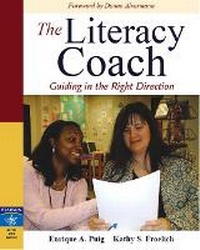
The Literacy Coach
Guiding in the Right Direction
Published on 9. February 2007
Book
Paperback/Softback
144 pages
978-0-205-49167-4 (ISBN)
Description
Expert coaches and anyone coaching for the first time will love The Literacy Coach!
Reviewers Sum it up!
"The framework in which this book is embedded is one of the more elegant ones in existence."
Donna Alvermann, The University of Georgia
"I found this book to be helpful to not only literacy coaches, but to classroom teachers who may want to become coaches or merely better understand their roles. I also believe building principals would find the book extremely useful...I only wish I had been given such access to all of this information five years ago!"
Amy Ely, Brush Middle School
Take a peek inside...
Supports the professional development of literacy coaches by
a) giving a comprehensive look at how learners learn vs. just learning to read;
b) implementing the idea of categorizing coaching points (into three broad categories) to economize on time and attention; and
c) including three levels of observations (primary, secondary, and tertiary).
Includes a description of the four cornerstones of any successful school reform model: students, teachers, administrators, and the literacy coach.
Considers the NRP report andIRA's Standards for Literacy Coaches.
Meet the Authors
Enrique A. Puig is the Director of the Florida Literacy and Reading Excellence Center at the University of Central Florida. He is a certified Reading Recovery teacher and Literacy Collaborative trainer. In addition to being president of the Orange County Reading Council (Florida), Enrique serves as an elected board member of the American Reading Forum and continues to work with students. He is author of Guided Reading and Spanish Speaking Students (Scholastic).
Kathy S. Froelich received her Ph.D. from Fordham University in New York and has provided professional development opportunities to teachers and literacy coaches at the national level. In addition to her years of classroom teaching experience, Kathy has taught at Agnes Scott College and Thomas University. She is currently teaching at Florida State University and is an independent consultant.
Reviewers Sum it up!
"The framework in which this book is embedded is one of the more elegant ones in existence."
Donna Alvermann, The University of Georgia
"I found this book to be helpful to not only literacy coaches, but to classroom teachers who may want to become coaches or merely better understand their roles. I also believe building principals would find the book extremely useful...I only wish I had been given such access to all of this information five years ago!"
Amy Ely, Brush Middle School
Take a peek inside...
Supports the professional development of literacy coaches by
a) giving a comprehensive look at how learners learn vs. just learning to read;
b) implementing the idea of categorizing coaching points (into three broad categories) to economize on time and attention; and
c) including three levels of observations (primary, secondary, and tertiary).
Includes a description of the four cornerstones of any successful school reform model: students, teachers, administrators, and the literacy coach.
Considers the NRP report andIRA's Standards for Literacy Coaches.
Meet the Authors
Enrique A. Puig is the Director of the Florida Literacy and Reading Excellence Center at the University of Central Florida. He is a certified Reading Recovery teacher and Literacy Collaborative trainer. In addition to being president of the Orange County Reading Council (Florida), Enrique serves as an elected board member of the American Reading Forum and continues to work with students. He is author of Guided Reading and Spanish Speaking Students (Scholastic).
Kathy S. Froelich received her Ph.D. from Fordham University in New York and has provided professional development opportunities to teachers and literacy coaches at the national level. In addition to her years of classroom teaching experience, Kathy has taught at Agnes Scott College and Thomas University. She is currently teaching at Florida State University and is an independent consultant.
More details
Language
English
Place of publication
United States
Publishing group
Pearson Education (US)
Target group
Professional and scholarly
Dimensions
Height: 235 mm
Width: 191 mm
Weight
254 gr
ISBN-13
978-0-205-49167-4 (9780205491674)
Copyright in bibliographic data and cover images is held by Nielsen Book Services Limited or by the publishers or by their respective licensors: all rights reserved.
Schweitzer Classification
Other editions
New editions
Book
03/2010
2nd Edition
Pearson
€49.51
Article is exhausted; no reprint
Persons
Enrique A. Puig is the Director of the Florida Literacy and Reading Excellence Center at the University of Central Florida. He is a certified Reading Recovery teacher and Literacy Collaborative trainer. In addition to being president of the Orange County Reading Council (Florida), Enrique serves as an elected board member of the American Reading Forum and continues to work with students. He is author of The Literacy Coach: Guiding in the Right Direction (2007, Allyn & Bacon) and Guided Reading and Spanish Speaking Students (Scholastic).
Kathy S. Froelich received her Ph.D. from Fordham University in New York and has provided professional development opportunities to teachers and literacy coaches at the national level. In addition to her years of classroom teaching experience, she has taught at Agnes Scott College and Thomas University. She is currently teaching in the School of Teacher Education at Florida State University and is the Program Coordinator for Undergraduate Reading. She is co-author of The Literacy Coach: Guiding in the Right Direction (2007, Allyn and Bacon)
Kathy S. Froelich received her Ph.D. from Fordham University in New York and has provided professional development opportunities to teachers and literacy coaches at the national level. In addition to her years of classroom teaching experience, she has taught at Agnes Scott College and Thomas University. She is currently teaching in the School of Teacher Education at Florida State University and is the Program Coordinator for Undergraduate Reading. She is co-author of The Literacy Coach: Guiding in the Right Direction (2007, Allyn and Bacon)
Content
Dedication
Foreword by Donna E. Alvermann
Preface
Acknowledgements
Introduction
Chapter 1 Professional Development
? Historical Perspective
? Models of Staff Development Programs
? What is a literacy coach?
? Time Management
? Elementary Literacy Coaches
? Middle and High School Literacy Coaches
? Standards for Literacy Coaches
(International Reading Association, 2006)
? Supporting School Resource Personnel
? In Summary
? Pause and Rethink
? Application: Scenario #1
? Coaching exercise
Chapter 2 Understanding literacy processing and effective classroom practices
? Conditions for learning
? Readingas a process
? Writing as a process
? Working systems of Reading Identified
? Supporting School Resource Personnel
? In Summary
? Pause and Rethink
? Application: Scenario #2
? Coaching exercise
Chapter 3 Observational lenses
? Collecting artifacts
? Participant observations
? Non-participant observations
? Supporting School Resource Personnel
? In Summary
? Pause and Rethink
? Application: Scenario #3
? Coaching exercise
Chapter 4 Noting observations ? Primary level protocol
? Secondary level protocol
? Tertiary level protocol
? Supporting School Resource Personnel
? In Summary
? Pause and Rethink
? Application: Scenario #4
? Coaching exercise
Chapter 5 Three major categories for coaching ? Coaching for rationales
? Coaching for aesthetics
? Coaching for procedures
? Supporting School Resource Personnel
? In Summary
? Pause and Rethink
? Application: Scenario #5
? Coaching exercise
Chapter 6 Becoming a co-learner
? Planning a yearlong course
? Developing a long-term plan
? Creating scaffolds and structures
? Supporting School Resource Personnel
? In Summary
? Pause and Rethink
? Application: Scenario #6
? Coaching exercise
Chapter 7 Scaffolding the principal
? Literacy leadership team
? Observation Classrooms
? Classroom observations
? Supporting the literacy coach
? Supporting School Resource Personnel
? In Summary
? Pause and Rethink
? Application: Scenario #7
? Coaching exercise
Chapter 8 Literacy coaching revisited: essential principles
Chapter 9 36 Weeks of Literacy Coaching: A Journal
Closing
Appendices
Glossary
References
Index
Foreword by Donna E. Alvermann
Preface
Acknowledgements
Introduction
Chapter 1 Professional Development
? Historical Perspective
? Models of Staff Development Programs
? What is a literacy coach?
? Time Management
? Elementary Literacy Coaches
? Middle and High School Literacy Coaches
? Standards for Literacy Coaches
(International Reading Association, 2006)
? Supporting School Resource Personnel
? In Summary
? Pause and Rethink
? Application: Scenario #1
? Coaching exercise
Chapter 2 Understanding literacy processing and effective classroom practices
? Conditions for learning
? Readingas a process
? Writing as a process
? Working systems of Reading Identified
? Supporting School Resource Personnel
? In Summary
? Pause and Rethink
? Application: Scenario #2
? Coaching exercise
Chapter 3 Observational lenses
? Collecting artifacts
? Participant observations
? Non-participant observations
? Supporting School Resource Personnel
? In Summary
? Pause and Rethink
? Application: Scenario #3
? Coaching exercise
Chapter 4 Noting observations ? Primary level protocol
? Secondary level protocol
? Tertiary level protocol
? Supporting School Resource Personnel
? In Summary
? Pause and Rethink
? Application: Scenario #4
? Coaching exercise
Chapter 5 Three major categories for coaching ? Coaching for rationales
? Coaching for aesthetics
? Coaching for procedures
? Supporting School Resource Personnel
? In Summary
? Pause and Rethink
? Application: Scenario #5
? Coaching exercise
Chapter 6 Becoming a co-learner
? Planning a yearlong course
? Developing a long-term plan
? Creating scaffolds and structures
? Supporting School Resource Personnel
? In Summary
? Pause and Rethink
? Application: Scenario #6
? Coaching exercise
Chapter 7 Scaffolding the principal
? Literacy leadership team
? Observation Classrooms
? Classroom observations
? Supporting the literacy coach
? Supporting School Resource Personnel
? In Summary
? Pause and Rethink
? Application: Scenario #7
? Coaching exercise
Chapter 8 Literacy coaching revisited: essential principles
Chapter 9 36 Weeks of Literacy Coaching: A Journal
Closing
Appendices
Glossary
References
Index