

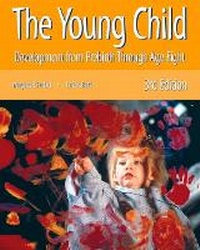
The Young Child
Development from Prebirth through Age Eight
3rd Edition
Published on 28. June 2000
Book
Paperback/Softback
574 pages
978-0-13-025700-0 (ISBN)
Description
For Early Childhood Development courses.
A core course for child development courses that cover prebirth through age eight, this widely-used text discusses major development theories as they relate to physical, psychosocial, and cognitive domains. The book contains extensive applications for those who will teach and work with young children, making it particularly appropriate for early childhood education programs.
A core course for child development courses that cover prebirth through age eight, this widely-used text discusses major development theories as they relate to physical, psychosocial, and cognitive domains. The book contains extensive applications for those who will teach and work with young children, making it particularly appropriate for early childhood education programs.
More details
Edition
3rd edition
Language
English
Place of publication
United States
Publishing group
Pearson Education (US)
Target group
Professional and scholarly
Dimensions
Height: 254 mm
Width: 203 mm
Weight
1000 gr
ISBN-13
978-0-13-025700-0 (9780130257000)
Copyright in bibliographic data and cover images is held by Nielsen Book Services Limited or by the publishers or by their respective licensors: all rights reserved.
Schweitzer Classification
Other editions
New editions
Book
07/2004
4th Edition
Pearson
€60.75
Article is exhausted; no reprint
Content
I. AN OVERVIEW OF EARLY CHILDHOOD DEVELOPMENT.
1. The What and Why of Early Childhood Development.
2. The Where, When, and How of Early Childhood Study and Assessment.
II. THE CHILD'S LIFE BEGINS.
3. The Family before Birth.
4. The Child and Family at Birth.
III. INFANCY.
5. Physical and Motor Development of the Infant.
6. Psychosocial Development of the Infant.
7. Cognitive, Language, and Literacy Development of the Infant.
IV. THE YOUNG CHILD AGES ONE THROUGH THREE.
8. Physical and Motor Development: Ages One through Three.
9. Psychosocial Development: Ages One through Three.
10. Cognitive, Language, and Literacy Development: Ages One through Three.
V. THE YOUNG CHILD AGES FOUR THROUGH FIVE.
11. Physical and Motor Development: Ages Four through Five.
12. Psychosocial Development: Ages Four through Five.
13. Cognitive, Language, and Literacy Development: Ages Four through Five.
VI. THE YOUNG CHILD AGES SIX THROUGH EIGHT.
14. Physical and Motor Development: Ages Six through Eight.
15. Psychosocial Development: Ages Six through Eight.
16. Cognitive, Language, and Literacy Development: Ages Six through Eight.
VII. THE DEVELOPING EARLY CHILDHOOD PROFESSIONAL.
17. Developing Adults in the Lives of Developing Young Children.
1. The What and Why of Early Childhood Development.
2. The Where, When, and How of Early Childhood Study and Assessment.
II. THE CHILD'S LIFE BEGINS.
3. The Family before Birth.
4. The Child and Family at Birth.
III. INFANCY.
5. Physical and Motor Development of the Infant.
6. Psychosocial Development of the Infant.
7. Cognitive, Language, and Literacy Development of the Infant.
IV. THE YOUNG CHILD AGES ONE THROUGH THREE.
8. Physical and Motor Development: Ages One through Three.
9. Psychosocial Development: Ages One through Three.
10. Cognitive, Language, and Literacy Development: Ages One through Three.
V. THE YOUNG CHILD AGES FOUR THROUGH FIVE.
11. Physical and Motor Development: Ages Four through Five.
12. Psychosocial Development: Ages Four through Five.
13. Cognitive, Language, and Literacy Development: Ages Four through Five.
VI. THE YOUNG CHILD AGES SIX THROUGH EIGHT.
14. Physical and Motor Development: Ages Six through Eight.
15. Psychosocial Development: Ages Six through Eight.
16. Cognitive, Language, and Literacy Development: Ages Six through Eight.
VII. THE DEVELOPING EARLY CHILDHOOD PROFESSIONAL.
17. Developing Adults in the Lives of Developing Young Children.