

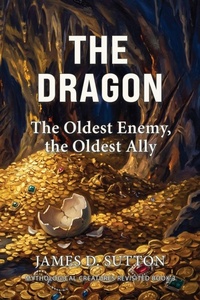
The Dragon
Description
In Europe, the dragon is the worst thing in the cave. In China, the dragon is on the emperor's robe.
Same creature. Opposite meanings. The dragon is the only mythological being that every major civilization independently invented and that two great civilizational traditions assigned fundamentally opposite moral values. In the West, the dragon must be slain for the world to be safe. In the East, the dragon must be honored for the world to function.
The Dragon investigates why.
The investigation follows the creature across eight thousand years and five continents. From the Chaoskampf cosmogonies of ancient Mesopotamia, where Marduk split the dragon-goddess Tiamat to create the world, through the Norse sagas, where Thor and the Midgard Serpent destroy each other at the end of time. From the Chinese emperor's five-clawed lóng, emblem of cosmic authority, through the Vietnamese national origin myth that claims an entire people as the children of a dragon lord. From Tolkien's Smaug, who reinvented the literary dragon, through Martin's Targaryen beasts, which gave the oldest metaphor its nuclear-age referent. From the pulvinar neurons that detect serpentine threats before conscious awareness engages to the DreamWorks franchise that taught a generation to imagine the dragon as a friend.
The dragon has been chaos, order, evil, treasure, deterrent, companion, and environmental force. It has been all of these because the thing it represents-power too large for human beings to fully control-never goes away. Every generation encounters that power. Every civilization must decide what to do about it.
The West says: kill it. The East says: honor it. The twenty-first century says: ride it.
Each answer reveals the civilization that gives it.
Mythological Creatures Revisited is an investigative nonfiction series examining the world's mythological beings-one creature per volume, each investigation tracing the beast from its oldest attestation through its contemporary cultural life. Every volume stands alone. Every volume follows the evidence.