

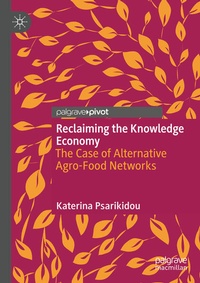
Reclaiming the Knowledge Economy
Description
This book offers a critical analysis of the diverse knowledge and knowledge production processes through which 'alternative agro-food networks' can constitute a more plural 'knowledge economy'. It provides critical sociological and political economic insights that help problematise dominant capitalocentric and technocentric framings of the 'knowledge (bio)economy'. It will appeal to researchers, practitioners and policy-makers with an interest in supporting inclusive research, policy and innovation agendas for sustainability.
Reviews / Votes
"Going beyond critique to explore many inspiringly positive policy and political implications, this book offers a pioneering understanding of alternative agro-food networks as an emerging new form of 'knowledge economy'. Drawing on a diversity of theoretical traditions - from Marxist sociology to heterodox economics and science and technology studies - it offers an account of a in-depth multi-methods empirical study of some important rural agro-food initiatives in the UK. The resulting thoughtful and provocative call to re-claim ideas of the knowledge economy, holds deep cross-national relevance for contemporary food production, as well repercussions across wider sectors".
(Professor Andy Stirling, Science Policy Research Unit, University of Sussex, UK)
"Using the example of food networks and the roles of scientific laboratories, farmers and consumers, this important book makes a powerful argument for a collective re-thinking and reclaiming of the 'knowledge economy', to create more inclusive economic systems based on a diversity of knowledge and experience".
(Dr Helen Wallace, GeneWatch UK)
(Professor Brian Wynne, Lancaster University, UK)
More details
Other editions
Additional editions
Person
Katerina Psarikidou is lecturer at the Science Policy Research Unit at the University of Sussex, UK.