

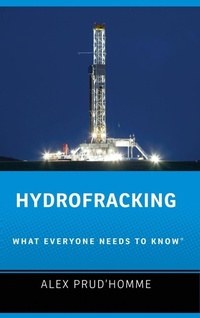
Hydrofracking
What Everyone Needs to Know (R)
Published on 12. December 2013
Book
Hardback
208 pages
978-0-19-931126-2 (ISBN)
Description
Constantly in the news and the subject of much public debate, fracking, as it is known for short, is one of the most promising yet controversial methods of extracting natural gas and oil. Today, 90 percent of natural gas wells use fracking. Though highly effective, the process-which fractures rock with pressurized fluid-has been criticized for polluting land, air, and water, and endangering human health.
A timely addition to Oxford's What Everyone Needs to Know series, Hydrofracking tackles this contentious topic, exploring both sides of the debate and providing a clear guide to the science underlying the technique. In concise question-and-answer format, Alex Prud'homme cuts through the maze of opinions and rhetoric to uncover key points, from the economic and political benefits of fracking to the health dangers and negative effects on the environment. Prud'homme offers clear answers to a range of fundamental questions, including: What is fracking fluid? How does it impact water supplies? Who regulates the industry? How much recoverable natural gas exists in the U.S.? What new innovations are on the horizon? Supporters as diverse as President Obama and the conservative billionaire T. Boone Pickens have promoted natural gas as a clean, "21st-century" fuel that will reduce global warming, create jobs, and provide tax revenues, but concerns remain, with environmental activists like Bill McKibben and others leading protests to put an end to fracking as a means of obtaining alternative energy. Prud'homme considers ways to improve methods in the short-term, while also exploring the possibility of transitioning to more sustainable resources-wind, solar, tidal, and perhaps nuclear power-for the long term.
Written for general readers, Hydrofracking clearly explains both the complex science of fracking and the equally complex political and economic issues that surround it, giving readers all the information they need to understand what will no doubt remain a contentious issue for years to come.
A timely addition to Oxford's What Everyone Needs to Know series, Hydrofracking tackles this contentious topic, exploring both sides of the debate and providing a clear guide to the science underlying the technique. In concise question-and-answer format, Alex Prud'homme cuts through the maze of opinions and rhetoric to uncover key points, from the economic and political benefits of fracking to the health dangers and negative effects on the environment. Prud'homme offers clear answers to a range of fundamental questions, including: What is fracking fluid? How does it impact water supplies? Who regulates the industry? How much recoverable natural gas exists in the U.S.? What new innovations are on the horizon? Supporters as diverse as President Obama and the conservative billionaire T. Boone Pickens have promoted natural gas as a clean, "21st-century" fuel that will reduce global warming, create jobs, and provide tax revenues, but concerns remain, with environmental activists like Bill McKibben and others leading protests to put an end to fracking as a means of obtaining alternative energy. Prud'homme considers ways to improve methods in the short-term, while also exploring the possibility of transitioning to more sustainable resources-wind, solar, tidal, and perhaps nuclear power-for the long term.
Written for general readers, Hydrofracking clearly explains both the complex science of fracking and the equally complex political and economic issues that surround it, giving readers all the information they need to understand what will no doubt remain a contentious issue for years to come.
Reviews / Votes
Previous praise for Alex Prud'homme: A tightly written, thoroughly researched, almost encyclopedic book. * The Cleveland Plain Dealer, on The Ripple Effect The Ripple Effect is true to its title, following the myriad reverberations from our use and abuse of this most abundant, ubiquitous resource. The book plunges in and rarely comes up for air.Washington Post *More details
Series
Language
English
Place of publication
New York
United States
Dimensions
Height: 235 mm
Width: 157 mm
Thickness: 16 mm
Weight
457 gr
ISBN-13
978-0-19-931126-2 (9780199311262)
Copyright in bibliographic data and cover images is held by Nielsen Book Services Limited or by the publishers or by their respective licensors: all rights reserved.
Schweitzer Classification
Other editions
Additional editions
Book
01/2014
Oxford University Press Inc
€15.90
Shipment within 15-20 days
E-Book
11/2013
OUP USA
€6.99
Available for download
E-Book
11/2013
OUP eBook
€6.99
Available for download
Person
Alex Prud'homme has written for The New York Times, The New Yorker, Vanity Fair, and Time. He is the author of five books, including The Ripple Effect: the Fate of Freshwater in the Twenty-First Century, and the co-writer of Julia Child's bestselling memoir, My Life in France.
Content
Introduction ; I. Energy in the 21st Century ; II. Fracking Basics ; III. Fracking Today ; IV. Fracking Pros and Cons ; V. Fracking Tomorrow ; Conclusion