

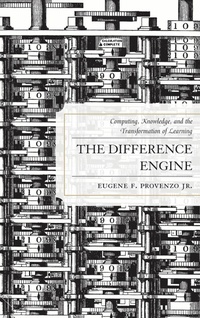
The Difference Engine
Computing, Knowledge, and the Transformation of Learning
Will be published approx. on 30. December 2011
Book
Hardback
192 pages
978-1-4422-1435-4 (ISBN)
Description
Since the 1960s, the rapid evolution of technology has created a new cultural geography-a virtual geography. The Difference Engine: Computing, Knowledge and the Transformation of Learning offers a conscious critique of this change and its effects on contemporary culture and education. This engaging text assumes that we are at a critical moment-one where we are moving from a modern into a post-modern culture- and examines the seven key components of this change:
1. Hypertext/Hypermedia
2. Augmented Intelligence
3. Networked Information and Communication Systems
4. Collective Intelligence
5. Hyperreality
6. the Panoptic Sort
7. Mobile computing.
Deriving its name from Charles Babbage's experimental calculating machine, also known as the first modern computer, The Difference Engine delineates these seven components, like those of the cogs and gears in Babbage's engine. As the real power of the engine lies not in its parts, but in its combined reaction, Provenzo's new book provides a unique perspective by assessing the result of this combination of technology, culture, and literacy.
1. Hypertext/Hypermedia
2. Augmented Intelligence
3. Networked Information and Communication Systems
4. Collective Intelligence
5. Hyperreality
6. the Panoptic Sort
7. Mobile computing.
Deriving its name from Charles Babbage's experimental calculating machine, also known as the first modern computer, The Difference Engine delineates these seven components, like those of the cogs and gears in Babbage's engine. As the real power of the engine lies not in its parts, but in its combined reaction, Provenzo's new book provides a unique perspective by assessing the result of this combination of technology, culture, and literacy.
Reviews / Votes
This book's premise is that advances in computer technology have brought about a second wave of social change that was first introduced at the dawn of the computing age in the 1960s. This thesis is heavily influenced by cited educational theorists, most notably C. A. Bowers, who believe that computing technologies are socially constructed phenomena, and not just computational tools. To advance his position, Provenzo (education, Univ. of Miami) reframes this argument by closely examining several aspects of information technology: "hypertext/hypermedia," "augmented intelligence," "networked information and communication systems," "collective intelligence," "hyperreality," "the panoptic sort," and "mobile computing." The author places each of these phenomena in historical context--sometimes going back hundreds of years--and conflates this history with discussions of future trends, offering the reader a deep, thoughtful narrative on the social and cultural implications of computing technology. Part educational and social theory and part history, this well-written work should be included in collections focusing on educational theory, computers in society, and information science. An extensive bibliography and useful index accompany the text. Summing Up: Recommended. * Choice Reviews * The Difference Engine is an imaginative and captivating tour de force on the ways in which digital tools are transforming knowledge production and literacy. It is filled with illuminating discussion of both the perils and possibilities. The book is a major contribution to the study of literacy in the modern world. -- James Gee, University of ArizonaMore details
Language
English
Place of publication
United States
Publishing group
Bloomsbury Publishing Plc
Target group
Professional and scholarly
Product notice
Laminated cover
Dimensions
Height: 240 mm
Width: 163 mm
Thickness: 10 mm
Weight
408 gr
ISBN-13
978-1-4422-1435-4 (9781442214354)
Copyright in bibliographic data and cover images is held by Nielsen Book Services Limited or by the publishers or by their respective licensors: all rights reserved.
Schweitzer Classification
Person
Eugene F. Provenzo, Jr. is professor of education in the department of teaching and learning at University of Miami. In 2008, he was awarded the University of Miami's Provost's Award for Scholarly Activity.
Content
Preface
Acknowledgments
Chapter 1: Introduction
Chapter 2: Reinventing the Text
Chapter 3: The Dream of Encyclopedic Knowledge
Chapter 4: The World Wide Web at a Hypermedia System
Chapter 5: Cyberspace, Hyperreality, and the Culture of Simulation
Chapter 6: Computing and the Panoptic Sort
Chapter 7: Mobile Computing
Chapter 8: The Reinvention of Text
Chapter 9: Cyberscholarship and the Reinvention of the University
Chapter 10: Ideal Speech and the Difference Engine
Bibliography
Acknowledgments
Chapter 1: Introduction
Chapter 2: Reinventing the Text
Chapter 3: The Dream of Encyclopedic Knowledge
Chapter 4: The World Wide Web at a Hypermedia System
Chapter 5: Cyberspace, Hyperreality, and the Culture of Simulation
Chapter 6: Computing and the Panoptic Sort
Chapter 7: Mobile Computing
Chapter 8: The Reinvention of Text
Chapter 9: Cyberscholarship and the Reinvention of the University
Chapter 10: Ideal Speech and the Difference Engine
Bibliography