

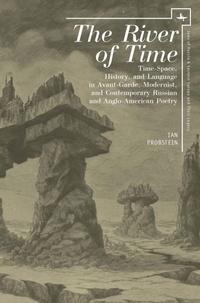
The River of Time
Time-Space, History, and Language in Avant-Garde, Modernist, and Contemporary Russian and Anglo-American Poetry
Published on 1. July 2017
Book
Hardback
300 pages
978-1-61811-626-0 (ISBN)
Description
This book explores the changing perception of time and space in avant-garde, modernist, and contemporary poetry. The author characterizes the works of modern Russian, French, and Anglo-American poets based on their attitudes towards reality, time, space, and history revealed in their poetics. The author compares the work of major Russian innovative poets Osip Mandelstam, Velimir Khlebnikov, Vladimir Mayakovsky, and Joseph Brodsky with that of W. B. Yeats, T. S. Eliot, Ezra Pound, and, in spite of the postmodernist "estrangement" of reality, the author proves that similar traces can be found in the work of contemporary American poets John Ashbery and Charles Bernstein. Both affinities and drastic differences are revealed in the poets' attitudes towards time-space, reality, and history.
Reviews / Votes
"I am reminded once again of Brodsky's fine account of Anna Akhmatova's ability to see the tragic events of her time 'first through the prism of the individual heart, then through the prism of history'. What remains so striking about such a vision, continues Brodsky, is that 'These two perspectives were brought into sharp focus through prosody, which is simply a repository of time within language'. Simply? Ian Probstein's The River of Time offers the help we need to gauge the real complexity of that word 'simply'." - Peter Nicholls, Textual Practice, Vol. 32. No. 3More details
Series
Language
English
Place of publication
Brighton
United States
Illustrations
Illustrations
Dimensions
Height: 240 mm
Width: 161 mm
Thickness: 21 mm
Weight
617 gr
ISBN-13
978-1-61811-626-0 (9781618116260)
Copyright in bibliographic data and cover images is held by Nielsen Book Services Limited or by the publishers or by their respective licensors: all rights reserved.
Schweitzer Classification
Person
Ian Probstein is associate professor of English at Touro College. He has published ten books of poetry, translated more than a dozen poetry volumes; and has compiled and edited more than thirty books and anthologies of poetry in translation.
Content
Introduction
Forms of Time-Space (Chronotope) in Poetry
Part One. Beyond Barriers: Avant-Gard? and Futurism
1. Forms of Chronotope in Avant-Garde Poetry
2. "The King of Time" and "The Slave of Time": Velimir Khlebnikov and Vladimir Mayakovsky
Part Two. Chronotopes of Reality and History in the Poetry of Osip Mandelstam, W. B. Yeats, and Ezra Pound
1. Nature and "The Artifice of Eternity": The Relation to Nature and Reality for Yeats, Pound, and Mandelstam
2. "Sailing to Byzantium"-"Sailing after Knowledge": Byzantium as a Symbol of Cultural Heritage in Mandelstam, Yeats, and Pound
3. Fear and Awe: Osip Mandelstam's "The Slate Ode"
Part Three. T. S. Eliot: "Liberation from the Future as Well as the Past"
1. The Waste Land as a Human Drama Revealed by Eliot's Dialogic Imagination
2. "Liberation from the Future as well as the Past": Time-Space and History in Four Quartets
Part Four. Joseph Brodsky: "The River of Time" or "What Gets Left of a Man"
Part Five. John Ashbery: "Time Is an Emulsion"
Part Six. Charles Bernstein: "Of Time and the Line"
Abbreviations
Bibliography
Index
Forms of Time-Space (Chronotope) in Poetry
Part One. Beyond Barriers: Avant-Gard? and Futurism
1. Forms of Chronotope in Avant-Garde Poetry
2. "The King of Time" and "The Slave of Time": Velimir Khlebnikov and Vladimir Mayakovsky
Part Two. Chronotopes of Reality and History in the Poetry of Osip Mandelstam, W. B. Yeats, and Ezra Pound
1. Nature and "The Artifice of Eternity": The Relation to Nature and Reality for Yeats, Pound, and Mandelstam
2. "Sailing to Byzantium"-"Sailing after Knowledge": Byzantium as a Symbol of Cultural Heritage in Mandelstam, Yeats, and Pound
3. Fear and Awe: Osip Mandelstam's "The Slate Ode"
Part Three. T. S. Eliot: "Liberation from the Future as Well as the Past"
1. The Waste Land as a Human Drama Revealed by Eliot's Dialogic Imagination
2. "Liberation from the Future as well as the Past": Time-Space and History in Four Quartets
Part Four. Joseph Brodsky: "The River of Time" or "What Gets Left of a Man"
Part Five. John Ashbery: "Time Is an Emulsion"
Part Six. Charles Bernstein: "Of Time and the Line"
Abbreviations
Bibliography
Index