

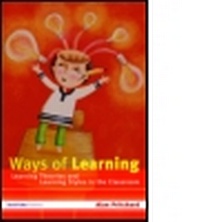
Ways of Learning
Learning Theories and Learning Styles in the Classroom
1st Edition
Published on 24. January 2006
Book
Paperback/Softback
132 pages
978-1-84312-323-1 (ISBN)
Description
This is a detailed introduction to the major theories that lie behind children's learning styles. The book examines how to develop learning situations and how to plan and create the best opportunities for effective and lasting learning. It includes:
coverage of areas such as behaviorism, multiple intelligence, constructivism and metacoginition
advice on how the theoretical ideas of Piaget, Vygotsky and Bruner can be placed into a classroom context
outlines on how to embed learning theories into the classroom so that they make a difference immediately!
Practical and thought-provoking, this is a must have text for teachers at all levels wishing to develop a fresh approach to the learning of their pupils.
coverage of areas such as behaviorism, multiple intelligence, constructivism and metacoginition
advice on how the theoretical ideas of Piaget, Vygotsky and Bruner can be placed into a classroom context
outlines on how to embed learning theories into the classroom so that they make a difference immediately!
Practical and thought-provoking, this is a must have text for teachers at all levels wishing to develop a fresh approach to the learning of their pupils.
More details
Language
English
Place of publication
London
United Kingdom
Publishing group
Taylor & Francis Ltd
Target group
Professional and scholarly
Dimensions
Height: 235 mm
Width: 159 mm
Weight
204 gr
ISBN-13
978-1-84312-323-1 (9781843123231)
Copyright in bibliographic data and cover images is held by Nielsen Book Services Limited or by the publishers or by their respective licensors: all rights reserved.
Schweitzer Classification
Other editions
New editions
Book
10/2008
2nd Edition
David Fulton Publishers Ltd
€47.22
Article exhausted; check for reprint
Person
Content
Introduction; What is learning?; Behaviourist approaches; Cognitive approaches; Multiple intelligences; Learning styles; What does all this mean for teachers?