

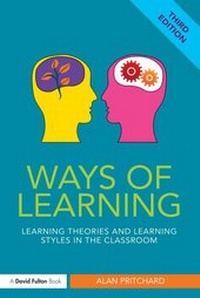
Ways of Learning
Learning theories and learning styles in the classroom
3rd Edition
Published on 22. November 2013
Book
Paperback/Softback
146 pages
978-0-415-83493-3 (ISBN)
Description
Whilst most teachers are skilled in providing opportunities for the progression of children's learning, it is often without fully understanding the theory behind it. With greater insight into what is currently known about the processes of learning and about individual learning preferences, teachers are better equipped to provide effective experiences and situations which are more likely to lead to lasting attainment.
Now fully updated, Ways of Learning seeks to provide an understanding of the ways in which learning takes place, which teachers can make use of in their planning and teaching, including:
An overview of learning
Behaviourism and the beginning of theory
Cognitive and constructivist learning
Multiple intelligences
Learning styles
Difficulties with learning
The influence of neuro-psychology
Relating theory to practice
The third edition of this book includes developments in areas covered in the first and second editions, as well as expanding on certain topics to bring about a wider perspective; most noticeably a newly updated and fully expanded chapter on the influence of neuro-educational research. The book also reflects changes in government policy and is closely related to new developments in practice.
Written for trainee teachers, serving teachers, and others interested in learning for various reasons, Ways of Learning serves as a valuable introduction for students setting out on higher degree work who are in need of an introduction to the topic.
Now fully updated, Ways of Learning seeks to provide an understanding of the ways in which learning takes place, which teachers can make use of in their planning and teaching, including:
An overview of learning
Behaviourism and the beginning of theory
Cognitive and constructivist learning
Multiple intelligences
Learning styles
Difficulties with learning
The influence of neuro-psychology
Relating theory to practice
The third edition of this book includes developments in areas covered in the first and second editions, as well as expanding on certain topics to bring about a wider perspective; most noticeably a newly updated and fully expanded chapter on the influence of neuro-educational research. The book also reflects changes in government policy and is closely related to new developments in practice.
Written for trainee teachers, serving teachers, and others interested in learning for various reasons, Ways of Learning serves as a valuable introduction for students setting out on higher degree work who are in need of an introduction to the topic.
More details
Edition
3rd New edition
Language
English
Place of publication
London
United Kingdom
Publishing group
Taylor & Francis Ltd
Target group
College/higher education
Professional and scholarly
Edition type
New edition
Illustrations
4 s/w Tabellen
6 Tables, black and white; 3 Illustrations, black and white
Dimensions
Height: 235 mm
Width: 159 mm
Weight
249 gr
ISBN-13
978-0-415-83493-3 (9780415834933)
Copyright in bibliographic data and cover images is held by Nielsen Book Services Limited or by the publishers or by their respective licensors: all rights reserved.
Schweitzer Classification
Other editions
New editions
Book
10/2017
4th Edition
Routledge
€38.60
Shipment within 10-20 days
Additional editions
Book
11/2013
3rd Edition
Routledge
€148.56
Article exhausted; check for reprint
Previous edition
Book
10/2008
2nd Edition
David Fulton Publishers Ltd
€47.22
Article exhausted; check for reprint
Person
Alan Pritchard is Associate Fellow at the Warwick Institute of Education, University of Warwick
Content
1. Learning 2.Behaviourism and the beginning of theory 3. Cognitive, constructivist learning 4. Multiple Intelligences 5. Learning Styles 6. Difficulties with Learning 7. The impact of Neuro-psychology on our understanding of learning 8. Relating theory to practice: what can we learn from research? Appendix Comparing and contrasting Piaget and Vygotsky - in summary