

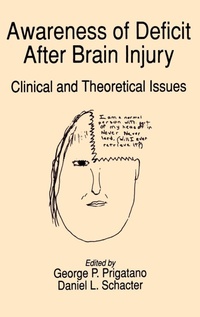
Awareness of Deficit after Brain Injury
Clinical and Theoretical Issues
Published on 16. May 1991
Book
Hardback
288 pages
978-0-19-505941-0 (ISBN)
Description
This volume provides, for the first time, multidisciplinary perspectives on the problem of awareness of deficits following brain injury. Such deficits may involve perception, attention, memory, language, or motor functions, and they can seriously disrupt an individual's ability to function. However, some brain-damaged patients are entirely unaware of the existence of their deficits, even when they are severe and easily noticed by others. In addressing these topics, contributors cover the entire range of neuropsychological syndromes in which problems with awareness of deficit are observed: hemiplegia and hemianopia, amnesia, aphasia, traumatic head injury, dementia, and others. On the clinical side, leading researchers delineate the implications of awareness of deficits for rehabilitation and patient management, and the role of defence mechanisms such as denial. Theoretical discussions focus on the importance of awareness disturbances for better understanding such cognitive processes as attention, consciousness, and monitoring.
Reviews / Votes
...interesting book...Any neurologist who is closely involved in the continuing management of patients who have suffered a stroke or head injury should read this book. It will stimulate thought about the experience of our patients and will thereby help us understand their bizarre experiences. * Journal of Neurology, Neurosurgery, and Psychiatry * The scope is extremely wide ranging ... The reviews have been written by some of the leading authorities in various fields and and enormous body of literature has been covered succinctly, in a very readblae form. The chapters are clearly laid out and each follows a similar format covering anatomical issues, a review of the literature for the particular form of anosognosia and a discussion of the theoretical issues raised. * Dr Nigel North, Odstock Hospital, Salisbury, International Journal of Rehabilitation Research 15 (1992) * For those of us who rehabilitate people with brain injuries, I consider this book a landmark event. It is probably one of the most important teaching tools for any member of the rehabilitation team. This book should be read by all who deal with these patients/clients; there is new knowledge to be found in this text even for the most sophisticated among us. * Henry H. Stonnington, Brain Injury, 1993, Vol. 7, No. 1 *More details
Language
English
Place of publication
New York
United States
Target group
Professional and scholarly
Dimensions
Height: 240 mm
Width: 161 mm
Thickness: 20 mm
Weight
599 gr
ISBN-13
978-0-19-505941-0 (9780195059410)
Copyright in bibliographic data and cover images is held by Nielsen Book Services Limited or by the publishers or by their respective licensors: all rights reserved.
Schweitzer Classification
Other editions
Additional editions
George P. Prigatano | Daniel L. Schacter
Awareness of Deficit after Brain Injury
Clinical and Theoretical Issues
E-Book
01/1991
1st Edition
OUP eBook
€70.99
Available for download
Persons
Content
George P. Prigatano & Daniel L. Schacter: Introduction; Edoardo Bisiach & Guiliano Geminiani: Anosognosia related to hemiplegia and hemianopia; Alan B. Rubens: Anosognosia of linguistic deficits in patients with neurological deficits; Kenneth M. Heilman: Anosognosia: Possible neuropsychological mechanisms; Donald T. Stuss: Disturbance of self-awareness after frontal system damage; Susan M. McGlynn & Alfred W. Kaszniak: Unawareness of deficits in dementia and schizophrenia; George P. Prigatano: Disturbances of self-awareness of deficit after traumatic brain injury; Daniel L. Schacter: Unawareness of deficit and unawareness of knowledge in patients with memory disorders; Elkhonon Goldberg & William B. Barr: Three possible mechanisms of unawareness of deficit; Marcia K. Johnson: Reality monitoring: Evidence from confabulation in organic brain disease patients; John F. Kihlstrom & Betsy A. Tobias: Anosognosia, consciousness, and the self; Lisa Lewis: The role of psychological factors in disordered awareness; Edwin A. Weinstein: Anosognosia and denial of illness; Daniel L. Schacter & George P. Prigatano: Forms of unawareness.