


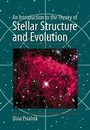
An Introduction to the Theory of Stellar Structure and Evolution
2nd Edition
Published on 29. October 2009
Book
Hardback
328 pages
978-0-521-86604-0 (ISBN)
Description
Using fundamental physics, the theory of stellar structure and evolution can predict how stars are born, how their complex internal structure changes, what nuclear fuel they burn, and their ultimate fate. This textbook is a stimulating introduction for undergraduates in astronomy, physics and applied mathematics, taking a course on the physics of stars. It uniquely emphasises the basic physical principles governing stellar structure and evolution. This second edition contains two new chapters on mass loss from stars and interacting binary stars, and new exercises. Clear and methodical, it explains the processes in simple terms, while maintaining mathematical rigour. Starting from general principles, this textbook leads students step-by-step to a global, comprehensive understanding of the subject. Fifty exercises and full solutions allow students to test their understanding. No prior knowledge of astronomy is required, and only a basic background in physics and mathematics is necessary.
Reviews / Votes
'The unique feature of this book is the emphasis it places, throughout, on the basic physical principles governing stellar evolution. The processes are always explained in the simplest terms, while maintaining full mathematical rigour ... This textbook provides a stimulating introduction for undergraduates in astronomy, physics, planetary science, and applied mathematics who are taking a course on the physics of stars. Because this book requires only basic undergraduate physics and mathematics and no prior knowledge of astronomy it may be read by advanced amateurs as well.' Orion 'Here we have a first-class textbook that spells out in a clear and methodical way the principles that underlie the life cycles of stars and the physics of their interiors. ... The host of student exercises in this book, plus the useful worked answers, ensure that any dedicated physics or mathematics undergraduate can, with some effort, understand what is going on.' David Hughes, New Scientist 'To my mind, this is the first book to be both a candidate for the title of classic and at the same time suitable for undergraduates ... The approach is very different from that of most textbooks on stars ... Throughout the book, the emphasis is on understanding physical principles, and there are well-designed exercises scattered through the text, relating to material that has just been covered; full solutions are clearly set out in an appendix ... This ... is a book that I can strongly recommend as a suitable textbook to anyone teaching a course in stellar structure, at advanced undergraduate or beginning graduate level ... Any undergraduate who masters this book will not only be well prepared to undertake graduate work in the area but will also understand his/her other physics courses better. An excellent book, which certainly deserves to become a classic.' Robert Connon Smith, The Observatory '... a stimulating introduction for students of astronomy, physics and applied mathematics, taking a course on the physics of stars. It uniquely emphasises the basic physical principles governing stellar structure and evolution.' Spaceflight '... second edition of a very popular textbook on stellar structure and evolution ... The coverage is very comprehensive and well-explained with clear illustrations and interesting historical side notes ... this textbook is an excellent buy for most students interested in the basic physical properties of stars.' Contemporary PhysicsMore details
Edition
2nd Revised edition
Language
English
Place of publication
Cambridge
United Kingdom
Target group
College/higher education
Professional and scholarly
Edition type
Revised edition
Illustrations
Worked examples or Exercises; 23 Halftones, unspecified
Dimensions
Height: 250 mm
Width: 175 mm
Thickness: 22 mm
Weight
754 gr
ISBN-13
978-0-521-86604-0 (9780521866040)
Copyright in bibliographic data and cover images is held by Nielsen Book Services Limited or by the publishers or by their respective licensors: all rights reserved.
Schweitzer Classification
Other editions
Additional editions

E-Book
10/2009
Cambridge University Press
€47.99
Available for download

E-Book
10/2009
2nd Edition
Cambridge University Press
€52.99
Available for download
Previous edition
Book
07/2000
Cambridge University Press
€99.20
Article exhausted; check for reprint
Person
Dina Prialnik is a Professor of Planetary Physics at Tel Aviv University. Her research interests lie in stellar evolution; the structure and evolution of cataclysmic variables, comet nuclei and other small Solar System bodies; and the evolution of planets.
Content
1. Observations and assumptions; 2. Equations of stellar evolution; 3. Physics of gas and radiation; 4. Nuclear processes; 5. Equilibrium - simple models; 6. Stability of stars; 7. Evolution of stars - schematic picture; 8. Mass loss from stars; 9. The evolution of stars - a detailed picture; 10. Exotic stars: supernovae, pulsars, black holes; 11. Interacting binary stars; 12. The stellar life cycle; Appendixes; References; Index.