


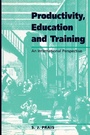
Productivity, Education and Training
Facts and Policies in International Perspective
Published on 14. September 1995
Book
Hardback
154 pages
978-0-521-48305-6 (ISBN)
Description
The continuing development of automated production methods, combined with increasing competition from low-wage developing economies, is likely to reduce yet further the scope for the employment of low-skilled and inexperienced personnel in advanced economies. Higher standards of schooling and of vocational training are now widely recognised as essential. Based on visits by expert teams over the last ten years to matched samples of manufacturing plants, as well as to schools and vocational colleges in Britain and the European Continent, this book provides a realistic analysis of what needs to be done. The emphasis is on the need to expand, not the proportion of the workforce with university qualifications, but those with craft and vocational qualifications. The findings of this research have been influential in the development of government policies, and the author explains why these policies need to move even further, and in which directions they must next move.
More details
Series
Language
English
Place of publication
Cambridge
United Kingdom
Target group
Professional and scholarly
Illustrations
10 Tables, unspecified
Dimensions
Height: 235 mm
Width: 156 mm
Thickness: 14 mm
Weight
352 gr
ISBN-13
978-0-521-48305-6 (9780521483056)
Copyright in bibliographic data and cover images is held by Nielsen Book Services Limited or by the publishers or by their respective licensors: all rights reserved.
Schweitzer Classification
Other editions
New editions
Book
09/1995
Cambridge University Press
€43.40
Shipment within 15-20 days
Additional editions
Book
09/1995
Cambridge University Press
€43.40
Shipment within 15-20 days
Person
Content
Preface; 1. General principles; 2. Preparation for work in Britain and elsewhere; 3. Productivity and its determinants: case studies; 4. Education and productivity; 5. From principles to practice; Notes; References; Index.