


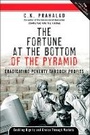
The Fortune at the Bottom of the Pyramid
Eradicating Poverty Through Profits
Published on 5. August 2004
Book
Mixed media product
432 pages
978-0-13-146750-7 (ISBN)
Description
The world's most exciting, fastest-growing new market is where you least expect it: at the bottom of the pyramid. Collectively, the world's billions of poor people have immense untapped buying power. They represent an enormous opportunity for companies who learn how to serve them. Not only can it be done, it is being done--very profitably. What's more, companies aren't just making money: by serving these markets, they're helping millions of the world's poorest people escape poverty.
C.K. Prahalad's global bestseller The Fortune at the Bottom of the Pyramid, now available in paperback, shows why you can't afford to ignore "Bottom of the Pyramid" (BOP) markets. Now available in paperback, it offers a blueprint for driving the radical innovation you'll need to profit in emerging markets--and using those innovations to become more competitive everywhere. This new paperback edition includes eleven concise, fast-paced success stories from India, Peru, Mexico, Brazil, and Venezuela--ranging from salt to soap, banking to cellphones, healthcare to housing. These stories are backed by more detailed case studies and 10 hours of digital videos on whartonsp.com. Simply put, this book is about making a revolution: building profitable "bottom of the pyramid" markets, reducing poverty, and creating an inclusive capitalism that works for everyone.
C.K. Prahalad's global bestseller The Fortune at the Bottom of the Pyramid, now available in paperback, shows why you can't afford to ignore "Bottom of the Pyramid" (BOP) markets. Now available in paperback, it offers a blueprint for driving the radical innovation you'll need to profit in emerging markets--and using those innovations to become more competitive everywhere. This new paperback edition includes eleven concise, fast-paced success stories from India, Peru, Mexico, Brazil, and Venezuela--ranging from salt to soap, banking to cellphones, healthcare to housing. These stories are backed by more detailed case studies and 10 hours of digital videos on whartonsp.com. Simply put, this book is about making a revolution: building profitable "bottom of the pyramid" markets, reducing poverty, and creating an inclusive capitalism that works for everyone.
Reviews / Votes
"C. K. Prahalad argues that companies must revolutionize how they dobusiness in developing countries if both sides of that economic equation areto prosper. Drawing on a wealth of case studies, his compelling new bookoffers an intriguing blueprint for how to fight poverty with profitability."Bill Gates, Chairman and Chief Software Architect,Microsoft"The Bottom of the Pyramid belongs at the top of the reading list forbusiness people, academics, and experts pursuing the elusive goal ofsustainable growth in the developing world. C. K. Prahalad writes withuncommon insight about consumer needs in poor societies andopportunities for the private sector to serve important public purposes whileenhancing its own bottom line. If you are looking for fresh thinking aboutemerging markets, your search is ended. This is the book for you."
Madeleine K. Albright, Former U.S. Secretary of State"Prahalad challenges readers to re-evaluate their pre-conceived notionsabout the commercial opportunities in serving the relatively poor nations ofthe world. The Bottom of the Pyramid highlights the way to commercialsuccess and societal improvement--but only if the developed worldreconceives the way it delivers products and services to the developingworld."
Christopher Rodrigues, CEO, Visa International"An important and insightful work showing persuasively how the privatesector can be put at the center of development, not just as a rhetoricalflourish but as a real engine of jobs and services for the poor."
Mark Malloch Brown, Administrator, United Nations Development Programme
More details
Language
English
Place of publication
Upper Saddle River
United States
Publishing group
Pearson Education (US)
Target group
Professional and scholarly
Dimensions
Width: 236 mm
Thickness: 35 mm
Weight
703 gr
ISBN-13
978-0-13-146750-7 (9780131467507)
Copyright in bibliographic data and cover images is held by Nielsen Book Services Limited or by the publishers or by their respective licensors: all rights reserved.
Schweitzer Classification
Other editions
New editions
Book
04/2006
Financial TImes Prentice Hall
€12.37
Article exhausted; check for reprint
Person
C.K. Prahalad is Harvey C. Fruehauf Professor of Business Administration and Professor of Corporate Strategy and International Business at the University of Michigan Business School. He is a globally recognized business consultant who has worked with senior management at many of the world's leading companies. Prahalad's groundbreaking article, "The End of Corporate Imperialism," won the 1998 McKinsey Prize as the year's best Harvard Business Review article. C. K. co-authored several important papers and articles, including "The Fortune at the Bottom of the Pyramid," which have helped launch a global movement towards private-sector solutions for global poverty. His research focuses on corporate strategy and the role of top management in diversified multinational corporations. With Gary Hamel, he co-authored the global business bestseller Competing for the Future.
Content
Preface.
About the Author.
I. THE FORTUNE AT THE BOTTOM OF THE PYRAMID.
1. The Market at the Bottom of the Pyramid.
The Power of Dominant Logic
The Nature of the BOP Market
There Is Money at the BOP
Access to BOP Markets
The BOP Markets Are Brand Conscious
The BOP Market Is Connected
BOP Consumers Accept Advanced Technology Readily
The Market Development Imperative
Create the Capacity to Consume
The Need for New Goods and Services
Dignity and Choice
Trust Is a Prerequisite
Benefits to the Private Sector
2. Products and Services for the BOP.
A Philosophy for Developing Products and Services for the BOP
Twelve Principles of Innovation for BOP Markets
Making It Happen
Conclusion
3. BOP: A Global Opportunity?
Engaging the BOP
Local Growth Opportunities
Learning to Grow
Local Innovations and Global Opportunity
BOP Solutions for Developed Markets
Lessons for MNCs from BOP Markets
Captial Intensity
Sustainable Development
Innovations
The Cost of Managing
Learning to Live in a Network of Relationships
4. The Ecosystem for Wealth Creation.
Market-Oriented Ecosystem
Ecosystems for a Developing Country
Learning the Sanctity of Contracts
Reducing Inequities in Contracts
Building Governance Capabilities Among the Poor
5. Reducing Corruption: Transaction Governance Capacity.
Are the Poor Poor?
TGC
Building TGC
The Andhra Pradesh e-Governance Story
eSeva
Center for Good Governance
Impediments
Lessons from the Andhra Pradesh Experiment
Appendix: List of eSeva Services
6. Development as Social Transformation.
Development as Social Transformation
Breaking Down Barriers to Communication
BOP Consumers Upgrade
Gaining Access to Knowledge
Identity for the Individual
Women Are Critcal for Development
Evolving Checks and Balances
The Real Test: From the Pyramid to the Diamond
II. INNOVATIVE PRACTICES AT THE BOTTOM OF THE PYRAMID.
Section I: The Market at the Bottom of the Pyramid.
Casas Bahia: Fulfilling a Dream
CEMEX: Innovation in Housing for the Poor
Section II: Known Problems and Known Solutions: What Is the Missing Link?
The Annapurna Salt Story: Public Health and Private Enterprise
Selling Health: Hindustan Lever Limited and the Soap Market
Section III: Known Problems and Unique Solutions.
Jaipur Foot: Challenging Convention
The Aravind Eye Care System: Delivering the Most Precious Gift
Section IV: Known Problems and Systemwide Reform.
ICICI Bank: Innovations in Finance
The ITC e-Choupal Story: Profitable Rural Transformation
The EID Parry Story On CD
Section V: Scaling Innovations.
The Voxiva Story
Innovations in Energy: E+Co's Investment in Tecnosol On CD
Section VI: -Creating Enabling Conditions for the Development of the Private Sector - On CD.
Citizen Centricity: E-Governance in Andhra Pradesh On CD
Biography
Index
III. CD: 35 MINUTES OF VIDEO SUCCESS STORIES FILMED ON LOCATION IN THE BOTTOM OF THE PYRAMID IN INDIA, PERU, MEXICO, BRAZIL, AND VENEZUELA.
Casas Bahia (3:54)
CEMEX (3:07)
Annapurna Salt (4:05)
Hindustan Lever Limited (4:16)
Jaipur Foot (4:40)
Aravind Eye Care (6:08)
ICICI Bank (4:23)
ITC e-Choupal (4:08)
EID Parry (4:12)
Voxiva (3:33)
E+Co/Tecnosol (4:34)
Andhra Pradesh (3:30)
Interactive practices text in PDF format
The EID Parry Story
Innovations in Energy: E+Co's Investment in Tecnosol
Citizen Centricity: E-Governance in Andhra Pradesh
About the Author.
I. THE FORTUNE AT THE BOTTOM OF THE PYRAMID.
1. The Market at the Bottom of the Pyramid.
The Power of Dominant Logic
The Nature of the BOP Market
There Is Money at the BOP
Access to BOP Markets
The BOP Markets Are Brand Conscious
The BOP Market Is Connected
BOP Consumers Accept Advanced Technology Readily
The Market Development Imperative
Create the Capacity to Consume
The Need for New Goods and Services
Dignity and Choice
Trust Is a Prerequisite
Benefits to the Private Sector
2. Products and Services for the BOP.
A Philosophy for Developing Products and Services for the BOP
Twelve Principles of Innovation for BOP Markets
Making It Happen
Conclusion
3. BOP: A Global Opportunity?
Engaging the BOP
Local Growth Opportunities
Learning to Grow
Local Innovations and Global Opportunity
BOP Solutions for Developed Markets
Lessons for MNCs from BOP Markets
Captial Intensity
Sustainable Development
Innovations
The Cost of Managing
Learning to Live in a Network of Relationships
4. The Ecosystem for Wealth Creation.
Market-Oriented Ecosystem
Ecosystems for a Developing Country
Learning the Sanctity of Contracts
Reducing Inequities in Contracts
Building Governance Capabilities Among the Poor
5. Reducing Corruption: Transaction Governance Capacity.
Are the Poor Poor?
TGC
Building TGC
The Andhra Pradesh e-Governance Story
eSeva
Center for Good Governance
Impediments
Lessons from the Andhra Pradesh Experiment
Appendix: List of eSeva Services
6. Development as Social Transformation.
Development as Social Transformation
Breaking Down Barriers to Communication
BOP Consumers Upgrade
Gaining Access to Knowledge
Identity for the Individual
Women Are Critcal for Development
Evolving Checks and Balances
The Real Test: From the Pyramid to the Diamond
II. INNOVATIVE PRACTICES AT THE BOTTOM OF THE PYRAMID.
Section I: The Market at the Bottom of the Pyramid.
Casas Bahia: Fulfilling a Dream
CEMEX: Innovation in Housing for the Poor
Section II: Known Problems and Known Solutions: What Is the Missing Link?
The Annapurna Salt Story: Public Health and Private Enterprise
Selling Health: Hindustan Lever Limited and the Soap Market
Section III: Known Problems and Unique Solutions.
Jaipur Foot: Challenging Convention
The Aravind Eye Care System: Delivering the Most Precious Gift
Section IV: Known Problems and Systemwide Reform.
ICICI Bank: Innovations in Finance
The ITC e-Choupal Story: Profitable Rural Transformation
The EID Parry Story On CD
Section V: Scaling Innovations.
The Voxiva Story
Innovations in Energy: E+Co's Investment in Tecnosol On CD
Section VI: -Creating Enabling Conditions for the Development of the Private Sector - On CD.
Citizen Centricity: E-Governance in Andhra Pradesh On CD
Biography
Index
III. CD: 35 MINUTES OF VIDEO SUCCESS STORIES FILMED ON LOCATION IN THE BOTTOM OF THE PYRAMID IN INDIA, PERU, MEXICO, BRAZIL, AND VENEZUELA.
Casas Bahia (3:54)
CEMEX (3:07)
Annapurna Salt (4:05)
Hindustan Lever Limited (4:16)
Jaipur Foot (4:40)
Aravind Eye Care (6:08)
ICICI Bank (4:23)
ITC e-Choupal (4:08)
EID Parry (4:12)
Voxiva (3:33)
E+Co/Tecnosol (4:34)
Andhra Pradesh (3:30)
Interactive practices text in PDF format
The EID Parry Story
Innovations in Energy: E+Co's Investment in Tecnosol
Citizen Centricity: E-Governance in Andhra Pradesh