

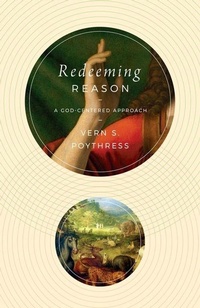
Redeeming Reason
A God-Centered Approach
Published on 25. April 2023
Book
Paperback/Softback
208 pages
978-1-4335-8731-3 (ISBN)
Description
Vern S. Poythress Explains the Laws of Human Reasoning and How to Apply Them in Light of the Gospel
Humans use reasoning to understand and order the world around us. We apply this logic in a variety of contexts, from classifying simple objects to considering complex philosophies. But how should our identity as Christians-made in the image of God (Gen. 1:26-27) with minds renewed by the Holy Spirit (Rom. 12:1-2)-inform our reasoning?
Vern S. Poythress explains how all human reasoning reflects God's nature. Providing a foundational understanding of God as the source of rationality, Poythress details the 3 fundamental laws of logic-identity, contradiction, and excluded middle-with a strong focus on analogical reasoning. This robust guide explains types of analogy, ethics applied to logic, the use of analogies in the doctrines of God, and more to give readers a renewed perspective on how to use reason as a follower of God.
Thorough Study of Reasoning: Explores the 3 fundamental laws of logic along with various kinds of analogy, including syllogistic reasoning, formal deductive reasoning, inductive reasoning, and scientific models
From the Author of Logic: A God-Centered Approach to the Foundation of Western Thought: This book continues Poythress's look at reasoning, placing it under the lordship of Christ
Great for Students, Pastors, and Christian Philosophers: Includes helpful visuals and appendices for learning and applying various systems of logic
Humans use reasoning to understand and order the world around us. We apply this logic in a variety of contexts, from classifying simple objects to considering complex philosophies. But how should our identity as Christians-made in the image of God (Gen. 1:26-27) with minds renewed by the Holy Spirit (Rom. 12:1-2)-inform our reasoning?
Vern S. Poythress explains how all human reasoning reflects God's nature. Providing a foundational understanding of God as the source of rationality, Poythress details the 3 fundamental laws of logic-identity, contradiction, and excluded middle-with a strong focus on analogical reasoning. This robust guide explains types of analogy, ethics applied to logic, the use of analogies in the doctrines of God, and more to give readers a renewed perspective on how to use reason as a follower of God.
Thorough Study of Reasoning: Explores the 3 fundamental laws of logic along with various kinds of analogy, including syllogistic reasoning, formal deductive reasoning, inductive reasoning, and scientific models
From the Author of Logic: A God-Centered Approach to the Foundation of Western Thought: This book continues Poythress's look at reasoning, placing it under the lordship of Christ
Great for Students, Pastors, and Christian Philosophers: Includes helpful visuals and appendices for learning and applying various systems of logic
More details
Language
English
Place of publication
Wheaton, IL
United States
Product notice
Paperback (trade)
Dimensions
Height: 214 mm
Width: 136 mm
Thickness: 18 mm
Weight
249 gr
ISBN-13
978-1-4335-8731-3 (9781433587313)
Copyright in bibliographic data and cover images is held by Nielsen Book Services Limited or by the publishers or by their respective licensors: all rights reserved.
Schweitzer Classification
Other editions
Additional editions
E-Book
04/2023
Crossway
€15.56
Available for download
Person
Vern S. Poythress (PhD, Harvard University; ThD, University of Stellenbosch) is Distinguished Professor of New Testament, Biblical Interpretation, and Systematic Theology at Westminster Theological Seminary in Philadelphia, Pennsylvania, where he has taught for four decades. In addition to earning six academic degrees, he is the author of numerous books and articles on biblical interpretation, language, and science.
Content
Tables
Diagrams
Introduction
Chapter 1: Where to Start in Redeeming Reasoning
Part I: God as the Source of Rationality
Chapter 2: God's Rationality
Chapter 3: God's Rationality Expressed
Chapter 4: Implications of the Image of God
Part II: Analogy
Chapter 5: The Nature of Analogy in Thought
Chapter 6: Analogy as a Perspective on Classification
Chapter 7: Analogy in the Three Fundamental Laws of Logic
Part III: Kinds of Analogy
Chapter 8: Analogy in Varied Contexts
Chapter 9: Analogy in Varied Communication
Chapter 10: Tight Analogy and Loose Analogy
Part IV: Guidance for Analogy
Chapter 11: Guidance in the Use of Analogy
Chapter 12: Context in God
Chapter 13: Perspectives on Ethics, Applied to Analogies
Chapter 14: Judicial Deliberations
Part V: Deriving Perspectives on Rationality
Chapter 15: The Idea of a Perspective
Chapter 16: Perspectives by Persons of the Trinity
Chapter 17: Perspectives on Our Knowledge of God
Chapter 18: Perspectives on Analogies in General
Part VI: Simplicity and the Doctrine of God
Chapter 19: The Simplicity of God and Perspectives
Chapter 20: Using Analogies in the Doctrine of God
Chapter 21: Conclusion
Appendices on Modeling Analogies
Appendix A: Modeling the Complexity of Analogy
Appendix B: Analysis Using Analogy
Bibliography
General Index
Scripture Index
Diagrams
Introduction
Chapter 1: Where to Start in Redeeming Reasoning
Part I: God as the Source of Rationality
Chapter 2: God's Rationality
Chapter 3: God's Rationality Expressed
Chapter 4: Implications of the Image of God
Part II: Analogy
Chapter 5: The Nature of Analogy in Thought
Chapter 6: Analogy as a Perspective on Classification
Chapter 7: Analogy in the Three Fundamental Laws of Logic
Part III: Kinds of Analogy
Chapter 8: Analogy in Varied Contexts
Chapter 9: Analogy in Varied Communication
Chapter 10: Tight Analogy and Loose Analogy
Part IV: Guidance for Analogy
Chapter 11: Guidance in the Use of Analogy
Chapter 12: Context in God
Chapter 13: Perspectives on Ethics, Applied to Analogies
Chapter 14: Judicial Deliberations
Part V: Deriving Perspectives on Rationality
Chapter 15: The Idea of a Perspective
Chapter 16: Perspectives by Persons of the Trinity
Chapter 17: Perspectives on Our Knowledge of God
Chapter 18: Perspectives on Analogies in General
Part VI: Simplicity and the Doctrine of God
Chapter 19: The Simplicity of God and Perspectives
Chapter 20: Using Analogies in the Doctrine of God
Chapter 21: Conclusion
Appendices on Modeling Analogies
Appendix A: Modeling the Complexity of Analogy
Appendix B: Analysis Using Analogy
Bibliography
General Index
Scripture Index