

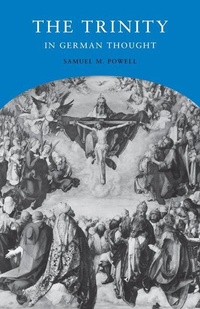
The Trinity in German Thought
Published on 8. January 2009
Book
Paperback/Softback
292 pages
978-0-521-09292-0 (ISBN)
Description
The Trinity in German Thought, published in 2000, describes the three ideas that govern modern German Trinitarian thought: the ideas of reflective selfhood, of revelation and of history. 'Reflective selfhood' designates the attempt at finding an analogy between the Trinity and the structure of the human self. Such attempts, following the lead of Augustine, typically see the structure of self-consciousness as an especially apt analogy of the Trinity. 'Revelation' points to two questions: what is the Word of God? and can the idea of the Trinity be derived from the Word? From Martin Luther to the present, Trinitarian thought has depended on the way in which theologians conceived of the Word. 'History' designates the impact that historical modes of thought have had on Trinitarian thought. For some, 'history' has meant a critical approach to Scripture and creeds; for others, it has meant God's own participation in history.
Reviews / Votes
Review of the hardback: '... a useful textbook for those studying modern doctrine ...'. Journal of Ecclesiastical History Review of the hardback: ' ... what he offers us at one and the same time is both a framework within which to understand present developments and a series of very helpful vignettes of the thought of major figures along the way.' David BrownMore details
Language
English
Place of publication
Cambridge
United Kingdom
Target group
Professional and scholarly
College/higher education
Product notice
Paperback (trade)
Illustrations
Worked examples or Exercises
Dimensions
Height: 216 mm
Width: 140 mm
Thickness: 17 mm
Weight
415 gr
ISBN-13
978-0-521-09292-0 (9780521092920)
Copyright in bibliographic data and cover images is held by Nielsen Book Services Limited or by the publishers or by their respective licensors: all rights reserved.
Schweitzer Classification
Person
Content
Foreword; Introduction; 1. Martin Luther and Philip Melanchthon; 2. Between scholastic theology and enlightenment; 3. The critical enlightenment; 4. Hegel; 5. Liberal theology; 6. The twentieth century; Conclusion.