

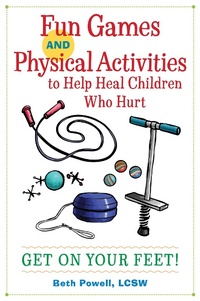
Fun Games and Physical Activities to Help Heal Children Who Hurt
Get On Your Feet!
Published on 21. February 2018
Book
Paperback/Softback
176 pages
978-1-78592-773-7 (ISBN)
Description
Develop children's brains and bonds with this collection of no-tech, physical games, strategies and activities. Ideal for children who have experienced neglect, abuse and trauma, these "real-world" experiences draw on therapeutic, trauma-focused-care play principles and promote positive attachment between child and caregivers.
Explanations for how and why specific play themes and caregiver attitudes can help children's brain development enhance the text. The book also shows how children learn to problem-solve real life situations by playing them out, finding workable solutions to their own problems, and increasing their resiliency. Further benefits include better cause-effect thinking, impulse control, and increased cognitive and emotional functioning by practicing physical movements that exercise specific areas of the brain.
Explanations for how and why specific play themes and caregiver attitudes can help children's brain development enhance the text. The book also shows how children learn to problem-solve real life situations by playing them out, finding workable solutions to their own problems, and increasing their resiliency. Further benefits include better cause-effect thinking, impulse control, and increased cognitive and emotional functioning by practicing physical movements that exercise specific areas of the brain.
Reviews / Votes
This book gives fun ways to engage children in physical as well as mental activities during difficult times of pain or hurt. The physical activities especially strengthen muscle memory, providing a vast opportunity for children who will benefit from this well-written and timely book! -- Dawn D'Amico LCSW, PhD, author of 101 Mindful Arts-Based Activities to Get Children and Adolescents Talking This is a fresh approach and much-needed resource for today's parents. An essential book for those who wish to instill "non-tech" problem-solving skills for real world problems that children face in the 21st century. Powell's personal stories and powerful insight combine to make this an easy read. The book is filled with helpful strategies and the questions at the end of each chapter are a great learning tool and resource. Truly, this is a book that is ideal for those working with children suffering from trauma. -- Dr. John DeGarmo, leading expert in foster care and parenting, founder of The Foster Care Institute What I find most interesting about Beth Powell's work is the connections she makes between the physical, the neurological, and the emotional. She reminds us that physical play and creative play are vital for healthy human growth and must retain significance in this world of electronic and passive stimulants. -- Dr. Brandy Harvey, Dean of Instruction, Lone Star College, Montgomery Fun Games and Physical Activities to Help Heal Children Who Hurt is unlike anything I've yet to read! Ms. Powell breaks the typical activity book barrier with a masterpiece much more personal. This book is what this generation needs: let's replace the tech and retrain the brain. A great read for parents, teachers, and people seeking out tools to reach the neglected and traumatized. -- Troy Skeen, Former Director and Founder of a Nationally Recognized Treatment Facility for Traumatized Children The book shows how particular activities contribute to healing the neurological and psychological damage that trauma has created. It also advises on helping children to problem-solve by acting out situations in real life. The questions at the end of each chapter are valuable for reflecting on what has been learnt and how to apply that; the personal experiences help reassurance and credibility, showing the impact of the activities in the real world. A useful book for teachers, therapists and parents which takes a refreshing new approach that can be utilised in many areas of childhood. -- Parents in Touch * Parents in Touch *More details
Language
English
Place of publication
London
United Kingdom
Target group
College/higher education
Professional and scholarly
Product notice
Paperback (UK-trade)
Illustrations
30 black and white line drawings
Dimensions
Height: 226 mm
Width: 152 mm
Thickness: 13 mm
Weight
227 gr
ISBN-13
978-1-78592-773-7 (9781785927737)
Copyright in bibliographic data and cover images is held by Nielsen Book Services Limited or by the publishers or by their respective licensors: all rights reserved.
Schweitzer Classification
Other editions
Additional editions
E-Book
02/2018
Jessica Kingsley Publishers
€23.99
Available for download
Person
Beth Powell, LCSW is owner of Beth Powell's In-Family Services, an outpatient psychotherapy private practice specializing in trauma-informed care, in Conroe, Texas.
Content
Acknowledgements. Introduction. Part 1: Trauma, Movement, Relationships and the Developing Brain. 1. How Traumatic Stress Creates Maladaptive but Self-Protective Brain States: or When Bad Things Happen to Small People. 2. How Movement, "Real World" Play and Non-Virtual Relationships Can Build Brains, Better Minds and Bolster Bonds: or What I Learned from Playing Sodom and Gomorrah with Barbie Dolls. 3. Creating the Structure of the Relationship to Help Hurting Children Heal. Part 2: Helping Children Heal through Real-World Experiences, Activities and Face-to-Face Human Contact. 4. Build the Foundation for Mature Character through Safety-Security-Protection-Trust Activities and Experiences. 5. Build Awareness of Self and Others through Proprioception Activities and Rhythmic Interactions. 6. Build Emotional Regulation and Self-Control so that the Power of the Will Can Strengthen. 7. Build Courage, Compassion and Higher Level Thinking through Problem-Solving Activities and Acts of Bravery. 8. Where Do We Go From Here? References. About the Author.