

The Persuasive Agency of Objects and Social Practices in Alfred the Great's Reform Programme
Description
Alfred the Great's early English kingdom was the only one to resist Viking conquest. His reform program strengthened the kingdom and enabled it to hold fast against the Vikings. But texts are largely silent on the process of reform. There has been a tendency to assume that these reforms would obviously be beneficial, but Alfred's elites were not to know that in advance. What motivated them to do as their king bid them?
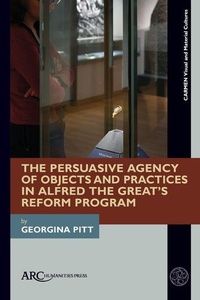
This book analyzes how objects and behaviours shaped aristocratic response to the reform program, using assemblage theory and social practice theory. The Alfred Jewel (as shown on the cover) exercised a powerful persuasive agency in Alfredian reform. Broadening the frame of inquiry beyond textual evidence, giving objects and behaviours their due, permits a richer and more nuanced understanding.
More details
Other editions
Additional editions
Person
Georgina Pitt is an Honorary Research Fellow at the University of Western Australia. Her research focuses on the early medieval period, across the disciplines of history, literary studies, and archaeology. She has published on Alfredian reform, Sutton Hoo, and the medieval experience of war.
Content
Acknowledgements
Author's Note
Abbreviations
Prelude. The Enigmatic Alfred Jewel
Chapter 1. Introduction
Chapter 2. Military Innovation: Performing Alfredian Ideology
Chapter 3. Alfredian Ideology
Chapter 4. Alfredian Learning and Its Implications for Alfredian Reform
Chapter 5. Text-Bodies: A Crucial Actant
Chapter 6. Social Practices: Routinized Ways of Doing Things
Chapter 7. The Enigmatic Alfred Jewel: A Powerful Player in Alfredian Reform
Coda. Looking Forward: Alfred's Successors
Bibliography
Index