

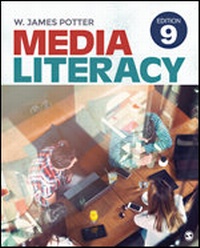
Media Literacy
9th Edition
Published on 12. July 2019
Book
Paperback/Softback
544 pages
978-1-5063-6628-9 (ISBN)
Description
Drawing from thousands of media research studies, W. James Potter presents numerous examples and facts to help students understand how the media operate, how they attract attention and how they influence the public. Each chapter concludes with a set of exercises to help readers apply the chapter material to everyday life and engage in a step-by-step process to increase their own media literacy.
Reviews / Votes
"A reliable book focused entirely on media literacy that is very thorough and well researched. W. James Potter is a well-respected author with sterling credentials and a reputation for credibility." -- Donna L. Halper "Potter's book is great for an introductory course for majors and non-majors alike...students also really love the book because the examples are current and the activities allow them to use their favorite media to develop a deeper level of media literacy." -- Elizabeth R. OrtizMore details
Edition
9th Revised edition
Language
English
Place of publication
Thousand Oaks
United States
Target group
College/higher education
Edition type
Revised edition
Dimensions
Height: 232 mm
Width: 187 mm
Weight
812 gr
ISBN-13
978-1-5063-6628-9 (9781506366289)
Copyright in bibliographic data and cover images is held by Nielsen Book Services Limited or by the publishers or by their respective licensors: all rights reserved.
Schweitzer Classification
Other editions
Previous edition
W. James Potter
Media Literacy
Book
03/2016
8th Edition
SAGE Publications Inc
€101.84
Article exhausted; check for reprint
Person
W. James Potter, professor at the University of California at Santa Barbara, holds one PhD in Communication Studies and another in Instructional Technology. He has been teaching media courses for more than two decades in the areas of effects on individuals and society, content narratives, structure and economics of media industries, advertising, and journalism. He has served as editor of the Journal of Broadcasting & Electronic Media and is the author of many journal articles and several dozen books, including: Media Effects; Media Literacy, 10th edition; The 11 Myths of Media Violence; Major Theories of Media Effects; Becoming a Strategic Thinker: Developing Skills for Success; and 7 Skills of Media Literacy.
Content
Preface
Acknowledgments
About the Author
PART I. INTRODUCTION
Chapter 1. Why Increase Media Literacy?
The Information Problem
Dealing With the Information Problem
The Big Question
Summary
Further Reading
Keeping Up to Date
Chapter 2. Media Literacy Approach
What Is Media Literacy?
The Three Building Blocks of Media Literacy
The Definition of Media Literacy
The Development of Media Literacy
Advantages of Developing a Higher Degree of Media Literacy
Summary
Further Reading
Exercise
PART II. AUDIENCES
Chapter 3. Audience: Individual Perspective
Information-Processing Tasks
Analyzing the Idea of Exposure to Media Messages
The Media Literacy Approach
Summary
Further Reading
Exercise
Chapter 4. Audience: Industry Perspective
Shift From Mass to Niche Perspective on Audience
Identifying Niches
Attracting Audiences
Conditioning Audiences
Summary
Further Reading
Exercises
Chapter 5. Children as a Special Audience
Why Treat Children as a Special Audience?
Special Treatment From Regulators
Special Treatment From Parents
Re-examining the Case for Special Treatment of Children
Young Adults as a Special Audience
Summary
Further Reading
Keeping Up to Date
Exercise
PART III. INDUSTRY
Chapter 6. Development of the Mass Media Industries
Patterns of Development
Comparisons Across Mass Media
Current Picture
Summary
Further Reading
Keeping Up to Date
Exercises
Chapter 7. Economic Perspective
The Media Game of Economics
Characteristics of the Game
Media Industry Perspective
Consumers' Strategies
Summary
Further Reading
Keeping Up to Date
Exercises
PART IV. CONTENT
Chapter 8. Media Content and Reality
Role of Reality in Media Content Formulas
Reality Programming as a Genre
The Importance of Media Literacy
Summary
Further Reading
Keeping Up to Date
Exercise
Chapter 9. News
Dynamic Nature of News
Different Perspectives on News
Consumer Standards for Evaluating the Quality of News
How Can We Become More Media Literate With News?
Summary
Further Reading
Keeping Up to Date
Exercises
Chapter 10. Entertainment
Story Formulas
Challenges
Patterns
Becoming Media Literate With Entertainment Messages
Summary
Further Reading
Keeping Up to Date
Exercises
Chapter 11. Advertising
Advertising Is Pervasive
Process of Constructing Advertising Messages
Becoming More Media Literate with Advertising
Summary
Further Reading
Keeping Up to Date
Exercises
Chapter 12. Interactive Media
Competitive Experiences
Cooperative Experiences
Acquisition Experiences
Media Literacy With Interactive Messages
Summary
Further Reading
Keeping Up to Date
Exercises
PART V. EFFECTS
Chapter 13. Broadening Our Perspective on Media Effects
Timing of Effects
Valence of Effects
Intentionality of Effects
Type of Effects
Four-Dimensional Analysis
Becoming More Media Literate
Summary
Further Reading
Exercises
Chapter 14. How Does the Media Effects Process Work?
Media Effects Are Constantly Occurring
Factors Influencing Media Effects
Process of Influence
Thinking About Blame
Becoming More Media Literate
Summary
Further Reading
Keeping Up to Date
Exercises
PART VI. THE SPRINGBOARD
Chapter 15. Helping Yourself and Others to Increase Media Literacy
Helping Yourself
Helping Others
Summary
Keeping Up to Date
Exercises
PART VII. CONFRONTING THE ISSUES
Issue 1. Ownership of Mass Media Businesses
Delineating the Issue
Evidence of Concentration
Evidence for Harm
Your Own Informed Opinion
Further Reading
Keeping Up to Date
Applying Media Literacy Skills
Issue 2. Sports
Delineating the Issue
The Money Cycle
Olympics
Video Gaming
Your Own Informed Opinion
Further Reading
Keeping Up to Date
Applying Media Literacy Skills
Issue 3. Fake News
What Is Fake News?
Media-Literate Treatment of Fake News
Your Own Informed Opinion
Further Reading
Keeping Up to Date
Applying Media Literacy Skills
Issue 4. Advertising
Delineating the Issue
Faulty Criticisms
Criticisms Based on Personal Values
Criticisms About Responsibility
Your Own Informed Opinion
Further Reading
Applying Media Literacy Skills
Issue 5. Media Violence
Delineating the Issue
The Public's Faulty Perceptions
Producers' Faulty Beliefs
Your Own Informed Opinion
Further Reading
Applying Media Literacy Skills
Issue 6. Privacy
Delineating the Issue
Criminal Threats to Your Privacy
Non-criminal Threats to Your Privacy
Public Opinion and Regulations
Your Own Informed Opinion
Further Reading
Keeping Up to Date
Applying Media Literacy Skills
Glossary
References
Index
Acknowledgments
About the Author
PART I. INTRODUCTION
Chapter 1. Why Increase Media Literacy?
The Information Problem
Dealing With the Information Problem
The Big Question
Summary
Further Reading
Keeping Up to Date
Chapter 2. Media Literacy Approach
What Is Media Literacy?
The Three Building Blocks of Media Literacy
The Definition of Media Literacy
The Development of Media Literacy
Advantages of Developing a Higher Degree of Media Literacy
Summary
Further Reading
Exercise
PART II. AUDIENCES
Chapter 3. Audience: Individual Perspective
Information-Processing Tasks
Analyzing the Idea of Exposure to Media Messages
The Media Literacy Approach
Summary
Further Reading
Exercise
Chapter 4. Audience: Industry Perspective
Shift From Mass to Niche Perspective on Audience
Identifying Niches
Attracting Audiences
Conditioning Audiences
Summary
Further Reading
Exercises
Chapter 5. Children as a Special Audience
Why Treat Children as a Special Audience?
Special Treatment From Regulators
Special Treatment From Parents
Re-examining the Case for Special Treatment of Children
Young Adults as a Special Audience
Summary
Further Reading
Keeping Up to Date
Exercise
PART III. INDUSTRY
Chapter 6. Development of the Mass Media Industries
Patterns of Development
Comparisons Across Mass Media
Current Picture
Summary
Further Reading
Keeping Up to Date
Exercises
Chapter 7. Economic Perspective
The Media Game of Economics
Characteristics of the Game
Media Industry Perspective
Consumers' Strategies
Summary
Further Reading
Keeping Up to Date
Exercises
PART IV. CONTENT
Chapter 8. Media Content and Reality
Role of Reality in Media Content Formulas
Reality Programming as a Genre
The Importance of Media Literacy
Summary
Further Reading
Keeping Up to Date
Exercise
Chapter 9. News
Dynamic Nature of News
Different Perspectives on News
Consumer Standards for Evaluating the Quality of News
How Can We Become More Media Literate With News?
Summary
Further Reading
Keeping Up to Date
Exercises
Chapter 10. Entertainment
Story Formulas
Challenges
Patterns
Becoming Media Literate With Entertainment Messages
Summary
Further Reading
Keeping Up to Date
Exercises
Chapter 11. Advertising
Advertising Is Pervasive
Process of Constructing Advertising Messages
Becoming More Media Literate with Advertising
Summary
Further Reading
Keeping Up to Date
Exercises
Chapter 12. Interactive Media
Competitive Experiences
Cooperative Experiences
Acquisition Experiences
Media Literacy With Interactive Messages
Summary
Further Reading
Keeping Up to Date
Exercises
PART V. EFFECTS
Chapter 13. Broadening Our Perspective on Media Effects
Timing of Effects
Valence of Effects
Intentionality of Effects
Type of Effects
Four-Dimensional Analysis
Becoming More Media Literate
Summary
Further Reading
Exercises
Chapter 14. How Does the Media Effects Process Work?
Media Effects Are Constantly Occurring
Factors Influencing Media Effects
Process of Influence
Thinking About Blame
Becoming More Media Literate
Summary
Further Reading
Keeping Up to Date
Exercises
PART VI. THE SPRINGBOARD
Chapter 15. Helping Yourself and Others to Increase Media Literacy
Helping Yourself
Helping Others
Summary
Keeping Up to Date
Exercises
PART VII. CONFRONTING THE ISSUES
Issue 1. Ownership of Mass Media Businesses
Delineating the Issue
Evidence of Concentration
Evidence for Harm
Your Own Informed Opinion
Further Reading
Keeping Up to Date
Applying Media Literacy Skills
Issue 2. Sports
Delineating the Issue
The Money Cycle
Olympics
Video Gaming
Your Own Informed Opinion
Further Reading
Keeping Up to Date
Applying Media Literacy Skills
Issue 3. Fake News
What Is Fake News?
Media-Literate Treatment of Fake News
Your Own Informed Opinion
Further Reading
Keeping Up to Date
Applying Media Literacy Skills
Issue 4. Advertising
Delineating the Issue
Faulty Criticisms
Criticisms Based on Personal Values
Criticisms About Responsibility
Your Own Informed Opinion
Further Reading
Applying Media Literacy Skills
Issue 5. Media Violence
Delineating the Issue
The Public's Faulty Perceptions
Producers' Faulty Beliefs
Your Own Informed Opinion
Further Reading
Applying Media Literacy Skills
Issue 6. Privacy
Delineating the Issue
Criminal Threats to Your Privacy
Non-criminal Threats to Your Privacy
Public Opinion and Regulations
Your Own Informed Opinion
Further Reading
Keeping Up to Date
Applying Media Literacy Skills
Glossary
References
Index