

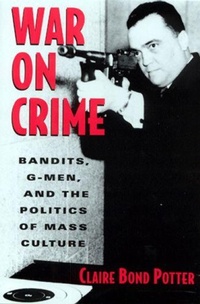
War on Crime
Bandits, G-Men, and the Politics of Mass Culture
Published on 1. January 1998
Book
Paperback/Softback
272 pages
978-0-8135-2487-0 (ISBN)
Description
War on Crime revises the history of the New Deal transformation and suggests a new model for political history-one which recognizes that cultural phenomena and the political realm produce, between them, an idea of "the state." The war on crime was fought with guns and pens, movies and legislation, radio and government hearings. All of these methods illuminate this period of state transformation, and perceptions of that emergent state, in the years of the first New Deal. The creation of G-men and gangsters as cultural heroes in this period not only explores the Depression-era obsession with crime and celebrity, but it also lends insight on how citizens understood a nation undergoing large political and social changes. Anxieties about crime today have become a familiar route for the creation of new government agencies and the extension of state authority. It is important to remember the original "war on crime" in the 1930s-and the opportunities it afforded to New Dealers and established bureaucrats like J. Edgar Hoover-as scholars grapple with the ways states assert influence over populations, local authority, and party politics while they pursue goals such as reducing popular violence and protecting private property.
Reviews / Votes
War on Crime introduces a whole new dimension into analysis of the evolution of the American state in the twentieth century. In Potter's exceedingly capable hands, a New Deal in national policing proves equally as significant as the more frequently discussed federalizations of social welfare, industrial relations, and economic policy. - Lizabeth Cohen (Harvard University) Based on exhaustive and imaginative research, Claire Bond Potter intelligently blends political, cultural, and social history to produce the most satisfying account yet of the forces behind the FBI's rise to power and glory during the Dillinger days of the 1930s. - Richard Gid Powers (author of G-Men: Hoover's FBI in American Popular Culture and Secrecy and Power: The Life of J. Edga) No one who reads Potter will any longer be able to separate the cultural development of the period from the growing role of the FBI, which staged a social coup in legitimizing its professional services in the 'war on crime.' - Paula Fass (University of California, Berkeley)More details
Language
English
Place of publication
New Brunswick NJ
United States
Target group
College/higher education
Professional and scholarly
Product notice
Paperback (trade)
Unsewn / adhesive bound
Illustrations
10 b&w photos
Dimensions
Height: 230 mm
Width: 153 mm
Thickness: 18 mm
Weight
440 gr
ISBN-13
978-0-8135-2487-0 (9780813524870)
Copyright in bibliographic data and cover images is held by Nielsen Book Services Limited or by the publishers or by their respective licensors: all rights reserved.
Schweitzer Classification
Person
CLAIRE BOND POTTER is an associate professor of history at Wesleyan University.
Content
Prohibition, crime, and federal policing
Scientific policing, masculinity, and bureau reform
The making of a crime wave
Romance, bandit identity, and the rise of celebrity bandits
Kidnapping, federal policing, and the role of the public in the war on crime
John Dillinger as political actor
The Barker-Karpis Gang, surveillance, and the victory of federal policing
Scientific policing, masculinity, and bureau reform
The making of a crime wave
Romance, bandit identity, and the rise of celebrity bandits
Kidnapping, federal policing, and the role of the public in the war on crime
John Dillinger as political actor
The Barker-Karpis Gang, surveillance, and the victory of federal policing