

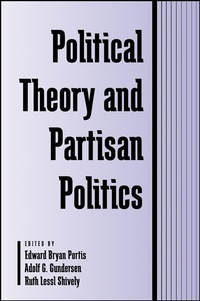
Political Theory and Partisan Politics
Published on 1. June 2000
Book
Paperback/Softback
226 pages
978-0-7914-4592-1 (ISBN)
Description
Renowned theorists address the interconnections between those who engage in political struggle and those who study it.
Political theorists typically define political action in terms of rational potential rather than conflict, and for this reason neglect the partisan nature of political experience. This volume redresses this neglect, focusing on the interrelated questions of whether the task of political theory is to find some means of containing partisan politics and whether political theory is itself separate from partisan politics. Each section of the book corresponds to one of three ways of conceiving the optimal or necessary relationship between political theory and partisan political struggle. The first section considers the extent to which partisan politics requires constitutional consensus and the degree to which such a consensus requires correct theoretical underpinnings. The second focuses on the compatibility of theoretical deliberation with partisan politics, and the third on the possibility that political theory is itself necessarily a form or means of partisan engagement. The end result is a theoretically diverse but focused debate on this important but neglected subject.
Contributors include William E. Connolly, Mary G. Dietz, Adolf G. Gundersen, John G. Gunnell, Donald S. Lutz, Edward Bryan Portis, Arlene W. Saxonhouse, Ruth Lessl Shively, and Thomas A. Spragens, Jr.
Political theorists typically define political action in terms of rational potential rather than conflict, and for this reason neglect the partisan nature of political experience. This volume redresses this neglect, focusing on the interrelated questions of whether the task of political theory is to find some means of containing partisan politics and whether political theory is itself separate from partisan politics. Each section of the book corresponds to one of three ways of conceiving the optimal or necessary relationship between political theory and partisan political struggle. The first section considers the extent to which partisan politics requires constitutional consensus and the degree to which such a consensus requires correct theoretical underpinnings. The second focuses on the compatibility of theoretical deliberation with partisan politics, and the third on the possibility that political theory is itself necessarily a form or means of partisan engagement. The end result is a theoretically diverse but focused debate on this important but neglected subject.
Contributors include William E. Connolly, Mary G. Dietz, Adolf G. Gundersen, John G. Gunnell, Donald S. Lutz, Edward Bryan Portis, Arlene W. Saxonhouse, Ruth Lessl Shively, and Thomas A. Spragens, Jr.
Reviews / Votes
"This topic is important not only for the relationship between political science and political theory, but also for the relationship between intellectuals and politics. This collection breaks new ground. Those essays that discuss traditional thinkers place them in new contexts; others give new life to continuing issues of constitutionalism and argumentation. This book contributes important insights." - Nancy S. Love, author of Understanding Dogmas and Dreams: A TextMore details
Series
Language
English
Place of publication
Albany, NY
United States
Target group
College/higher education
Professional and scholarly
US School Grade: College Graduate Student and over
Product notice
Paperback (trade)
Dimensions
Height: 230 mm
Width: 150 mm
Thickness: 13 mm
Weight
318 gr
ISBN-13
978-0-7914-4592-1 (9780791445921)
Copyright in bibliographic data and cover images is held by Nielsen Book Services Limited or by the publishers or by their respective licensors: all rights reserved.
Schweitzer Classification
Other editions
Additional editions
Edward Bryan Portis | Adolf G. Gundersen | Ruth Lessl Shively
Political Theory and Partisan Politics
E-Book
02/2012
State University of New York Press
€36.49
Available for download
Persons
Edward Bryan Portis is Professor of Political Science at Texas A&M University and the author of Reconstructing the Classics: Political Theory from Plato to Marx, Max Weber and Political Commitment: Science, Politics and Personality, and the coeditor of Handbook of Political Theory and Policy Science. Adolf G. Gundersen is the author of The Environmental Promise of Democratic Deliberation. Ruth Lessl Shively is the author of Compromised Goods: A Realist Critique of Constructionist Politics.
Content
Acknowledgments
Introduction
PART I. Political Theory and the Constitutional Foundations of Partisan Politics
1. Political Theorists on the Legitimacy of Partisan Politics
Arlene W. Saxonhouse
2. Political Theory and Constitutional Construction
Donald S. Lutz
3. Constitutional Doctrine and Political Theory
Edward Bryan Portis
PART II. Theoretical Deliberation and Partisan Politics
4. Rationality in Liberal Politics
Thomas A. Spragens, Jr.
5. Deliberative Democracy and the Limits of Partisan Politics: Between Athens and Philadelphia
Adolf G. Gundersen
6. Working in Half-Truth: Some Premodern Reflections on Discourse Ethics in Politics
Mary G. Dietz
PART III. Political Theory as Politics
7. Secularism, Partisanship and the Ambiguity of Justice
William E. Connolly
8. Political Theory and the Postmodern Politics of Ambiguity
Ruth Lessl Shively
9. Political Theory as Metapractice
John G. Gunnell
Epilogue
Contributors
Index
Introduction
PART I. Political Theory and the Constitutional Foundations of Partisan Politics
1. Political Theorists on the Legitimacy of Partisan Politics
Arlene W. Saxonhouse
2. Political Theory and Constitutional Construction
Donald S. Lutz
3. Constitutional Doctrine and Political Theory
Edward Bryan Portis
PART II. Theoretical Deliberation and Partisan Politics
4. Rationality in Liberal Politics
Thomas A. Spragens, Jr.
5. Deliberative Democracy and the Limits of Partisan Politics: Between Athens and Philadelphia
Adolf G. Gundersen
6. Working in Half-Truth: Some Premodern Reflections on Discourse Ethics in Politics
Mary G. Dietz
PART III. Political Theory as Politics
7. Secularism, Partisanship and the Ambiguity of Justice
William E. Connolly
8. Political Theory and the Postmodern Politics of Ambiguity
Ruth Lessl Shively
9. Political Theory as Metapractice
John G. Gunnell
Epilogue
Contributors
Index