


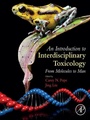
An Introduction to Interdisciplinary Toxicology
From Molecules to Man
Published on 21. February 2020
Book
Paperback/Softback
644 pages
978-0-12-813602-7 (ISBN)
Description
An Introduction to Interdisciplinary Toxicology: From Molecules to Man integrates the various aspects of toxicology, from "simple? molecular systems, to complex human communities, with expertise from a spectrum of interacting disciplines. Chapters are written by specialists within a given subject, such as a chemical engineer, nutritional scientist, or a microbiologist, so subjects are clearly explained and discussed within the toxicology context. Many chapters are comparative across species so that students in ecotoxicology learn mammalian toxicology and vice versa. Specific citations, further reading, study questions, and other learning features are also included.
The book allows students to concurrently learn concepts in both biomedical and environmental toxicology fields, thus better equipping them for the many career opportunities toxicology provides. This book will also be useful to those wishing to reference how disciplines interact within the broad field of toxicology.
The book allows students to concurrently learn concepts in both biomedical and environmental toxicology fields, thus better equipping them for the many career opportunities toxicology provides. This book will also be useful to those wishing to reference how disciplines interact within the broad field of toxicology.
More details
Language
English
Place of publication
San Diego
United States
Publishing group
Elsevier Science Publishing Co Inc
Target group
College/higher education
Graduate students and advanced undergraduate students in toxicology programs. Students and researchers in medicine, environmental sciences, neuroscience, food sciences, computing, and fundamental life sciences needing information about toxicology information in their discipline.
Product notice
Paperback (trade)
Unsewn / adhesive bound
Dimensions
Height: 234 mm
Width: 190 mm
Thickness: 22 mm
Weight
771 gr
ISBN-13
978-0-12-813602-7 (9780128136027)
Copyright in bibliographic data and cover images is held by Nielsen Book Services Limited or by the publishers or by their respective licensors: all rights reserved.
Schweitzer Classification
Other editions
Additional editions
E-Book
02/2020
Academic Press
€113.00
Available for download
Persons
Dr. Pope is the author of over 95 peer-reviewed papers. He is the Director of the Interdisciplinary Toxicology Program at Oklahoma State University as well as a member of the Food Quality Protection Act (FQPA) Board, U.S. Environmental Protection Agency, Washington, D.C.. He sits on the Editorial Board of many journals including:
* Toxicological Sciences
* Journal of Toxicology and Environmental Health
* International Journal of Toxicology
* Toxicology
* Toxicology and Applied Pharmacology
* Journal of Environmental Science and Health Part C
* NeuroToxicology
* Archives of Toxicology Dr. Liu's research interests include the neurochemical and neurobehavioral effects of xenobiotics. She is interested in exogenous and endogenous factors that modulate the neurotoxicological effects of pesticides and other neurotoxicants.
* Toxicological Sciences
* Journal of Toxicology and Environmental Health
* International Journal of Toxicology
* Toxicology
* Toxicology and Applied Pharmacology
* Journal of Environmental Science and Health Part C
* NeuroToxicology
* Archives of Toxicology Dr. Liu's research interests include the neurochemical and neurobehavioral effects of xenobiotics. She is interested in exogenous and endogenous factors that modulate the neurotoxicological effects of pesticides and other neurotoxicants.
Editor
Professor and Sitlington Endowed Chair in Toxicology, Department of Physiological Sciences, College of Veterinary Medicine; Director, Interdisciplinary Toxicology Program, Oklahoma State University-Stillwater
Senior Research Scientist, Charles River Laboratories, Reno, NV; Adjunct Associate Professor, Department of Physiological Sciences, College of Veterinary Medicine, Oklahoma State University-Stillwater
Content
I. General Concepts
1. Principles
2. Sources of exposures: Point vs Nonpoint Source Contamination
3. How chemicals distribute in the physical environment
4. How chemicals distribute in cells and simple organisms
5. How chemicals distribute in complex organisms
II. Responses to chemical toxicants
6. Cellular responses to toxicants
7. Genotoxicity and epigenetics
8. Carcinogenesis
9. Disruption of cell signaling
10. Altered development and reproduction
11. Microbiome alterations and modulation of toxicity
12. Nanotoxicology
III. Organ System Effects
13. Dermal system
14. Gastrointestinal system
15. Excretory system
16. Respiratory System
17. Cardiovascular system
18. Musculoskeletal system
19. Endocrine system
20. The immune system
21. Visual system
22. Nervous system
IV. Ecosystems and Ecotoxicology
23. Organism vs population
24. Bioconcentration
25. Biomarkers
V. Toxicology in the Home
26. Opiates and other therapeutics
27. Cleaning products
28. Petroleum products
VI. Toxicology in the Community
29. Historical case studies
30. Social factors in community contamination
VII. Forensic Toxicology
VIII. Regulatory Toxicology
31. Toxicity testing
32. Tox21
33. Principles of Risk Assessment
IX. Reference materials and websites
34. Information Resources in Toxicology, 4th edition.
35. National Toxicology Program
36. National Center for Toxicological Research
37. FDA
38. EPA
1. Principles
2. Sources of exposures: Point vs Nonpoint Source Contamination
3. How chemicals distribute in the physical environment
4. How chemicals distribute in cells and simple organisms
5. How chemicals distribute in complex organisms
II. Responses to chemical toxicants
6. Cellular responses to toxicants
7. Genotoxicity and epigenetics
8. Carcinogenesis
9. Disruption of cell signaling
10. Altered development and reproduction
11. Microbiome alterations and modulation of toxicity
12. Nanotoxicology
III. Organ System Effects
13. Dermal system
14. Gastrointestinal system
15. Excretory system
16. Respiratory System
17. Cardiovascular system
18. Musculoskeletal system
19. Endocrine system
20. The immune system
21. Visual system
22. Nervous system
IV. Ecosystems and Ecotoxicology
23. Organism vs population
24. Bioconcentration
25. Biomarkers
V. Toxicology in the Home
26. Opiates and other therapeutics
27. Cleaning products
28. Petroleum products
VI. Toxicology in the Community
29. Historical case studies
30. Social factors in community contamination
VII. Forensic Toxicology
VIII. Regulatory Toxicology
31. Toxicity testing
32. Tox21
33. Principles of Risk Assessment
IX. Reference materials and websites
34. Information Resources in Toxicology, 4th edition.
35. National Toxicology Program
36. National Center for Toxicological Research
37. FDA
38. EPA