

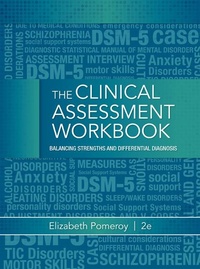
Clinical Assessment Workbook
Balancing Strengths and Differential Diagnosis
2nd Edition
Published on 18. August 2014
Book
Paperback/Softback
480 pages
978-1-285-74888-7 (ISBN)
Description
This practical workbook facilitates readers' understanding of the DSM-5 and other texts related to the diagnoses of mental disorders, enhancing their ability to assess their clients' strengths and to diagnose any emotional difficulties the clients may be experiencing. As a workbook, it offers a wealth of real life examples and exercises, providing users with the opportunity to practice their assessment skills in a classroom environment prior to entering the field as a mental health professional. Readers learn the various diagnostic categories of the DSM-5-along with dual diagnoses, symptom formulation, and the overlap between diagnostic categories-as well as how to apply these categories to clients they will be seeing in practice.
More details
Edition
2nd edition
Language
English
Place of publication
CA
United States
Publishing group
Cengage Learning, Inc
Target group
College/higher education
Product notice
Paperback (trade)
Unsewn / adhesive bound
Dimensions
Height: 272 mm
Width: 213 mm
Thickness: 20 mm
Weight
975 gr
ISBN-13
978-1-285-74888-7 (9781285748887)
Copyright in bibliographic data and cover images is held by Nielsen Book Services Limited or by the publishers or by their respective licensors: all rights reserved.
Schweitzer Classification
Person
Elizabeth Pomeroy earned a B.A. at the University of North Carolina-Asheville, an M.S.W. at the University of North Carolina-Chapel Hill, and a Ph.D. at The University of Texas at Austin. With more than 20 years of experience, Pomeroy's current teaching and research interests include clinical social work courses with a focus on mental health, health and children, and families; HIV/AIDS interventions; crime victims; interventions for offenders in the criminal justice system; and clinical social work group interventions for children, adults, and families.
Content
1. Introduction.
2. Neurodevelopmental Disorders.
3. Schizophrenia Spectrum and Other Psychotic Disorders.
4. Bipolar and Related Disorders.
5. Depressive Disorders.
6. Anxiety Disorders.
7. Obsessive-Compulsive and Related Disorders.
8. Trauma- and Stressor-Related Disorders.
9. Dissociative Disorders.
10. Somatic Symptom and Related Disorders.
11. Feeding and Eating Disorders.
12. Sleep-Wake Disorders (Breathing-Related Sleep Disorders, Parasomnias)
13. Sexual Dysfunctions.
14. Gender Dysphoria.
15. Disruptive, Impulse-Control, and Conduct Disorders.
16. Substance-Related and Addictive Disorders.
17. Non-Substance-Related Disorders/Gambling Disorder.
18. Neurocognitive Disorders (Major and Mild Neurocognitive Disorders).
19. Personality Disorders.
20. Paraphilic Disorders.
21. Medication-Induced Movement Disorders and Other Adverse Effects of Medication.
22. Other Conditions That May Be a Focus of Clinical Attention.
2. Neurodevelopmental Disorders.
3. Schizophrenia Spectrum and Other Psychotic Disorders.
4. Bipolar and Related Disorders.
5. Depressive Disorders.
6. Anxiety Disorders.
7. Obsessive-Compulsive and Related Disorders.
8. Trauma- and Stressor-Related Disorders.
9. Dissociative Disorders.
10. Somatic Symptom and Related Disorders.
11. Feeding and Eating Disorders.
12. Sleep-Wake Disorders (Breathing-Related Sleep Disorders, Parasomnias)
13. Sexual Dysfunctions.
14. Gender Dysphoria.
15. Disruptive, Impulse-Control, and Conduct Disorders.
16. Substance-Related and Addictive Disorders.
17. Non-Substance-Related Disorders/Gambling Disorder.
18. Neurocognitive Disorders (Major and Mild Neurocognitive Disorders).
19. Personality Disorders.
20. Paraphilic Disorders.
21. Medication-Induced Movement Disorders and Other Adverse Effects of Medication.
22. Other Conditions That May Be a Focus of Clinical Attention.