


Contemporary Theories of Knowledge
Published on 31. December 1986
Book
Hardback
434 pages
978-0-8476-7452-7 (ISBN)
Description
Designed as a text for advanced philosophy students, this book introduces the reader to the fundamental issues and approaches in the field of epistemology. The author provides a critical survey and assessment of all major competing theories of knowledge - foundations theories, coherence theories, direct realism, reliabilism and probabilism. Pollock clarifies the dinstinguishing features of each theory and analyzes the arguments supporting or refuting them. He makes a strong case for a particular theory - the nondoxastic internalist theory of direct realism - as the most logically defensible.
More details
Edition
New edition
Language
English
Place of publication
Lanham, MD
United States
Target group
College/higher education
Edition type
New edition
Illustrations
bibliography
Dimensions
Height: 230 mm
Weight
595 gr
ISBN-13
978-0-8476-7452-7 (9780847674527)
Copyright in bibliographic data is held by Nielsen Book Services Limited or its licensors: all rights reserved.
Schweitzer Classification
Other editions
New editions
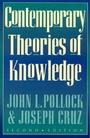
John L. Pollock | Joseph Cruz
Contemporary Theories of Knowledge
Book
03/1999
2nd Edition
Rowman & Littlefield
€111.61
Article exhausted; check different version
Content
Part 1 The problems of knowledge: skeptical problems; knowledge and justification; areas of knowledge; theories of knowledge. Part 2 Foundations theories: motivation; basic beliefs; epistemic ascent; reasoning and memory; reconsideration of epistemologically basic beliefs. Part 3 Coheremce theories: motivation a taxonomy of coherence theories; nondoxastic theories and direct realism. Part 4 Externalism: motivation; varities of probability; probabilism; reliabilism. Part 5 Epistemic norms: recapitulation; epistemic norms; how do epistemic norms regulate?; the refutation of externalism; man as a cognitive machine; a naturalistic internalism; direct realism. Appendix: The Getting problem - objective epistemic justification, social aspects of knowledge.