

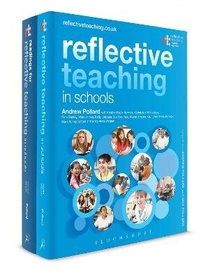
Reflective Teaching in Schools Pack
Published on 23. May 2014
Book
978-1-4725-9500-3 (ISBN)
Description
Building on best-selling texts over three decades, this thoroughly revised new edition of Reflective Teaching in Schools is essential reading for both primary and secondary school teachers in training and in practice, supporting both initial school-based training and extended career-long professionalism. Considering a wide range of professionally relevant topics, it presents key issues and research insights, suggests 'Reflective Activities' for classroom work and offers guidance on selected 'Key Readings'.
Readings for Reflective Teaching in Schools provides a portable library of over a hundred readings to support teacher education and professional development. Extensively updated since earlier editions, new readings concisely introduce much of the best of classic and contemporary international research on teaching and learning. The selection reflects current issues and concerns in education and has been designed to support school-led teacher education and a wide range of school-university partnership arrangements.
The website, reflectiveteaching.co.uk, offers supplementary resources including reflective activities, research briefings, advice on further reading and additional chapters. It also features a glossary of educational terms, links to useful websites, and a conceptual framework for deepening expertise.
Reflective Teaching in Schools links directly to the companion text, Readings for Reflective Teaching in Schools, and to the website, reflectiveteaching.co.uk, fully integrated and complementary range of resources is for both primary and secondary schools.
Readings for Reflective Teaching in Schools provides a portable library of over a hundred readings to support teacher education and professional development. Extensively updated since earlier editions, new readings concisely introduce much of the best of classic and contemporary international research on teaching and learning. The selection reflects current issues and concerns in education and has been designed to support school-led teacher education and a wide range of school-university partnership arrangements.
The website, reflectiveteaching.co.uk, offers supplementary resources including reflective activities, research briefings, advice on further reading and additional chapters. It also features a glossary of educational terms, links to useful websites, and a conceptual framework for deepening expertise.
Reflective Teaching in Schools links directly to the companion text, Readings for Reflective Teaching in Schools, and to the website, reflectiveteaching.co.uk, fully integrated and complementary range of resources is for both primary and secondary schools.
More details
Series
Language
English
Place of publication
London
United Kingdom
Publishing group
Bloomsbury Publishing PLC
Target group
College/higher education
Professional and scholarly
ISBN-13
978-1-4725-9500-3 (9781472595003)
Copyright in bibliographic data and cover images is held by Nielsen Book Services Limited or by the publishers or by their respective licensors: all rights reserved.
Schweitzer Classification
Persons
Andrew Pollard with Kristine Black-Hawkins, Gabrielle Cliff-Hodges, Pete Dudley, Mary James, Holly Linklater, Sue Swaffield, Mandy Swann, Fay Turner, Paul Warwick, Mark Winterbottom and Mary Anne Wolpert
Andrew Pollard is Professor of Education and supports educational research at the Institute of Education, University of London, UK, the University of Bristol, UK, and the University of Cambridge, UK. He taught for ten years before becoming a teacher educator and researcher. He was Director of the UK-wide Teaching and Learning Research Programme (TLRP) and advised the government on the National Curriculum Review.
Andrew Pollard is Professor of Education and supports educational research at the Institute of Education, University of London, UK, the University of Bristol, UK, and the University of Cambridge, UK. He taught for ten years before becoming a teacher educator and researcher. He was Director of the UK-wide Teaching and Learning Research Programme (TLRP) and advised the government on the National Curriculum Review.
Content
Both volumes within this pack follow the same structure:
Introduction-
Part I: Becoming a Reflective Professional
1. Identity. Who are we, and what do we stand for?
2. Learning. How can we understand learner development?
3. Reflection. How can we develop the quality of our teaching?
4. Principles. What are the foundations of effective teaching and learning?
Part II: Creating Conditions for Learning
5. Contexts. What is, and what might be?
6. Relationships. How are we getting on together?
7. Engagement. How are we managing behaviour?
8. Spaces. How are we creating environments for learning?
Part III: Teaching for Learning
9. Curriculum. What is to be taught and learned?
10. Planning. How are we implementing the curriculum?
11. Pedagogy. How can we develop effective strategies?
12. Communication. How does use of language support learning?
13. Assessment. How can assessment enhance learning?
Part IV: Reflecting on Consequences
14. Outcomes. How do we monitor student learning achievements?
15. Inclusion. How are we enabling learning opportunities?
Part V: Deepening Understanding
16. Expertise. Conceptual tools for career-long fascination?
17. Professionalism. How does reflective teaching contribute to society?
List of case-studies, checklists, figures and research briefings
Bibliography
Acknowledgements
Index
Introduction-
Part I: Becoming a Reflective Professional
1. Identity. Who are we, and what do we stand for?
2. Learning. How can we understand learner development?
3. Reflection. How can we develop the quality of our teaching?
4. Principles. What are the foundations of effective teaching and learning?
Part II: Creating Conditions for Learning
5. Contexts. What is, and what might be?
6. Relationships. How are we getting on together?
7. Engagement. How are we managing behaviour?
8. Spaces. How are we creating environments for learning?
Part III: Teaching for Learning
9. Curriculum. What is to be taught and learned?
10. Planning. How are we implementing the curriculum?
11. Pedagogy. How can we develop effective strategies?
12. Communication. How does use of language support learning?
13. Assessment. How can assessment enhance learning?
Part IV: Reflecting on Consequences
14. Outcomes. How do we monitor student learning achievements?
15. Inclusion. How are we enabling learning opportunities?
Part V: Deepening Understanding
16. Expertise. Conceptual tools for career-long fascination?
17. Professionalism. How does reflective teaching contribute to society?
List of case-studies, checklists, figures and research briefings
Bibliography
Acknowledgements
Index