

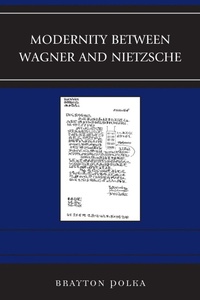
Modernity between Wagner and Nietzsche
Published on 12. April 2019
Book
Paperback/Softback
222 pages
978-1-4985-1250-3 (ISBN)
Description
Modernity between Wagner and Nietzsche analyzes the operas and writings of Wagner in order to prove that the ideas on which they are based contradict and falsify the values that are fundamental to modernity. This book also analyzes the ideas that are central to the philosophy of Nietzsche, demonstrating that the values on the basis of which he breaks with Wagner and repudiates their common mentor, Schopenhauer, are those fundamental to modernity. Brayton Polka makes use of the critical distinction that Kierkegaard draws between Christianity and Christendom. Christianity represents what Nietzsche calls the faith that is presupposed in unconditionally willing the truth in saying yes to life. Christendom, in contrast, represents the bad faith of nihilism in saying no to life. Polka then shows that Wagner, in following Schopenhauer, represents Christendom with the demonstration in his operas that life is nothing but death and death is nothing but life. In other words, the purpose of the will for Wagner is to annihilate the will, since it is only in and through death that human beings are liberated from life as willfully sinful. Nietzsche, in contrast, is consistent with the biblical concept that existence is created from nothing, from nothing that is not made in the image of God, that any claim that the will can will not to will is contradictory and hence false. For not to will is, in truth, still to will nothing. There is then, Nietzsche shows, no escape from the will. Either human beings will the truth in saying yes to life as created from nothing, or in truly willing nothing, they say no to life in worshiping the God of Christendom who is dead.
Reviews / Votes
Passionately and accessibly written, Brayton Polka's new book offers a bracing challenge to the prevailing view of Wagner and Nietzsche as the twin-progenitors of aesthetic modernism. Sharply critical of Wagner's 'falsification of the values that...constitute modernity,' Polka's study drives a sharp wedge between the musical 'master' and his one-time devotee. Eschewing a strictly immanent view of Wagner's revolutionary aesthetic, Polka's new study helpfully draws attention to modernism's deep philosophical and religious sources. -- Thomas Pfau, Duke UniversityMore details
Series
Language
English
Place of publication
United States
Publishing group
Bloomsbury Publishing Plc
Target group
College/higher education
Dimensions
Height: 229 mm
Width: 152 mm
Thickness: 13 mm
Weight
361 gr
ISBN-13
978-1-4985-1250-3 (9781498512503)
Copyright in bibliographic data and cover images is held by Nielsen Book Services Limited or by the publishers or by their respective licensors: all rights reserved.
Schweitzer Classification
Other editions
Additional editions
Brayton Polka
Modernity between Wagner and Nietzsche
E-Book
01/2015
1st Edition
Bloomsbury eBooks US
€42.99
Available for download
Person
Brayton Polka is professor emeritus of humanities and social and political thought at York University.
Content
Chapter 1: Introduction
Chapter 2: Wagner's Ring: Life Redeemed in Death - Love's Sacrifice of Life to Death
Chapter 3: Tristan und Isolde: Life Redeemed In Death - Love's Sacrifice of Life in Death
Chapter 4: Parsifal: Life Redeemed in Death - Love's Sacrifice of Life through Death
Chapter 5: Postlude Recapitulated as Prelude in Nietzsche: Ecce Homo!
Chapter 6: Conclusion: Modernity as Biblical Consonance
Chapter 2: Wagner's Ring: Life Redeemed in Death - Love's Sacrifice of Life to Death
Chapter 3: Tristan und Isolde: Life Redeemed In Death - Love's Sacrifice of Life in Death
Chapter 4: Parsifal: Life Redeemed in Death - Love's Sacrifice of Life through Death
Chapter 5: Postlude Recapitulated as Prelude in Nietzsche: Ecce Homo!
Chapter 6: Conclusion: Modernity as Biblical Consonance