

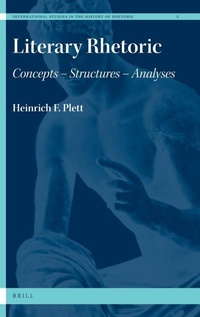
Literary Rhetoric
Concepts - Structures - Analyses
Published on 16. February 2010
Book
Hardback
344 pages
978-90-04-17113-8 (ISBN)
Description
Dedicated to the subject of literary rhetoric, this book is divided in three principal parts: I. An historical outline of the relationship of rhetoric and literature. II. An overview of the realm of rhetoric and its parts and functions, above all in the section of "elocutio" with its classes of figures, where a critical comparison of traditional and modern models of the rhetorical figures is followed by the design of a new one. III. The implementation of this new concept in seven classes of figures and their respective subdivisions: 1. phonological, 2. morphological, 3. syntactic, 4. semantic, 5. graphemic, 6. textological, and 7. intertextual figures. Each chapter is supplemented by analyses of literary texts conceived as a demonstration of the applicability of the theoretical concepts and structures presented before. An extensive bibliography of research literature and detailed indices of names and subjects conclude this treatise.
More details
Series
Language
English
Place of publication
Leiden
Netherlands
Target group
Professional and scholarly
Product notice
sewn/stitched
Cloth over boards
Dimensions
Height: 246 mm
Width: 165 mm
Thickness: 23 mm
Weight
635 gr
ISBN-13
978-90-04-17113-8 (9789004171138)
Copyright in bibliographic data and cover images is held by Nielsen Book Services Limited or by the publishers or by their respective licensors: all rights reserved.
Schweitzer Classification
Person
Heinrich F. Plett was Professor of English at the University of Essen (1972-2004) where he founded the Center for Rhetoric and Renaissance Studies. He co-founded the International Society for the History of Rhetoric in 1977. He has organized many conference on rhetoric, poetics, and Renaissance literature and has published extensively on the same topics.
Content
Table of Contents
Part I Rhetoric and Literature
I From the Decline of Rhetoric to its Revival
II Rhetorical Literature
III Literary Rhetoric
IV Rhetoric and Literary Criticism
Part II The Realm of Rhetoric
1 Approaches to Rhetoric
2 Domains of Rhetoric
3 The Rhetoric of Figures
4 The System of Figures
4.1 Proposal for a New Model of Figures
4.2 Model Comparison as Model Critique
4.2.1 Historical Models of Figures
4.2.2 Modern Models of Figures
4.2.3 Critical Synopsis
4.3 Pragmatic and Semantic Figures
5 Competence and Performance
6 The Aesthetics of Figures
Part III - The System of Figures
1 Phonological Figures
1.1 Phonaesthetic Basic Structure: The Phonological Figures
1.1.1 Figures of Phonological Deviation (Metaphonemes)
1.1.1.1 Addition
1.1.1.2 Subtraction
1.1.1.3 Permutation
1.1.1.4 Substitution
1.1.1.5 Text Analysis: Ernst Jandl, etuede in f, v. 1-3
1.1.2 Figures of Phonological Equivalence (Isophonemes)
1.1.2.1 Position
1.1.2.2 Extent
1.1.2.3 Similarity
1.1.2.4 Frequency
1.1.2.5 Distribution
1.1.2.6 Text Analysis: Gerard Manley Hopkins, The Windhover
1.1.2.7 Digression: Semantic Aspects of Phonaesthetics
1.2 Phonaesthetic Superstructure: The Prosodic Figures
1.2.1 Phonaesthetic Competence: The Metre
1.2.1.1 Figures of Accent
1.2.1.1.1 Position
1.2.1.1.2 Extent
1.2.1.1.3 Similarity
1.2.1.1.4 Frequency
1.2.1.1.5 Distribution
1.2.1.2 Figures of Pause and Pitch
1.2.2 Phonesthetic Performance: Rhythm
1.2.2.1 Deviating Stresses
1.2.2.2 Deviating Pauses
1.2.3 Text Analysis: William Shakespeare, A Midsummernight's Dream V.i. 108-117.
1.3 The Interrelationship of Phonemes and Prosodic Figures
2 Morphological Figures
2.1 Figures of Morphological Deviation (Metamorphemes)
2.1.1 Intra-word Deviation
2.1.1.1 Addition
2.1.1.2 Subtraction
2.1.1.3 Permutatution
2.1.1.4 Substitution
2.1.1.5 Text analysis: Lewis Carroll: Jabberwocky
2.1.2 Contextual Deviation
2.1.2.1 Diastratic Deviations
2.1.2.2 Diatopic Deviations
2.1.2.3 Bilingual or Multilingual Deviations
2.1.2.4 Diachronic Deviations
2.1.2.5 Digression: Deviation of the Word Class (Conversion)
2.1.2.6 Text Analysis: E.E. Cummings, anyone lived in a pretty how town
2.2 Figures of Morphological Equivalence (Isomorphemes)
2.2.1 Position
2.2.2 Extent
2.2.3 Frequency
2.2.4 Distribution
2.2.5 Similarity
2.2.5.1 Polyptoton
2.2.5.2 Paronymy
2.2.5.3 The Ambiguity of Word Play
2.2.5.3.1 Homophonous Word Play
2.2.5.3.2 Polysemic and Homonymic Word Play
2.2.5.3.3 Homeophonic Word Play (Paronomasia)
2.2.5.3.4 Homeographic Word Play (Eye Rhyme)
2.2.6 Text Analysis: George Herbert, A Wreath
3 Syntactic Figures
3.1 Figures of Syntactic Deviation (Metataxemes)
3.1.1 Addition
3.1.2 Subtraction
3.1.2.1 Ellipsis
3.1.2.2 Zeugma
3.1.3 Permutation
3.1.4 Substitution
3.1.5 Text Analysis: Carl Sternheim, Das Fossil I.iv (excerpt)
3.2 Figures of Syntactic Equivalence (Isotaxemes)
3.2.1 Similarity
3.2.2 Frequency
3.2.3 Extent and Position
3.2.4 Distribution
3.2.5 Phonological, Morphological and Semantic Aspects
3.2.6 Text Analyses
3.2.6.1 Bertolt Brecht, Lob der Partei
3.2.6.2 William Shakespeare, Julius Caesar III.ii.13-47 (Brutus' speech)
4 Semantic Figures
4.1 Figures of Semantic Deviation (Metasememes)
4.1.1 Addition
4.1.2 Subtraction
4.1.3 Permutation
4.1.4 Substitution
4.1.4.1 Similarity Tropes (Metaphers)
4.1.4.2 Contiguity Tropes (Metonymies)
4.1.5 Text Analyses
4.1.5.1 Johann Wolfgang von Goethe, Kennst du das Land ...?
4.1.5.2 Emily Dickinson, I like to see it lap the Miles
4.2 Figures of Semantic Equivalence (Isosememes)
4.2.1 Text Analyses
4.2.1.1 Edmund Spenser, The Faerie Queene III.i.46
4.2.1.2 Andreas Gryphius, Die Hoelle
5 Graphemic Figures
5.1 Figures of Graphemic Deviation (Metagraphemes)
5.1.1 Addition
5.1.2 Subraction
5.1.3 Permutation
5.1.4 Substitution
5.1.4.1 Substitution within the same Graphemic System
5.1.4.2 Substitution outside the same Graphemic System
5.1.5 Text Analyses
5.1.5.1 Ernst Jandl, onkel toms huette
5.1.5.2 Gerhard Ruehm, schweigen
5.2 Figures of Graphemic Equivalence (Isographemes)
5.2.1 Text Analyses
5.2.1.1 Gerhard Ruehm, die ersten menschen sind auf dem mond
5.2.1.2 A Poem by E.E. Cummings
5.2.1.3 Vaclav Havel, antreten
6 Textological Figures (Text Figures)
6.1 Figures of Textological Deviation (Metatextemes)
6.1.1 Addition
6.1.2 Subtraction
6.1.3 Substitution
6.1.4 Permutation
6.2 Figures of Textological Equivalence (Isotextemes)
7 Intertextual Figures
7.1 Figures of Intertextual Deviation (Meta-Intertextemes)
7.1.1 Substitution (Citation/Quotation)
7.1.2 Permutation (Cento)
7.2 Figures of Intertextual Equivalence (Iso-Intertextemes)
Bibliography
Indices
1 Index of Names
2 Index of Subjects
Part I Rhetoric and Literature
I From the Decline of Rhetoric to its Revival
II Rhetorical Literature
III Literary Rhetoric
IV Rhetoric and Literary Criticism
Part II The Realm of Rhetoric
1 Approaches to Rhetoric
2 Domains of Rhetoric
3 The Rhetoric of Figures
4 The System of Figures
4.1 Proposal for a New Model of Figures
4.2 Model Comparison as Model Critique
4.2.1 Historical Models of Figures
4.2.2 Modern Models of Figures
4.2.3 Critical Synopsis
4.3 Pragmatic and Semantic Figures
5 Competence and Performance
6 The Aesthetics of Figures
Part III - The System of Figures
1 Phonological Figures
1.1 Phonaesthetic Basic Structure: The Phonological Figures
1.1.1 Figures of Phonological Deviation (Metaphonemes)
1.1.1.1 Addition
1.1.1.2 Subtraction
1.1.1.3 Permutation
1.1.1.4 Substitution
1.1.1.5 Text Analysis: Ernst Jandl, etuede in f, v. 1-3
1.1.2 Figures of Phonological Equivalence (Isophonemes)
1.1.2.1 Position
1.1.2.2 Extent
1.1.2.3 Similarity
1.1.2.4 Frequency
1.1.2.5 Distribution
1.1.2.6 Text Analysis: Gerard Manley Hopkins, The Windhover
1.1.2.7 Digression: Semantic Aspects of Phonaesthetics
1.2 Phonaesthetic Superstructure: The Prosodic Figures
1.2.1 Phonaesthetic Competence: The Metre
1.2.1.1 Figures of Accent
1.2.1.1.1 Position
1.2.1.1.2 Extent
1.2.1.1.3 Similarity
1.2.1.1.4 Frequency
1.2.1.1.5 Distribution
1.2.1.2 Figures of Pause and Pitch
1.2.2 Phonesthetic Performance: Rhythm
1.2.2.1 Deviating Stresses
1.2.2.2 Deviating Pauses
1.2.3 Text Analysis: William Shakespeare, A Midsummernight's Dream V.i. 108-117.
1.3 The Interrelationship of Phonemes and Prosodic Figures
2 Morphological Figures
2.1 Figures of Morphological Deviation (Metamorphemes)
2.1.1 Intra-word Deviation
2.1.1.1 Addition
2.1.1.2 Subtraction
2.1.1.3 Permutatution
2.1.1.4 Substitution
2.1.1.5 Text analysis: Lewis Carroll: Jabberwocky
2.1.2 Contextual Deviation
2.1.2.1 Diastratic Deviations
2.1.2.2 Diatopic Deviations
2.1.2.3 Bilingual or Multilingual Deviations
2.1.2.4 Diachronic Deviations
2.1.2.5 Digression: Deviation of the Word Class (Conversion)
2.1.2.6 Text Analysis: E.E. Cummings, anyone lived in a pretty how town
2.2 Figures of Morphological Equivalence (Isomorphemes)
2.2.1 Position
2.2.2 Extent
2.2.3 Frequency
2.2.4 Distribution
2.2.5 Similarity
2.2.5.1 Polyptoton
2.2.5.2 Paronymy
2.2.5.3 The Ambiguity of Word Play
2.2.5.3.1 Homophonous Word Play
2.2.5.3.2 Polysemic and Homonymic Word Play
2.2.5.3.3 Homeophonic Word Play (Paronomasia)
2.2.5.3.4 Homeographic Word Play (Eye Rhyme)
2.2.6 Text Analysis: George Herbert, A Wreath
3 Syntactic Figures
3.1 Figures of Syntactic Deviation (Metataxemes)
3.1.1 Addition
3.1.2 Subtraction
3.1.2.1 Ellipsis
3.1.2.2 Zeugma
3.1.3 Permutation
3.1.4 Substitution
3.1.5 Text Analysis: Carl Sternheim, Das Fossil I.iv (excerpt)
3.2 Figures of Syntactic Equivalence (Isotaxemes)
3.2.1 Similarity
3.2.2 Frequency
3.2.3 Extent and Position
3.2.4 Distribution
3.2.5 Phonological, Morphological and Semantic Aspects
3.2.6 Text Analyses
3.2.6.1 Bertolt Brecht, Lob der Partei
3.2.6.2 William Shakespeare, Julius Caesar III.ii.13-47 (Brutus' speech)
4 Semantic Figures
4.1 Figures of Semantic Deviation (Metasememes)
4.1.1 Addition
4.1.2 Subtraction
4.1.3 Permutation
4.1.4 Substitution
4.1.4.1 Similarity Tropes (Metaphers)
4.1.4.2 Contiguity Tropes (Metonymies)
4.1.5 Text Analyses
4.1.5.1 Johann Wolfgang von Goethe, Kennst du das Land ...?
4.1.5.2 Emily Dickinson, I like to see it lap the Miles
4.2 Figures of Semantic Equivalence (Isosememes)
4.2.1 Text Analyses
4.2.1.1 Edmund Spenser, The Faerie Queene III.i.46
4.2.1.2 Andreas Gryphius, Die Hoelle
5 Graphemic Figures
5.1 Figures of Graphemic Deviation (Metagraphemes)
5.1.1 Addition
5.1.2 Subraction
5.1.3 Permutation
5.1.4 Substitution
5.1.4.1 Substitution within the same Graphemic System
5.1.4.2 Substitution outside the same Graphemic System
5.1.5 Text Analyses
5.1.5.1 Ernst Jandl, onkel toms huette
5.1.5.2 Gerhard Ruehm, schweigen
5.2 Figures of Graphemic Equivalence (Isographemes)
5.2.1 Text Analyses
5.2.1.1 Gerhard Ruehm, die ersten menschen sind auf dem mond
5.2.1.2 A Poem by E.E. Cummings
5.2.1.3 Vaclav Havel, antreten
6 Textological Figures (Text Figures)
6.1 Figures of Textological Deviation (Metatextemes)
6.1.1 Addition
6.1.2 Subtraction
6.1.3 Substitution
6.1.4 Permutation
6.2 Figures of Textological Equivalence (Isotextemes)
7 Intertextual Figures
7.1 Figures of Intertextual Deviation (Meta-Intertextemes)
7.1.1 Substitution (Citation/Quotation)
7.1.2 Permutation (Cento)
7.2 Figures of Intertextual Equivalence (Iso-Intertextemes)
Bibliography
Indices
1 Index of Names
2 Index of Subjects