

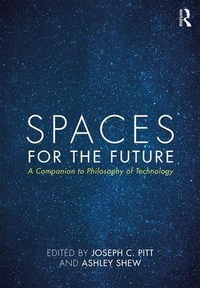
Spaces for the Future
A Companion to Philosophy of Technology
1st Edition
Published on 2. August 2017
Book
Hardback
376 pages
978-0-415-84296-9 (ISBN)
Description
Focused on mapping out contemporary and future domains in philosophy of technology, this volume serves as an excellent, forward-looking resource in the field and in cognate areas of study. The 32 chapters, all of them appearing in print here for the first time, were written by both established scholars and fresh voices. They cover topics ranging from data discrimination and engineering design, to art and technology, space junk, and beyond. Spaces for the Future: A Companion to Philosophy of Technology is structured in six parts: (1) Ethical Space and Experience; (2) Political Space and Agency; (3) Virtual Space and Property; (4) Personal Space and Design; (5) Inner Space and Environment; and (6) Outer Space and Imagination. The organization maps out current and emerging spaces of activity in the field and anticipates the big issues that we soon will face.
Reviews / Votes
"This volume not only represents an impressive contribution to the philosophy of technology, but also helps serve to further define this lively field of inquiry. It shows how philosophical questions about technology abound within familiar spheres of human interaction such as art and religion, as well as in new spaces created by technology such as virtual reality. With insightful and accessibly-written essays from a diversity of theoretical perspectives, this work promises to be an excellent resource both for inspiring classroom discussion and for future scholarly research."--Diane Michelfelder, Macalester College
More details
Language
English
Place of publication
London
United Kingdom
Publishing group
Taylor & Francis Ltd
Target group
General
Illustrations
2 s/w Tabellen
2 Tables, black and white
Dimensions
Height: 254 mm
Width: 178 mm
Weight
858 gr
ISBN-13
978-0-415-84296-9 (9780415842969)
Copyright in bibliographic data and cover images is held by Nielsen Book Services Limited or by the publishers or by their respective licensors: all rights reserved.
Schweitzer Classification
Other editions
Additional editions
E-Book
08/2017
Routledge
€68.49
Available for download
E-Book
08/2017
Routledge
€68.49
Available for download

Book
07/2016
1st Edition
Routledge
€207.98
The article will not be published
Persons
Joseph C. Pitt, a Fellow of AAAS, has been teaching at Virginia Tech for 45 years. His major area of scholarship is philosophy of technology with an emphasis on the impact of technological innovation on scientific change. He is the author of 4 books and the editor/co-editor of twelve others. He is past president of the Society for Philosophy and Technology and served as Editor-in-Chief of Techne: Research in Philosophy and Technology, of which he is currently on the editorial board.
Ashley Shew works in philosophy of technology on topics relating to emerging technologies, animals, disability, and environment. Her first book, Animal Constructions and Technological Knowledge, will be published next year. Her latest work concerns how disabled bodies are used in technological imagination and how narratives about technology often fail to match up to the lived experience of disability. She collects class materials and information about disability and technology on her website, http://techanddisability.com.
Ashley Shew works in philosophy of technology on topics relating to emerging technologies, animals, disability, and environment. Her first book, Animal Constructions and Technological Knowledge, will be published next year. Her latest work concerns how disabled bodies are used in technological imagination and how narratives about technology often fail to match up to the lived experience of disability. She collects class materials and information about disability and technology on her website, http://techanddisability.com.
Content
Table of Contents
Editorial Introduction
Part I: Ethical Space and Experience
Anna Lauren Hoffmann, "Data, Technology, and Gender"
D.E. Wittkower, "Discrimination"
Monique Wonderly, "Video Games and Ethics"
Yoni van den Eede and Katleen Gabriels, "Social Networking"
Don Ihde, "TechnoArt"
Jessie Mann, "The Philosophy of Art and Technology"
Part 2: Political Space and Agency
Shannon Vallor, "Robots with Guns"
Andrew Wells Garnar, "Educational Technology"
Carl Mitcham, "Religious Transcendence"
Andrew Feenberg, "Agency and Citizenship in a Technological Society"
Ashley Shew, "Animals in Philosophy of Technology"
Part 3: Virtual Space and Property
Evan Selinger and Woodrow Hartzog, "Obscurity and Privacy"
Gordon Hull, "Copyright between Economic and Cultural Models of Creativity"
Benjamin Jantzen, "Cyberwarfare"
Craig Condella and Julie Swierzcek, "The Cloud"
Deborah Johnson, "Ethical Issues in Big Data"
Johnny Hartz Soraker, "Virtual Environments"
Part 4: Personal Space and Design
Robert Rosenberger, "The Organization of User Experience"
Pieter Vermaas, "Engineering Design"
Ann Johnson, "Design"
Albrecht Fritzsche, "Dancing the Device: a translational approach to technology"
Dana Belu, "On Harnessing Birth in the Technological Age"
Cyrus Mody, "Moore's Regula"
Part 5: Inner Space and Environment
Robert Darrow, "Is Renewable Energy Technology Revolutionary?"
Tina Sikka, "Geoengineering and Climate Change"
Adam Briggle, "Fracking"
Robert-Jan Geerts, "Climate Change and Philosophy of Technology"
Part 6: Outer Space and Imagination
Rosalyn Berne, "Space Tourism and Science Fiction"
Zachary Pirtle and David Tomblin, "Well Ordered Engineering: Participatory Technology Assessment at NASA"
Diana Hoyt, "When Loving Your Planet Isn't Enough"
Joseph C. Pitt, "Transcendence in Space"
Nicholas Rescher, "The Role of Technology in Natural Science"
Editorial Introduction
Part I: Ethical Space and Experience
Anna Lauren Hoffmann, "Data, Technology, and Gender"
D.E. Wittkower, "Discrimination"
Monique Wonderly, "Video Games and Ethics"
Yoni van den Eede and Katleen Gabriels, "Social Networking"
Don Ihde, "TechnoArt"
Jessie Mann, "The Philosophy of Art and Technology"
Part 2: Political Space and Agency
Shannon Vallor, "Robots with Guns"
Andrew Wells Garnar, "Educational Technology"
Carl Mitcham, "Religious Transcendence"
Andrew Feenberg, "Agency and Citizenship in a Technological Society"
Ashley Shew, "Animals in Philosophy of Technology"
Part 3: Virtual Space and Property
Evan Selinger and Woodrow Hartzog, "Obscurity and Privacy"
Gordon Hull, "Copyright between Economic and Cultural Models of Creativity"
Benjamin Jantzen, "Cyberwarfare"
Craig Condella and Julie Swierzcek, "The Cloud"
Deborah Johnson, "Ethical Issues in Big Data"
Johnny Hartz Soraker, "Virtual Environments"
Part 4: Personal Space and Design
Robert Rosenberger, "The Organization of User Experience"
Pieter Vermaas, "Engineering Design"
Ann Johnson, "Design"
Albrecht Fritzsche, "Dancing the Device: a translational approach to technology"
Dana Belu, "On Harnessing Birth in the Technological Age"
Cyrus Mody, "Moore's Regula"
Part 5: Inner Space and Environment
Robert Darrow, "Is Renewable Energy Technology Revolutionary?"
Tina Sikka, "Geoengineering and Climate Change"
Adam Briggle, "Fracking"
Robert-Jan Geerts, "Climate Change and Philosophy of Technology"
Part 6: Outer Space and Imagination
Rosalyn Berne, "Space Tourism and Science Fiction"
Zachary Pirtle and David Tomblin, "Well Ordered Engineering: Participatory Technology Assessment at NASA"
Diana Hoyt, "When Loving Your Planet Isn't Enough"
Joseph C. Pitt, "Transcendence in Space"
Nicholas Rescher, "The Role of Technology in Natural Science"