


Postcolonial Opera
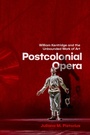
William Kentridge and the Unbounded Work of Art
Published on 17. September 2025
Book
Hardback
304 pages
978-0-19-774920-3 (ISBN)
Description
Opera has long been known for its ability to be used as a tool for colonial expression. But it is increasingly used to narrate histories of colonial trauma, oppression, and struggle. What does it mean for a colonial form to represent the experiences of those it used to exclude and undermine? How can opera adapt to meet the challenges of ethical representation and reparation?
In response to these questions, Postcolonial Opera: William Kentridge and the Unbounded Work of Art examines the social and political role of opera in the postcolony. Taking the multimedia operatic experiments of William Kentridge, South Africa's most celebrated contemporary visual artist, as a starting point, author Juliana M. Pistorius investigates contemporary opera's potential to process the troubled histories that haunt post- and decolonial societies. Centered around the critical-theoretical themes of return, confession, mourning, time, displacement, and totality, the book considers Kentridge's productions for puppets (Il Ritorno d'Ulisse, 1998; Confessions of Zeno, 2002), his operatic installation for a miniature automated theatre (Black Box/Chambre Noire, 2005), his chamber work for performers and machines (Refuse the Hour, 2012), and his 'processional operas' (Triumphs and Laments, 2016; The Head & the Load, 2018). Pistorius argues that the artist's newly conceived operatic form, built on ideas of unboundedness rather than totality or formlessness, offers opportunities to engage anew with questions of race, coloniality, and cultural belonging in the postcolony. While Kentridge's pieces take the artist's responsibility to deal with the genre's colonial past seriously, she shows how they also offer humor, beauty, and catalytic opportunities to reimagine the form and function of opera in the postcolonial present.
Postcolonial Opera intervenes in contemporary debates about opera's relevance and contributes to the growing study of the art form's relationship with race and coloniality. Ultimately, Pistorius argues that Kentridge's multimedia experiments--at once local and global--present compelling perspectives on the contradictions and compromises of the genre's position in the postcolony.
In response to these questions, Postcolonial Opera: William Kentridge and the Unbounded Work of Art examines the social and political role of opera in the postcolony. Taking the multimedia operatic experiments of William Kentridge, South Africa's most celebrated contemporary visual artist, as a starting point, author Juliana M. Pistorius investigates contemporary opera's potential to process the troubled histories that haunt post- and decolonial societies. Centered around the critical-theoretical themes of return, confession, mourning, time, displacement, and totality, the book considers Kentridge's productions for puppets (Il Ritorno d'Ulisse, 1998; Confessions of Zeno, 2002), his operatic installation for a miniature automated theatre (Black Box/Chambre Noire, 2005), his chamber work for performers and machines (Refuse the Hour, 2012), and his 'processional operas' (Triumphs and Laments, 2016; The Head & the Load, 2018). Pistorius argues that the artist's newly conceived operatic form, built on ideas of unboundedness rather than totality or formlessness, offers opportunities to engage anew with questions of race, coloniality, and cultural belonging in the postcolony. While Kentridge's pieces take the artist's responsibility to deal with the genre's colonial past seriously, she shows how they also offer humor, beauty, and catalytic opportunities to reimagine the form and function of opera in the postcolonial present.
Postcolonial Opera intervenes in contemporary debates about opera's relevance and contributes to the growing study of the art form's relationship with race and coloniality. Ultimately, Pistorius argues that Kentridge's multimedia experiments--at once local and global--present compelling perspectives on the contradictions and compromises of the genre's position in the postcolony.
Reviews / Votes
Pistorius outlines a theory that asks us to think about how opera has meaning in today's world that hosts the afterlives of brutal oppressive legacies whether they be from colonialism, apartheid, slavery, settler colonialism, or other forms of domination. Part of the magic is through a focus on one artist, William Kentridge, and these ideas can be helpful for thinking about how all operas work today when they are interpreted on stage. * Naomi Andre, David G. Frey Distinguished Professor of Music, University of North Carolina at Chapel Hill, and author of Black Opera: History, Power, Engagement *More details
Language
English
Place of publication
New York
United States
Target group
College/higher education
Illustrations
18 illustrations
Dimensions
Height: 22 mm
Width: 156 mm
Thickness: 235 mm
Weight
529 gr
ISBN-13
978-0-19-774920-3 (9780197749203)
Copyright in bibliographic data is held by Nielsen Book Services Limited or its licensors: all rights reserved.
Schweitzer Classification
Other editions
Additional editions
Book
08/2025
Oxford University Press Inc
€40.50
Shipment within 15-20 days
E-Book
05/2025
OUP eBook
€28.49
Available for download
E-Book
05/2025
OUP eBook
€28.49
Available for download
Person
Juliana M. Pistorius is a Marie Sklodowska Curie Global Research Fellow at University College London and the University of the Witwatersrand, South Africa. Her research engages with questions of race, coloniality, and political resistance in Western art music, with a special focus on opera in apartheid and post-apartheid South Africa. Since graduating with a DPhil from the University of Oxford she has held a Leverhulme Early Career Research Fellowship at the University of Huddersfield and has been admitted as a research fellow to Africa Open Institute for Music, Research, and Innovation at the Stellenbosch University. She is a founding member of the Black Opera Research Network (BORN) and the reviews editor for Cambridge Opera Journal.
Content
Acknowledgements
About the Companion Website
List of Figures
Introduction Chapter 1: Return
Chapter 2: Confession
Chapter 3: Mourning
Chapter 4: Time
Chapter 5: Place
Chapter 6: Totality
Conclusion: Future Bibliography
Index
About the Companion Website
List of Figures
Introduction Chapter 1: Return
Chapter 2: Confession
Chapter 3: Mourning
Chapter 4: Time
Chapter 5: Place
Chapter 6: Totality
Conclusion: Future Bibliography
Index