

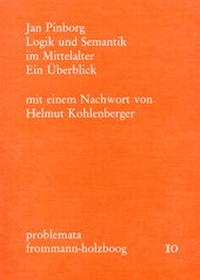
Logik und Semantik im Mittelalter
Ein Überblick
1st Edition
Published in 1972
Book
Paperback/Softback
276 pages
978-3-7728-0336-9 (ISBN)
Description
The logical and semantical theories of the Middle Ages originate in the interpretation and explication of the Aristotelian texts. Their development can be seen as a movement towards a purer Aristotelian and empiricist approach to logic, as against the more Platonic and rationalist interpretations of the Logica vetus. The discovery of the complete Aristotelian Organon during Abelard's time, the consistent Aristotelian philosophy of science in Aquinas and Boethius of Dacia as well as the the clear-cut distinction between logical order and reality in the writings of Ockham and his contemporaries are all important steps in this direction. The Aristotelian concept substance, which in spite of its inherent contradictions remained the base of medieval logic, is one of the main reasons why the Middle Ages have never accomplished a consistent semantic theory not a completely formal logical calculus. The growing empiricism, however, did never diminish the interest in the formal relations between logical entities. - Some of the problems discussed in the Middle Ages, e.g. the relations between logic, linguistics, and ontology or those between technical and ordinary language, are still of great interest to the modern debate.