

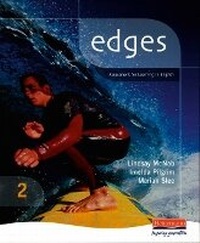
Edges Student Book 2
Published on 14. March 2005
Book
Paperback/Softback
160 pages
978-0-435-22730-2 (ISBN)
Description
Making Assessment for Learning happen
More details
Series
Language
English
Place of publication
Harlow
United Kingdom
Publishing group
Pearson Education Limited
Target group
Primary & secondary/elementary & high school
Dimensions
Height: 263 mm
Width: 218 mm
Thickness: 8 mm
Weight
436 gr
ISBN-13
978-0-435-22730-2 (9780435227302)
Copyright in bibliographic data and cover images is held by Nielsen Book Services Limited or by the publishers or by their respective licensors: all rights reserved.
Schweitzer Classification
Content
Introduction.
1. Playing with words
Changing English
How writers create excitement
New words
Standard English, accent and dialect
Speaking your own language
The power of words
Design a new chocolate bar wrapper
Assessment task: Words are fun!
2. Crafting writing
Choices writers make
Following the development of a writer's ideas
Organising your own writing
Establishing the tone of a piece of writing
Writing to entertain
Exploring the structure of a text
Exploring the writer's techniques
Writing your own ending
Using figurative language in poetry
Assessment task: Snappy writing
3. Influence and argument
The words you choose
Body language
Tone of voice
Using visual images to influence
Using words to influence the reader
How writers and speakers persuade
Making a point forcefully
Assessment task: Hamburgers: friend or foe?
Unit 4. Creating structures
The organisation and presentation of newspaper articles
Writing a formal letter
Linking paragraphs and sentences
The organisation of leaflets
Studying textbooks
Comparing texts
Writing your own text to entertain
Making notes
Assessment task: Writing a biography of a famous person
Unit 5. Assessing evidence
Exploring a theme
How to refer to evidence in a text
Identifying the writer's attitude
Recognising language differences
Exploring the writer's comments
Weighing up the evidence
Does Nessie exist? How to write a balanced response
Assessment task: The deep blue sea
Unit 6. Scripts and sketches
What does drama mean to you?
Presenting speech in writing
Dialogue
Stage directions
Different ways of writing scripts
Studying a complete play
The narrator
The playwright's ideas
Assessment task: Spotlight!
1. Playing with words
Changing English
How writers create excitement
New words
Standard English, accent and dialect
Speaking your own language
The power of words
Design a new chocolate bar wrapper
Assessment task: Words are fun!
2. Crafting writing
Choices writers make
Following the development of a writer's ideas
Organising your own writing
Establishing the tone of a piece of writing
Writing to entertain
Exploring the structure of a text
Exploring the writer's techniques
Writing your own ending
Using figurative language in poetry
Assessment task: Snappy writing
3. Influence and argument
The words you choose
Body language
Tone of voice
Using visual images to influence
Using words to influence the reader
How writers and speakers persuade
Making a point forcefully
Assessment task: Hamburgers: friend or foe?
Unit 4. Creating structures
The organisation and presentation of newspaper articles
Writing a formal letter
Linking paragraphs and sentences
The organisation of leaflets
Studying textbooks
Comparing texts
Writing your own text to entertain
Making notes
Assessment task: Writing a biography of a famous person
Unit 5. Assessing evidence
Exploring a theme
How to refer to evidence in a text
Identifying the writer's attitude
Recognising language differences
Exploring the writer's comments
Weighing up the evidence
Does Nessie exist? How to write a balanced response
Assessment task: The deep blue sea
Unit 6. Scripts and sketches
What does drama mean to you?
Presenting speech in writing
Dialogue
Stage directions
Different ways of writing scripts
Studying a complete play
The narrator
The playwright's ideas
Assessment task: Spotlight!