

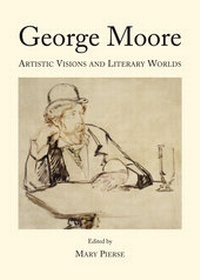
George Moore
Artistic Visions and Literary Worlds
Published on 7. May 2014
Book
Paperback/Softback
264 pages
978-1-4438-5889-2 (ISBN)
Description
The Irish writer George Moore (1852-1933) was a very significant and often controversial figure on the literary stages of Paris, London and Dublin at a key cultural moment. Between 1880 and 1931, his creative involvements included spells with literary theatres in London and Dublin, jousts with the daring and repression of the fin de siecle, and a hail-and-farewell to Yeats and the Irish Revival. This collection of essays offers fresh insights into diverse elements of his oeuvre and reflects some of the wide variety in Moore's literary innovations, influences and legacy. Contributors note his pioneering contributions to the short story, his penetrating insights into Greek classical literature, his avant-garde feminism and egalitarianism, and - what may surprise 21st-century readers of biblical-theme blockbusters - his sensitive but contentious novelistic treatment of the historical Jesus.
Reviews / Votes
"The dust jacket ... announces that the volumes eighteen essays ... offer 'fresh insights into diverse elements' of Moore's oeuvre and reflect the wide variety of his 'literary innovations, influences and legacy.' Readers will not be disappointed: here is MOore in all shapes and guises - from autobiographer to Voltairian - through the lenses of Irish, English, American, French, Spanish, Brazilian, and Greek scholars."From a review in English Literature in Transition"This volume is a most welcome and timely reassessment of George Moore's significance in Irish and world literature, of his sense of innovation, his modernism, his significance to James Joyce, his artistic role. The variety of the theoretical approaches, of the national backgrounds of the authors, their emphasis on Moore's significance in their own countries all contribute to the interest of this book.This is an excellent analysis of the significance of what Deleuze and Gattari call 'minority literature', i. e. 'the literature of a minority written in the language of the majority, a literature in which compulsive expression of revolutionary sentiment cannot be avoided by its author'.Moore is rendered visible in his working and reworking of the written text and the process through which textual grammar reveals psychic grammar is made explicit."Professor J. Brihault"Mary Pierse argues for a lasting sympathy between Moore and his reforming landowner father in her essay on politics. If this erases the late-century textures of the younger Moore's advanced beliefs, it also refigures teh cultural geography of post-Famine Ireland, Pierse preparing the reader for Moore's reading of Dalkey as a modern-day Babylon, the decaying villas of the mortgaged aristocracy hanging like faded gardens from the Dublin coast. Perceptively, Pierse sets Thomas hardy's Tess of the D'Urbervilles against Moore's Esther Waters... Manet's early portrait, 'George Moore au Cafe', outlines a writer and thinker in development, the wide cuffs and loose collar opening on to a career to which Moore looks across the table, attentively disputatious. George Moore: Artistic Visions and Literary Worlds is an engaging portrait of this figure in literary perspective"-Nicholas Allen, Associate Professor at the University of North Carolina at Chapel Hill, in The Irish Times Weekend Review, Saturday, June 30, 2007More details
Edition
Unabridged edition
Language
English
Place of publication
Newcastle upon Tyne
United Kingdom
Target group
College/higher education
Professional and scholarly
Edition type
Unabridged edition
Product notice
With dust jacket
Dimensions
Height: 212 mm
Width: 148 mm
ISBN-13
978-1-4438-5889-2 (9781443858892)
Copyright in bibliographic data and cover images is held by Nielsen Book Services Limited or by the publishers or by their respective licensors: all rights reserved.
Schweitzer Classification
Other editions
Additional editions
Book
12/2006
Cambridge Scholars Publishing
€69.51
Shipment within 15-20 days
Person
Mary Pierse has taught in the Department of English, University College Cork, where she has held Post-Doctoral Research Fellowships. She has also taught in the Department of Women's Studies at the same university. Organiser of the first international and tri-lingual Moore Conference (2005), her current research focuses on Moore studies, Irish feminisms and Franco-Irish artistic connections.